Are you embarking on an investment journey and looking for the best broker in the Netherlands? We’ve curated a comprehensive overview of the top online brokers to streamline your decision-making process.
In this guide, we unveil the strengths and weaknesses of leading platforms based on our hands-on experience and direct testing. The selection considers factors like fees (commissions, FX fees, and platform charges), investment platforms (web, desktop, and mobile), the range of markets and instruments available (Dutch and European stocks, US shares, ETFs, bonds, and derivatives), regulatory oversight (AFM supervision and MiFID II passporting for Dutch investors), and education resources.
Whether you’re an investor looking for the lowest fees, a beginner seeking simplicity, or an active trader needing professional-grade tools, this guide covers the leading options for 2026.
Best online brokers in the Netherlands
Eager to start investing? Here are our bullet-point suggestions for the best online brokers available to Dutch investors in 2026:
- eToro: Top online broker in the Netherlands with commission-free ETF investing. Offers a welcome bonus up to $500 for new users (T&Cs apply).
- Interactive Brokers: Best trading platform in the Netherlands overall
- Freedom24: Best for ETF Investment plans and personal manager support
- XTB: One of the best brokers in the Netherlands for Forex
- Pepperstone: Best for active traders who want MT4, MT5, cTrader or TradingView
- Plus500: Leading CFD broker with demo accounts
- Saxo Markets: Best for experienced investors in the Netherlands
- DEGIRO: Among the best stock brokers in the Netherlands with low fees
- Trading 212: Leading online broker with no commissions on stocks and ETFs (other fees may apply, see terms and fees). Sponsored Code: to get free fractional shares worth up to €100, you can open an account with Trading 212 using the promo code “IITW”. Terms apply.
- Lightyear: Best for beginners and ETFs. New users earn a free share worth up to €100 with the promo code INVESTINGINTHEWEB.
Disclaimer: Investing involves risk of loss.

52% of retail CFD accounts lose money.


Investing involves risk of loss.

69-80% of retail CFD accounts lose money.

72-95% of retail CFD accounts lose money.

81% of retail CFD accounts lose money.

62% of retail CFD accounts lose money.

Investing involves risk of loss.

Capital at Risk. Sponsored Link. To get free fractional shares worth up to 100 EUR/GBP, you can open an account with Trading 212 through this link. Terms apply.

Terms apply, seek guidance if necessary. When you invest, your capital is at risk.
Video summary
Comparison of best brokers in the Netherlands



For a list of brokers we do not recommend, you can visit our full list of broker reviews, and filter by “Not recommended”.
Other resources
- Check our Youtube channel! You will find step-by-step guides of how to invest in the S&P 500 on different apps, as well as other educational videos about investing and investment platforms.
- Explore our tools: Check our comparison tool, reviews, broker bonuses, broker interest rates, BrokerMatch, and others.
Broker reviews
eToro at a glance
52% of retail CFD accounts lose money.
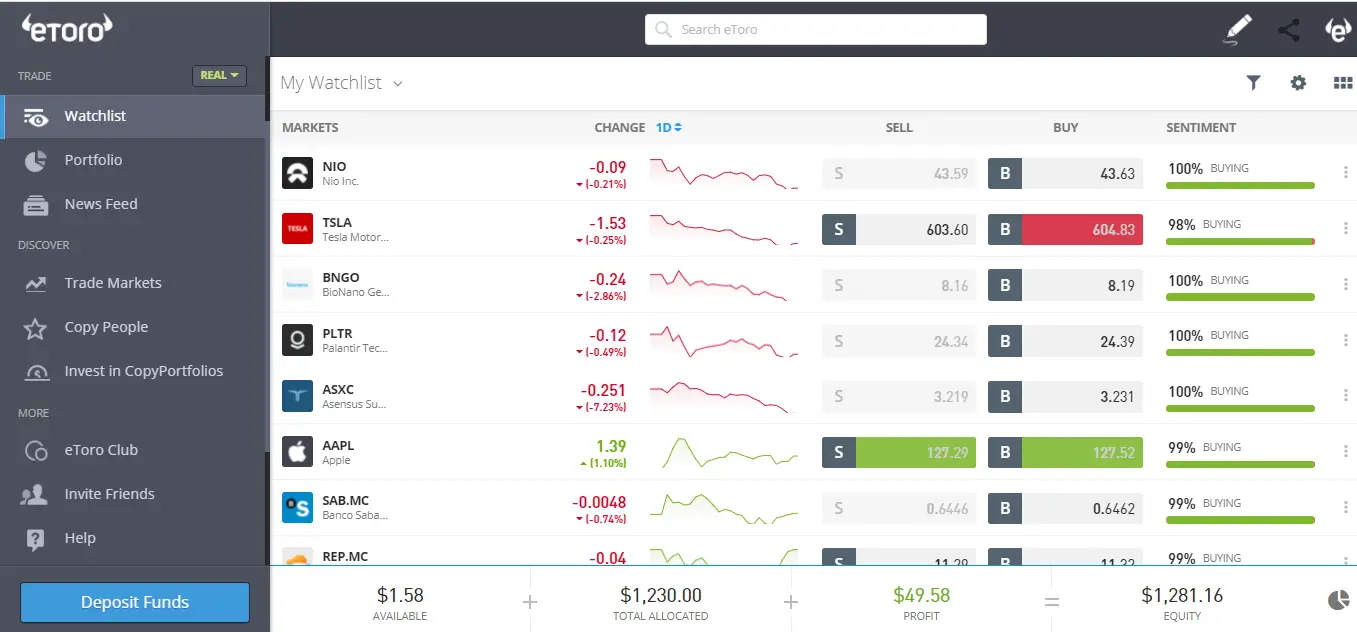
eToro is one of the largest online brokers in the world, with over 40 million registered users across 140+ countries, where you can trade stocks, ETFs, cryptocurrencies, commodities, and CFDs. The company became publicly traded on the NASDAQ in May 2025 (ticker: ETOR), reinforcing its credibility and transparency. eToro is best known for its social trading feature, which allows users to copy the trades of experienced investors. There are thousands of verified traders on eToro, and you can select traders to follow based on past return on investment (ROI), risk score, asset allocation, or other criteria.
The eToro platform provides access to over 3,000 financial instruments, including real stocks (not CFDs), ETFs, and cryptocurrencies. Additionally, users can invest in ready-made thematic portfolios called Smart Portfolios, which group together assets or traders around themes such as artificial intelligence, renewable energy, dividend-paying stocks, or sector-specific opportunities.
eToro offers commission-free ETF investing in the Netherlands, while real stock trades carry a flat commission of $1 to $2 per trade depending on the exchange (other fees apply). Dutch investors can also earn interest on uninvested USD cash, with the rate depending on their eToro Club tier and linked to US Federal Reserve policy.
New users in the Netherlands can also claim eToro’s welcome bonus of up to $500 (T&Cs apply). Opening an account and depositing funds are quick and straightforward, and you can practise with a $100,000 virtual demo account before committing real capital. On the downside, spreads can be relatively high for some products (particularly forex and crypto), withdrawals from the USD account cost $5, and a $10 monthly inactivity fee applies after 12 months without logging in. eToro also does not offer Dutch-specific tax-advantaged accounts.
eToro is fully regulated and supervised by top-tier regulators globally, including the UK’s Financial Conduct Authority (FCA), the Australian Securities and Investments Commission (ASIC), and the US Securities and Exchange Commission (SEC) and FINRA. Dutch clients are onboarded by eToro (Europe) Ltd, authorised and regulated by the Cyprus Securities and Exchange Commission (CySEC) and passported to provide services in the Netherlands under MiFID II, with oversight from the Dutch Authority for the Financial Markets (AFM). Client funds are protected up to €20,000 under the Cyprus Investor Compensation Fund (ICF).
If you want to learn more, check out our eToro review.
Pros
- Low stock trading fees (from $0 per trade)
- Commission-free ETFs (other fees apply)
- Social trading and other innovative products
- Wide variety of financial products
- Slick, modern, and easy for anyone to use
- European users have access to three account currencies: EUR, USD and GBP
- Top tier regulators
Cons
- Limited disclosed financial information
- Withdraw and inactivity fees
- Spread, overnight, inactivity, and currency conversion fees higher than average
- Doesn’t offer bonds, futures, or options
Interactive Brokers at a glance
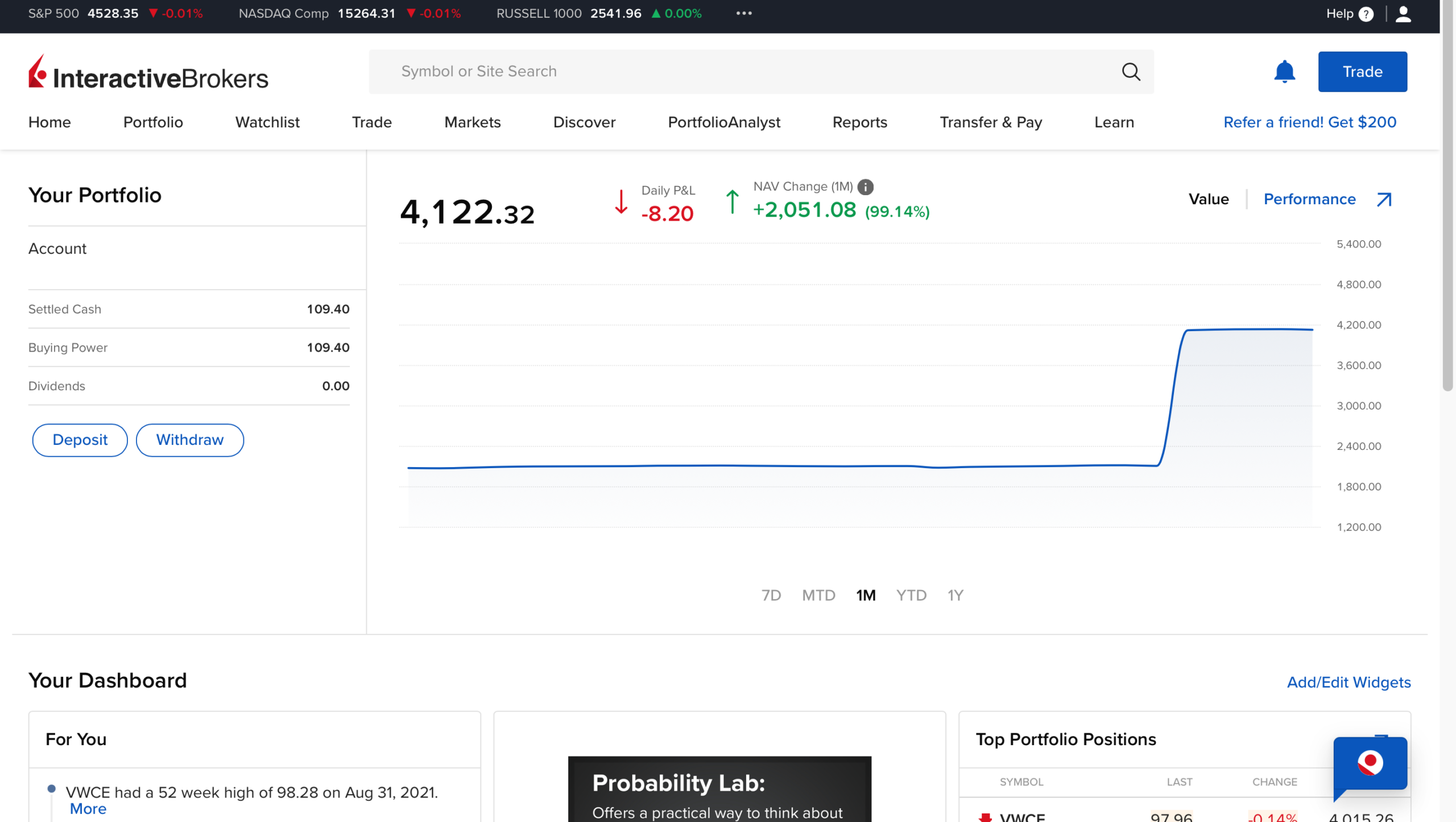
Another exceptional trading platform for Dutch investors is Interactive Brokers. Founded in 1978 and publicly listed on NASDAQ (ticker: IBKR, an S&P 500 constituent since August 2025), Interactive Brokers is a global online broker that has weathered every major financial crisis since its founding, demonstrating exceptional resilience and rigorous risk management. The broker serves around 4.7 million client accounts globally (March 2026) and provides access to 170+ markets.
Interactive Brokers offers an advanced investment platform with a wide range of products (stocks, options, mutual funds, ETFs, futures, bonds, and currencies), solid trade execution through IB SmartRouting (which automatically routes orders to the venue offering the best available price), and a comprehensive set of technical and fundamental tools to support your investment decisions. Dutch investors can access major European exchanges (Euronext Amsterdam, Frankfurt, Paris, London) as well as US, Asian, and emerging markets.
Beginners and intermediate investors can explore educational resources through IBKR Campus, though the learning curve is steep, which is why we mainly endorse IBKR to more advanced traders. Customer service is responsive and provides clear answers to client questions.
On the downside, IBKR’s fee structure is complex, the registration process is lengthy (though fully online), and the broker doesn’t offer commission-free trading on European stocks. However, when accounting for FX fees, narrower spreads, the Stock Yield Enhancement Program (SYEP), and interest on uninvested cash (paid at the full rate on accounts above $100,000 NAV), IBKR clients still achieve significant cost savings compared to most brokers, particularly active traders and larger portfolios.
Interactive Brokers also operates IBKR GlobalTrader, a modern mobile trading app for stocks, ETFs, and options, ideal for beginner and intermediate investors. Features include automatic currency conversions, fractional shares, and a $10,000 demo account. Dutch clients are served by Interactive Brokers Ireland Limited, authorised and regulated by the Central Bank of Ireland (CBI) and passported to provide services in the Netherlands under MiFID II, with oversight from the AFM.
Want to know more about Interactive Brokers? Check our Interactive Brokers review.
Pros
- Low commissions on US stock trading
- No monthly inactivity fee
- The broadest product and markets range in the brokerage industry
- Demo account
- Excellent reputation (founded in 1978)
- Extensive research and Education tools
- Has a modern mobile trading app to trade Stocks, Options and ETFs, ideal for novice investors, IBKR GlobalTrader.
- Offers interest on uninvested cash balances
Cons
- Complicated and lengthy account opening process (but fully online)
- Steeper learning curve for beginners
- Website is difficult to navigate
- Interactive Advisors (Robo-advisor feature) is only available for US customers
Freedom24 at a glance
Investing involves risk of loss.
Freedom24, part of Freedom Holding Corp. (NASDAQ: FRHC), is a European broker that gives access to more than 1 million instruments on 15 exchanges in Europe, Asia and the US, including stocks, 3,600+ ETFs, bonds and US stock options. It is particularly popular with European investors who want access to US markets and a broad ETF universe, and it has had a local office in Amsterdam since 2024.
Alongside the most popular ETFs from issuers like Vanguard, iShares and Invesco, Freedom24 covers a range of investment strategies, including dividend-focused and short-term bond ETFs, as well as niche options such as covered call ETFs.
For long-term investors, Freedom24 offers ETF Investment plans: you can invest in selected ETFs regularly (weekly or monthly) with €0 commission. The €0 fee applies only to purchases made within the Freedom24 Recurring Investment function, and other fees apply according to the Freedom24 Fee Schedule.
Dutch clients can also ask their personal manager for investment advice, a service that most online brokers in this guide do not provide because they are execution-only. The only prerequisite is completing the suitability test, which sets your risk profile. The platform’s web and mobile interfaces are intuitive, complemented by market analysis (InvestIdeas) and educational content.
With no minimum deposit, Freedom24 offers two pricing plans: Smart in EUR (€0.02 per share + €2 per order on US and European stocks and ETFs, better suited to lower trading volumes) and All Inclusive in EUR (which adds a personal manager, at 0.5% of the trade value + €0.012 per share + €1.20 per order). On the downside, it charges a €7 withdrawal fee, does not offer fractional shares and does not offer cryptocurrencies.
Freedom Finance Europe Ltd is regulated by the Cyprus Securities and Exchange Commission (CySEC) and passported to provide services in the Netherlands under MiFID II, with oversight from the AFM. In the unlikely event that segregated assets cannot be returned to clients, Freedom24 falls under the Cyprus Investor Compensation Fund (ICF), which compensates investors for non-returned investments up to €20,000.
Want to learn more? Check out our Freedom24 review or visit Freedom24 directly.

Pros
- Low commissions on stock and ETF trading
- No minimum deposit for general trading
- Demo trading
- Slick, modern, and easy for anyone to use
- No custody fee
Cons
- €7 per withdrawal
- No cryptocurrencies
Disclaimer: Investing involves risk of loss. Commission-free investing applies exclusively to specific recurring investment plans. Other fees apply according to the Freedom24 Fee Schedule. Options are complex financial instruments with a high risk of loss and are not suitable for all investors. Access to a specific financial instrument may depend on the suitability assessment.
XTB at a glance
69-80% of retail CFD accounts lose money.
Founded in 2002, XTB is a major player in the European brokerage industry with extensive worldwide experience, serving more than 2 million clients at the end of 2025. It is listed on the Warsaw Stock Exchange (ticker: XTB) and regulated by multiple top-tier regulators, including the Financial Conduct Authority (FCA), the Polish Financial Supervision Authority (KNF) and the Cyprus Securities and Exchange Commission (CySEC). Dutch clients are served on a cross-border basis under MiFID II passporting.
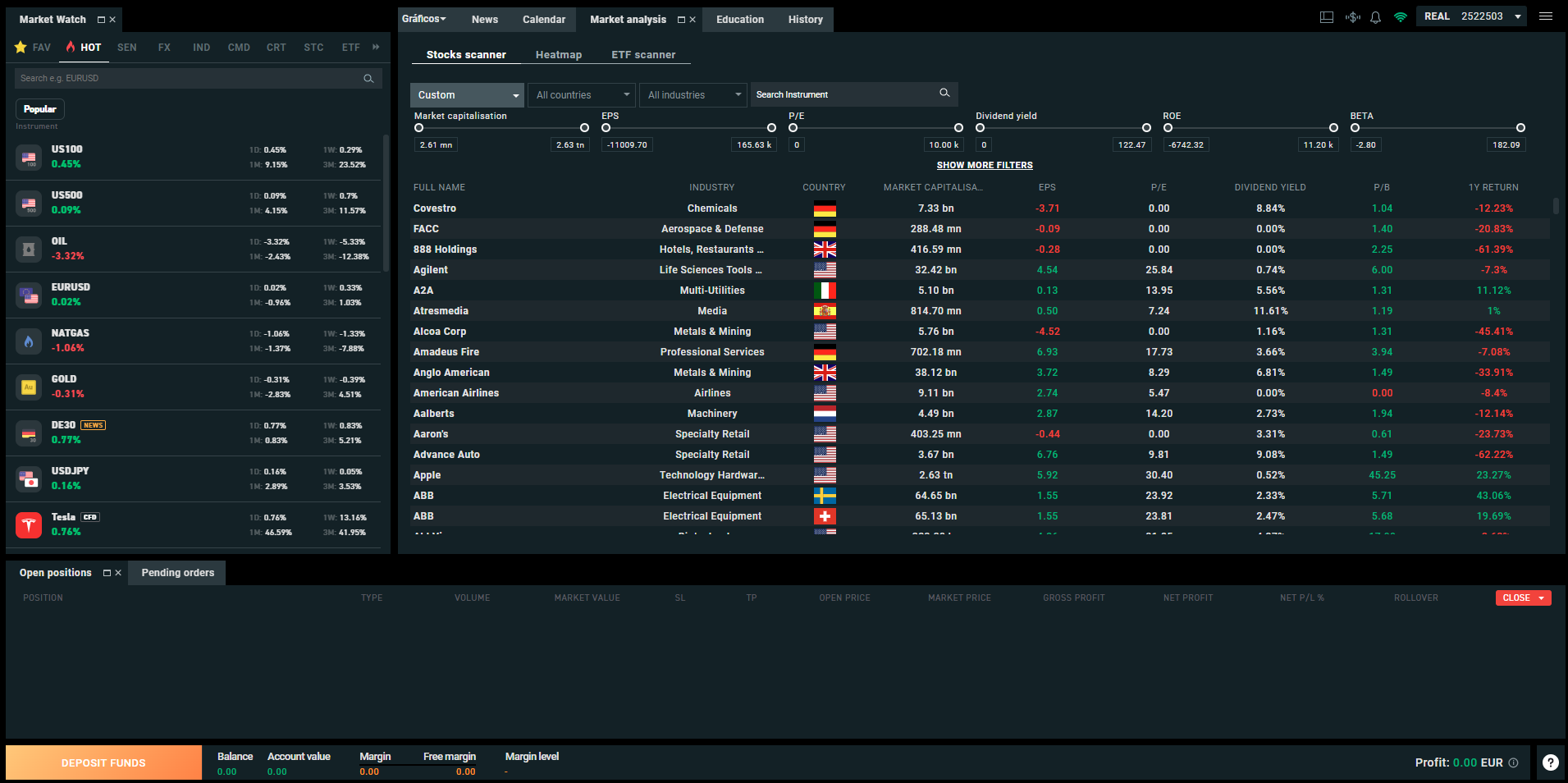
You can invest through xStation 5 (desktop and web) and xStation Mobile in a wide range of investment products, including 5,300+ stocks, 1,300+ ETFs, and CFDs on stocks, forex, indices, commodities, and cryptocurrencies (product offering may vary slightly by country). It offers 0% commission on real stocks and ETFs up to €100,000 in monthly trading volume (0.2% commission applies above that threshold, with a €10 minimum per order). XTB also offers Investment Plans for automated, recurring ETF investing, useful for Dutch investors building long-term portfolios systematically.
Opening an account and transferring money are quick and hassle-free. For beginners, XTB provides a demo account where you can trade as if it were real money, plus access to educational tools through the XTB Trading Academy. For intermediate and advanced investors, the platform offers plenty of technical and fundamental tools to support your investment decisions.
On the downside, XTB charges a €10 monthly inactivity fee when there has been no trading for 365 days and no deposit in the previous 90 days. There is also a 0.5% currency conversion fee for trades in non-base currencies, and CFD cryptocurrency trading carries relatively high spreads (although forex spreads are competitive).
Want to know more about XTB? Check our XTB review.
Pros
- Free stocks trading (only applicable to some countries)
- Customizable trading platform (charts and workspace)
- Low Forex Spreads
- Demo account
- No minimum account deposit
- Valuable education materials
- Top-tier Regulators
Cons
- Complex trading platform for a beginner
- High Stock CFD spreads
- Limited product portfolio
- Withdrawal fees for transfers below $100
- Inactivity fee (€10/monthly after 1+ year with no activity plus no deposit in the last 90 days)
Pepperstone at a glance
72-95% of retail CFD accounts lose money.
Founded in Melbourne in 2010, Pepperstone serves Dutch clients through Pepperstone EU Limited, authorised and regulated by the Cyprus Securities and Exchange Commission under licence 388/20 and passported into the Netherlands under MiFID II, with AFM oversight.
Pepperstone works differently from most brokers in this guide, and it is worth being clear about that first: it is a CFD broker, so you cannot buy real shares or ETFs here. There is no share ownership, no dividends, no fractional investing and no long-term savings plan. Dutch investors building a portfolio on Euronext Amsterdam should look at DEGIRO, Trading 212 or Lightyear instead. Pepperstone is included for the narrower group of Dutch investors who actively trade, and for that purpose it is one of the strongest options available.
The differentiator is platform choice. Alongside its own web platform and mobile app, Pepperstone supports MetaTrader 4, MetaTrader 5, cTrader and native TradingView execution, and it is the only broker in this article that supports MT4, MT5 and cTrader. If you run an Expert Advisor or a cBot, or your analysis already lives in TradingView charts, that is often the whole decision.
There are two pricing models. The Standard account builds a 1 pip mark-up into the raw spread with no separate commission on forex, indices or commodities. The Razor account gives you the raw spread (from 0.0 pips on forex) plus a fixed commission from $3.50 per lot, per side, dropping to $3.00 per side on cTrader. Beyond occasional trading, Razor almost always works out cheaper.
Three points matter specifically for Dutch clients. Accounts can be held in EUR, so unlike eToro you are not pushed into a dollar base currency. Funding works via SEPA transfer, cards, PayPal, Apple Pay and Google Pay, all free from Pepperstone’s side, but there is no iDEAL support, worth noting given how standard iDEAL is in the Netherlands. And the platform and support are available in English, Italian, Spanish and French, but not in Dutch.
Non-trading costs are clean: no inactivity, deposit or withdrawal fees. The costs that do bite are overnight funding on positions held past 5pm New York time, which makes multi-week holding periods expensive, and the fact that Pepperstone pays no interest on uninvested cash, a real gap next to Trading 212, Lightyear, XTB or IBKR, and one that matters if you close out to cash between setups.
Want to know more about Pepperstone? Check our Pepperstone review.
Pros
-
Only broker here supporting MT4, MT5 and cTrader, plus native TradingView execution
-
Raw spreads from 0.0 pips on the Razor account
-
Scalping, hedging and automated strategies fully permitted
-
EUR base currency available
-
No inactivity, deposit or withdrawal fees
-
No minimum deposit and a free demo account
- Fast execution with Tier-1 bank liquidity and no dealing desk
Cons
-
CFDs only: no real shares or ETFs, so unsuitable for long-term investing
-
No Dutch-language platform or customer support
-
No interest paid on uninvested cash
-
Overnight funding makes longer holding periods expensive
- No native copy trading and no guaranteed stop-loss orders
Plus500 at a glance
81% of retail CFD accounts lose money.
Founded in 2008, Plus500 is an online CFD broker offering contracts for difference on forex, indices, shares, commodities, options, ETFs, and cryptocurrencies. It is available in over 50 countries and is listed on the London Stock Exchange (ticker: PLUS), where it is a constituent of the FTSE 250 index.
In Europe, Plus500 is a CFD-only broker: you trade on price movements without owning the underlying asset, so it is not a platform for buying real shares or building a long-term portfolio. Dutch investors looking for real stocks and ETFs should consider DEGIRO, Trading 212, Lightyear or Interactive Brokers instead.
The web platform you will use is WebTrader, Plus500’s proprietary platform, offering a stable trading experience and reliable access from multiple devices, including a well-rated mobile app. All platforms are accessible and responsive, and you can start testing the features by opening a demo account.
Customer support is helpful and readily accessible through the chat function always shown on the trading platform. Spreads are competitive, and accounts can be opened in several base currencies, including USD, EUR, and GBP. However, Plus500 charges a 0.70% currency conversion fee on trades in a currency different from your account, and a $10 monthly inactivity fee applies after three months without logging in.
Plus500 is regulated by multiple top-tier financial regulators worldwide, including the FCA (UK), CySEC (Cyprus), ASIC (Australia), MAS (Singapore), and the DFSA (Dubai), among others. Dutch clients are typically onboarded through Plus500CY Ltd, authorised and regulated by CySEC and passported to provide services in the Netherlands under MiFID II, with oversight from the AFM. As an EU investor, you are protected up to €20,000 under the Cyprus Investor Compensation Fund (ICF). Additionally, Plus500 provides negative balance protection for retail CFD clients.
Want to know more about Plus500? Check our Plus500 review.

Pros
- Acessible and responsive platform
- Low spreads
- No dealing commissions
- Demo Account
- Top-tier regulators
Cons
- No ETF offering
- Inactivity fee ($10 per month after no login activity in 3 months)
- High overnight funding fees
- Very little research and education provided
Saxo at a glance
62% of retail CFD accounts lose money.
Launched in 1992, Saxo is one of the most established names in the brokerage industry. In March 2026, the Swiss private bank J. Safra Sarasin completed the acquisition of around 71% of Saxo Bank, and in July 2026 it agreed to buy the remaining stake from founder Kim Fournais (subject to regulatory approval). Saxo lets you trade over 71,000 financial instruments through two flagship platforms: SaxoTraderPRO (for advanced desktop trading) and SaxoTraderGO (for web and mobile).
The wide range of cash and margin trading products across global markets includes stocks, ETFs, bonds, mutual funds, options, futures, CFDs, forex, and more (note: cryptocurrency exposure is offered through ETPs and CFDs, with limitations depending on the jurisdiction). Saxo provides advanced research tools positioned for both “Buy and hold” investors and active leveraged traders.
In the Netherlands, Saxo’s account levels are assigned automatically based on your cash and portfolio value:
- Bronze: the default level when you open an account, with no minimum deposit. Euronext stocks and ETFs cost 0.08% (min. €2), US stocks 0.08% (min. $1) and options €/$0.75 per contract.
- Silver: from €200,000 in cash and investments. Euronext and US stocks cost 0.05% (same minimums), and real-time Euronext prices and options quotes are included.
- Gold: from €1,000,000. Stocks cost 0.03% (same minimums), and you earn credit interest on your entire net cash balance from €100,000.

On top of trading fees, Saxo charges a service fee of 0.01% of your portfolio value per month (excluding derivative positions), capped at €40 per month. The following month, the fee you paid comes back as a trading credit valid for one month, so active investors can recover it by placing trades. Saxo also offers AutoInvest for periodic investing without transaction costs.
Saxo Bank A/S is a fully licensed European bank under the supervision of the Danish Financial Supervisory Authority (Finanstilsynet). Saxo is a member of the Danish Guarantee Fund, which covers client cash deposits up to €100,000 and financial securities (stocks, ETFs, etc.) up to €20,000 per client. Dutch clients are served through Saxo Bank’s Netherlands branch (the former BinckBank, acquired by Saxo in 2019), with AFM oversight.
Do you want to know more about Saxo? Check out our Saxo review.
Pros
- Excellent research materials
- Outstanding trading platforms (SaxoInvestor and SaxoTrader)
- Extensive range of investment products and commercial offers
- Long track record
- Supervised by worldwide top-tier regulators
Cons
- $0 in most countries; higher minimums in some regions (e.g. $5,000 in MENA)
- Fees higher than average
- Fee structure is complex
- Does not accept US residents
DEGIRO at a glance
Investing involves risk of loss.
Founded in 2013 in the Netherlands and part of flatexDEGIRO since 2020, DEGIRO is a low-cost brokerage firm that has become very popular due to its competitive rates. The group has 3.5 million customer accounts across 16 European countries, and the platform is widely known for its “do-it-yourself” philosophy: you have everything at your disposal to start investing on your own, without unnecessary hand-holding. It offers a wide range of financial assets to trade, including stocks, ETFs, bonds, options, futures contracts, warrants, investment funds, and some leveraged products (not the same as CFDs, more info here).
For instance, you can trade ETFs within the DEGIRO Core Selection with €0 commission when the order is executed on Tradegate (a €1 handling fee per trade still applies). Other ETFs cost €2 commission plus the €1 handling fee. The web trading platform is intentionally minimalist but efficient and easy to use: within minutes, you get familiar with it. The same applies to its mobile app. On the downside, there is limited fundamental research, a US stock trade costs €2 (€1 commission plus the €1 handling fee), a €2.50 annual connectivity fee applies per foreign exchange you trade on (Euronext Amsterdam and Brussels are exempt for Dutch clients), and pricing alerts are missing.

Regarding security, DEGIRO is the Dutch branch of flatexDEGIRO Bank SE, a German credit institution supervised by the German Federal Financial Supervisory Authority (BaFin) and Deutsche Bundesbank, with additional oversight from the Dutch central bank (DNB) and the Dutch Authority for the Financial Markets (AFM) for Dutch clients. In the unlikely event that segregated assets cannot be returned to clients, DEGIRO falls under the German Investor Compensation Scheme (EdW), which compensates investors for non-returned assets up to 90% with a maximum of €20,000.
Additionally, any cash deposited in a DEGIRO Cash Account with flatexDEGIRO Bank is covered up to €100,000 under the German Deposit Guarantee Scheme, a meaningful advantage compared to brokers without banking licences.
Still have doubts? Go through our DEGIRO review.
Pros
- ETF Core Selection: full range of ETFs/ETCs/ETNs on Tradegate (1,000+ products) for only the €/£1 handling fee, with no connectivity fee (external fees apply)
- User-friendly web and mobile app
- Wide range of investment options
- Education material: Investor’s Academy and Investing with DEGIRO
- Low overall commission structure
- No account opening, inactivity, or withdrawal fee
Cons
- 0.25% currency conversion fee (charged if you deposit or invest in a different currency than your base currency)
- €/£1 flat handling fee (charged in most transactions)
- €/£2.50 of connectivity fee (paid annually), per exchange where you’re invested
- Does not offer Forex or CFDs
- No ISA account (for UK residents)
- Low-quality customer support
- No interest paid on cash balances
Trading 212 at a glance
Capital at Risk. Sponsored Link. To get free fractional shares worth up to 100 EUR/GBP, you can open an account with Trading 212 through this link. Terms apply.
Founded in 2004 in Sofia (Bulgaria) and headquartered in London, Trading 212 is a fintech that aims to make investing more accessible through a simple, mobile-first platform. It gives access to 10,000+ stocks and ETFs and serves more than 5 million clients. Sponsored Code: to get free fractional shares worth up to €100, you can open an account with Trading 212 using the promo code “IITW”. Terms apply.
On Trading 212, you’ll find no commissions on stocks and ETFs (other fees may apply, see terms and fees), fractional shares from as little as €1, multi-currency accounts, interest on uninvested cash, and automated investing via Pies and AutoInvest. A 0.15% FX fee applies when converting funds. Other fees may apply. Opening an account is quick and easy. On the downside, the product range is more limited than at full-service brokers, with no bonds, options, or futures.

Pies & AutoInvest is an execution-only service. Not investment advice or portfolio management. Automatic investing refers to executing scheduled deposits. You are responsible for all investment and rebalancing decisions.
When investing, your capital is at risk. If you enable interest, Trading 212 will hold your cash in qualifying money market funds and banks. Otherwise, your cash will be held only in banks. Interest applies on cash in an investment account. Terms apply. Rates change over time, so check Trading 212’s Terms and Fees page for the current rate.
The minimum deposit and withdrawal amounts are both €10. There are no deposit fees for bank transfers (other options include cards and Google/Apple Pay, which may carry small fees), and there are no withdrawal fees regardless of the method used.
In terms of licences, Trading 212 operates through several regulated entities: Trading 212 UK Ltd, authorised by the Financial Conduct Authority (FCA) (register number 609146), Trading 212 Markets Ltd, authorised by the Cyprus Securities and Exchange Commission (CySEC) (licence 398/21), Trading 212 EU GmbH, authorised by the German Federal Financial Supervisory Authority (BaFin) (licence 10109603), and Trading 212 AU PTY Ltd, authorised by the Australian Securities and Investments Commission (ASIC). New Dutch clients open their accounts with Trading 212 EU GmbH (BaFin licence 10109603), which provides its services in the Netherlands on a cross-border basis under MiFID II, so German investor protection rules apply to these accounts.
If you want to learn more, check our Trading 212 review.
Pros
- Commission-free real stock, ETFs and crypto trading (other fees may apply. See terms and fees)
- AutoInvest & Pies feature (execution-only service, not financial advice)
- Fast and easy account opening process
- Demo account
- Top Tier Regulators
- Free fractional shares worth up to €100
- High interest on uninvested cash
Cons
- Limited product portfolio (no Options, Bonds, Mutual Funds or Futures)
- No relevant Fundamental tools
- 0.15% of Foreign exchange fees
Disclaimer: When investing, your capital is at risk and you may get back less than invested. Past performance doesn’t guarantee future results. Crypto-assets are high-risk and volatile. You could lose your invested capital, and these assets are not covered by protection schemes. Make sure you understand the risks before investing.
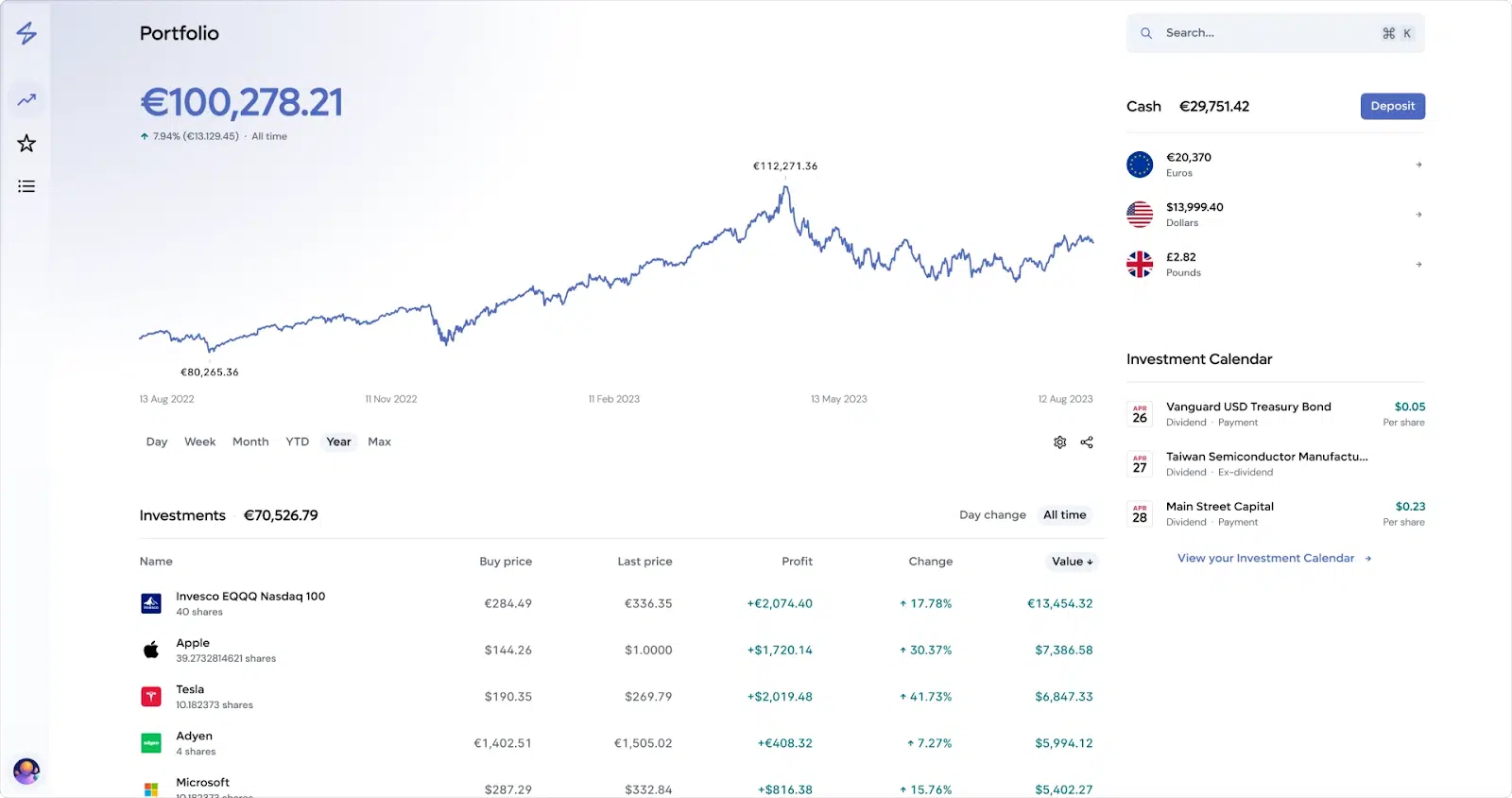
Lightyear at a glance
Terms apply, seek guidance if necessary. When you invest, your capital is at risk.
Lightyear is a European investment platform founded in 2020 by ex-Wise (formerly TransferWise) co-founders Martin Sokk and Mihkel Aamer. It operates via two entities: Lightyear Europe AS, authorised and regulated by the Estonian Financial Supervision and Resolution Authority (EFSA, activity licence 4.1-1/31), and Lightyear UK Ltd, authorised by the FCA. Dutch clients are served via Lightyear Europe AS under MiFID II passporting with AFM oversight, with client assets covered up to €20,000 by the Estonian Investor Protection Sectoral Fund.
There are no Lightyear execution fees on ETFs (fund manager fees may apply). US stocks cost 0.1% of the trade value ($0.10 minimum, $1 maximum), EUR stocks €1 per order and other European stocks 0.1%, with a 0.35% FX fee on currency conversions. The multi-currency account (EUR, GBP, USD) helps minimise unnecessary conversions. Lightyear also offers interest through Money Market Funds managed by BlackRock or J.P. Morgan, depending on the country: EUR 2.22% or 2.24%, USD 3.70% or 3.67% and GBP 3.82% or 3.84% (AER/APY, net, variable, as of 25 August 2026). Money market funds are investments, not bank deposits.
The investment platform is well-suited for beginners and intermediate investors, with fractional shares (US and most EU stocks/ETFs) and access to 6,000+ stocks and ETFs in the US, UK, European, and Asian markets. Lightyear also offers EU and UK government bonds (€1 commission per trade), Plans for automated goal-based investing, and crypto-assets for EU clients (0.45% fee).
Lightyear also offers a free share up to €100 with the promo code INVESTINGINTHEWEB (capital at risk, T&Cs apply).
There are, however, some downsides to Lightyear: the product offering is curated rather than comprehensive (no options, futures, commodities, forex, or CFDs), and there is no demo account. GBP-denominated UK stocks are also not yet available as fractional shares.
Want to know more about Lightyear? Check out our Lightyear review.
Disclaimer: Capital at risk. The provider of investment services is Lightyear Financial Ltd for the UK and Lightyear Europe AS for the EU. Terms apply: lightyear.com/terms. Crypto-assets are high-risk and volatile. Seek qualified advice if necessary.
Pros
- 0% Lightyear execution commission on ETF trading (other fees, like fund manager and FX fees, may apply)
- No account opening, inactivity, or withdrawal fees
- High interest on EUR, USD & GBP through MMFs
- Free multi-currency account
- Minimum deposit of €/£/$1
- Fractional Shares
- Account opening promotion with the promo code INVESTINGINTHEWEB
- You can automate your investments with "Plans"
Cons
- Limited financial instruments (no options or futures; commodities only via ETCs such as gold, silver and copper; bonds limited to a small Baltic selection)
- No demo account
- Only available in 25 european countries (not available internationally)
- 0.35% currency conversion fee (0.10% for UK GIA and ISA accounts)
How to buy stocks in the Netherlands (step-by-step)
Buying stocks in the Netherlands involves several steps. Here’s a step-by-step guide tailored for Dutch retail investors:
- Educate yourself: before investing, build a foundational understanding of the stock market, the main investment vehicles (stocks, ETFs, bonds, funds), and your personal risk tolerance. The AFM (Dutch financial regulator) publishes consumer guidance worth reviewing.
- Understand Dutch taxation: investments in the Netherlands are taxed under Box 3, which applies a 36% rate to a deemed return on net wealth above the tax-free allowance (€59,357 per person in 2026, or €118,714 with a fiscal partner). For 2026, the deemed return on investments is 6%, and the value of your assets on 1 January is what counts. The government is working towards a new system based on actual returns, planned for 1 January 2028, so check your expected tax position before choosing how to invest.
- Create a financial plan: develop a financial plan that includes your investment goals (e.g., retirement, house deposit, financial independence), time horizon, and risk tolerance. This guides your asset allocation between stocks, ETFs, bonds, and cash.
- Choose a broker: select a reputable broker supervised by the AFM or passported into the Netherlands under MiFID II. Popular options in the Netherlands include DEGIRO (founded in the Netherlands, low fees), eToro (social trading and multi-asset), Interactive Brokers (advanced tools and professional features), Trading 212 (no commissions on stocks and ETFs, other fees may apply), Lightyear (interest through Money Market Funds), Saxo (premium platform, formerly BinckBank), and Trade Republic (mobile-first banking and investing). Consider factors such as fees, FX charges, user interface, available products, and regulatory protection.
- Open a brokerage account: once you’ve chosen a broker, you’ll need to open an account. This typically involves providing personal information, proof of identity (passport or Dutch ID), proof of residence, your BSN (citizen service number), and linking a Dutch bank account.
- Deposit funds: fund your brokerage account with the amount you’re comfortable investing. Most Dutch-friendly brokers support SEPA bank transfers (free and typically arriving within 1 business day) and instant SEPA. Some also support iDEAL, debit card, or Apple/Google Pay deposits.
- Research stocks: conduct thorough research on the stocks or ETFs you’re interested in. Consider the company’s financial health, valuation, growth prospects, competitive position, and sector outlook. For ETFs, review the index methodology, total expense ratio (TER), tracking difference, and replication method.
- Place an order: log in to your brokerage account and place an order. You can choose between market orders (buy at the current market price) and limit orders (set the maximum price you’re willing to pay). For long-term investors, limit orders during market hours typically offer better execution.
- Review and confirm: before confirming, review the order details (instrument, quantity, price, currency, total cost including FX) to ensure accuracy.
- Monitor your investments: keep an eye on your portfolio regularly (monthly or quarterly is sufficient for most long-term investors, as daily checking can encourage impulsive decisions). Monitor market trends, company news, and developments that might affect your holdings.
- Build a diversified portfolio: to manage risk, consider diversifying across different sectors, geographies (US, Europe, emerging markets), and asset classes (equities, bonds, commodities). A simple option is a globally diversified equity ETF (such as a Vanguard FTSE All-World UCITS or iShares MSCI World UCITS).
- Stay informed: stay informed about market trends, central bank policy, and any changes in your chosen stocks. Continuous learning is key to successful long-term investing.
Remember, investing in stocks always carries risk: your capital is at risk and past performance is not indicative of future results. If you’re uncertain about your investment decisions or tax position, consider consulting with a Dutch-licensed financial advisor or tax consultant.
Bottom line
As we finish exploring the best brokers in the Netherlands, it’s clear that Dutch investors have diverse, high-quality options, all regulated by either the AFM directly or through MiFID II passporting from other top-tier EU regulators (BaFin, CySEC, CBI, Danish FSA). The best choice depends on your investor profile:
- For low-cost, do-it-yourself investing in Dutch and European stocks: DEGIRO (German banking licence + €100K deposit guarantee) or Trading 212 (no commissions on stocks and ETFs, other fees may apply).
- For commission-free ETFs and social investing: eToro (NASDAQ-listed, real stocks plus CopyTrader and Smart Portfolios).
- For advanced traders and broad market access: Interactive Brokers (170+ markets, professional-grade tools, S&P 500 constituent).
- For ETF-focused investing with interest on cash: Lightyear (no Lightyear execution fees on ETFs, interest through Money Market Funds).
- For a broad ETF range with a personal manager: Freedom24 (3,600+ ETFs, ETF Investment plans with €0 commission on recurring purchases, and investment advice from your personal manager).
- For a premium banking-plus-investing experience: Saxo (formerly BinckBank in the Netherlands, 71,000+ instruments) or Trade Republic (German banking licence, cash interest, mobile-first).
- For CFD trading: Pepperstone (MT4, MT5, cTrader and TradingView), Plus500 (LSE-listed, FTSE 250) or XTB (Warsaw Stock Exchange-listed, multi-regulated).
Take a close look at each option, consider what matters most to you (fees, product range, platform features, customer support, regulatory protection), and choose the broker that best aligns with your investment goals. Good luck with your investments.
Other FAQs about brokers in the Netherlands
What are the types of investments you can make with a brokerage account?
You can trade stocks, ETFs, Forex, Bonds, Futures and CFDs on stocks, ETFs, indices, cryptocurrencies, commodities.
What is the cheapest stock broker in the Netherlands?
DEGIRO is widely regarded as one of the cheapest stock brokers in the Netherlands, offering a low-cost platform with competitive fees for trading stocks, ETFs, and other financial instruments.
How are investments taxed in the Netherlands?
Investments fall under Box 3. In 2026, the first €59,357 of net wealth per person (€118,714 with a fiscal partner) is tax-free. Above that, you pay 36% on a deemed return, which is 6% for investments in 2026, based on the value of your assets on 1 January. Brokers do not handle Box 3 for you: you declare your holdings in your annual tax return.
Can I get investment advice from an online broker in the Netherlands?
Most online brokers in this guide are execution-only, meaning they carry out your orders but do not give personal advice. Freedom24 is an exception: Dutch clients can ask their personal manager for investment advice after completing the suitability test.
Is Forex trading legal in the Netherlands?
Yes, forex trading is legal in the Netherlands. It is regulated by the Dutch financial regulatory authority, the Autoriteit Financiële Markten (AFM). Traders can engage in forex trading through authorized and regulated brokers in compliance with Dutch financial laws.
Is DEGIRO better than eToro?
The choice between DEGIRO and eToro depends on your preferences. DEGIRO is known for low fees and a user-friendly interface, while eToro offers social trading features. Consider your priorities (fees, social trading or other factors) when deciding which platform better suits your investment goals in the Netherlands.
Where to invest in the Netherlands?
Consider investing in diverse options like stocks, bonds, or real estate in the Netherlands. Evaluate your risk tolerance, financial goals, and time horizon. Consult with financial advisors or use reputable online brokers like DEGIRO, eToro, or Interactive Brokers to access various investment opportunities in the Dutch market.