Are you looking for the best trading platform in the UK? Which are safe and cheap? We’ve carefully analyzed and compared the top options to help you find the right fit. If you’re looking for the best UK (FCA-regulated) trading platforms, this guide is for you.
In this guide, we break down the strengths and weaknesses of leading platforms based on our experience, considering key factors like fees, trading tools, market access, and educational resources.
Video summary
Best trading platforms in the UK
Can’t wait to start investing? Here are our bullet-point suggestions for the best online brokers in the UK:
- Interactive Brokers: Best overall
- Capital.com: Best broker for CFDs and spread betting
- Pepperstone: Best for forex
- eToro: Top online broker in the UK with commission-free ETF investing
- XTB: One of the best brokers in the UK for Forex
- Trading 212: Leading online broker with commission-free ETFs (Other fees may apply. See terms and conditions)
- DEGIRO: Best low-cost broker for European and international stock & ETF investing
- Webull UK: Best for beginners looking for quick exposure to US stocks
- Saxo Markets: Best for experienced investors in the UK
- Freetrade: Best broker for beginners
- InvestEngine: Cheapest ETF broker
Disclaimer: Investing involves risk of loss.


CFDs involve a high level of risk. 74-89% of retail investors lose money.

72-95% of retail CFD accounts lose money.

52% of retail CFD accounts lose money.

69-80% of retail CFD accounts lose money.

Capital at Risk. Sponsored Link. To get free fractional shares worth up to 100 EUR/GBP, you can open an account with Trading 212 through this link. Terms apply.

Investing involves risk of loss.

Investing involves risk of loss.

62% of retail CFD accounts lose money.


When investing your capital is at risk.
Comparison of best brokers in the UK


For a list of brokers we do not recommend, you can visit our full list of broker reviews, and filter by “Not recommended”.
Other resources
- Check our Youtube channel! You will find step-by-step guides of how to invest in the S&P 500 on different apps, as well as other educational videos about investing and investment platforms.
- Explore our tools: Check our comparison tool, reviews, broker bonuses, broker interest rates, BrokerMatch, and others.
Broker reviews
Interactive Brokers at a glance
Founded in 1978 and publicly listed on NASDAQ (ticker: IBKR), Interactive Brokers is a global online broker that has surpassed major financial crises, showing resilience and a rigorous risk management process. We consider Interactive Brokers the best broker both for day trading and long-term investors.
Interactive Brokers offers an advanced investment platform that includes a wide range of products (stocks, options, mutual funds, ETFs, futures, bonds, and currencies) from +135 markets, solid trade execution (IB SmartRouting), and a set of technical and fundamental tools to help you in your investment decisions.
Beginners and intermediate investors have educational tools to explore, but the learning curve will be steep. Besides, customer service gives crystal clear answers to your doubts, so there is no need to go back and forth.
On the downside, Interactive Brokers’ fee structure is quite complex, the registration process is lengthy (but fully online), and the broker doesn’t offer commission-free trading. However, when considering FX fees, narrower spreads, and the stock loan program, Interactive Brokers’ clients still get significant savings compared to most brokers.
Interactive Brokers also launched IBKR GlobalTrader, a modern mobile trading app to trade stocks, ETFs, and options, ideal for beginner investors. Some of the features of IBKR GlobalTrader include automatic currency conversions, fractional shares, and a demo account.
Finally, it is registered with the Financial Conduct Authority (FCA). Want to know more about Interactive Brokers? Check our Interactive Brokers Review.

Pros
- Low commissions on US stock trading
- No monthly inactivity fee
- The broadest product and markets range in the brokerage industry
- Demo account
- Excellent reputation (founded in 1978)
- Extensive research and Education tools
- Has a modern mobile trading app to trade Stocks, Options and ETFs, ideal for novice investors, IBKR GlobalTrader.
- Offers interest on uninvested cash balances
Cons
- Complicated and lengthy account opening process (but fully online)
- Steeper learning curve for beginners
- Website is difficult to navigate
- Interactive Advisors (Robo-advisor feature) is only available for US customers
Capital.com at a glance
CFDs involve a high level of risk. 74-89% of retail investors lose money.
Founded in 2016, Capital.com is a global CFD trading platform that has quickly grown thanks to its commission-free model and user-friendly technology. Trusted by 770k+ traders worldwide, it offers access to a wide range of markets, including CFDs on forex, stocks, indices and commodities. Plus, it provides spread betting and an “X1” account, which means CFD trading without leverage.
They offer their in-house web and mobile app (packed with innovative tools such as AI-driven insights and risk management features), and you can also invest through the TradingView and MT4 platforms, where you can create automated investment strategies. A free demo account is available to practice before investing real money.
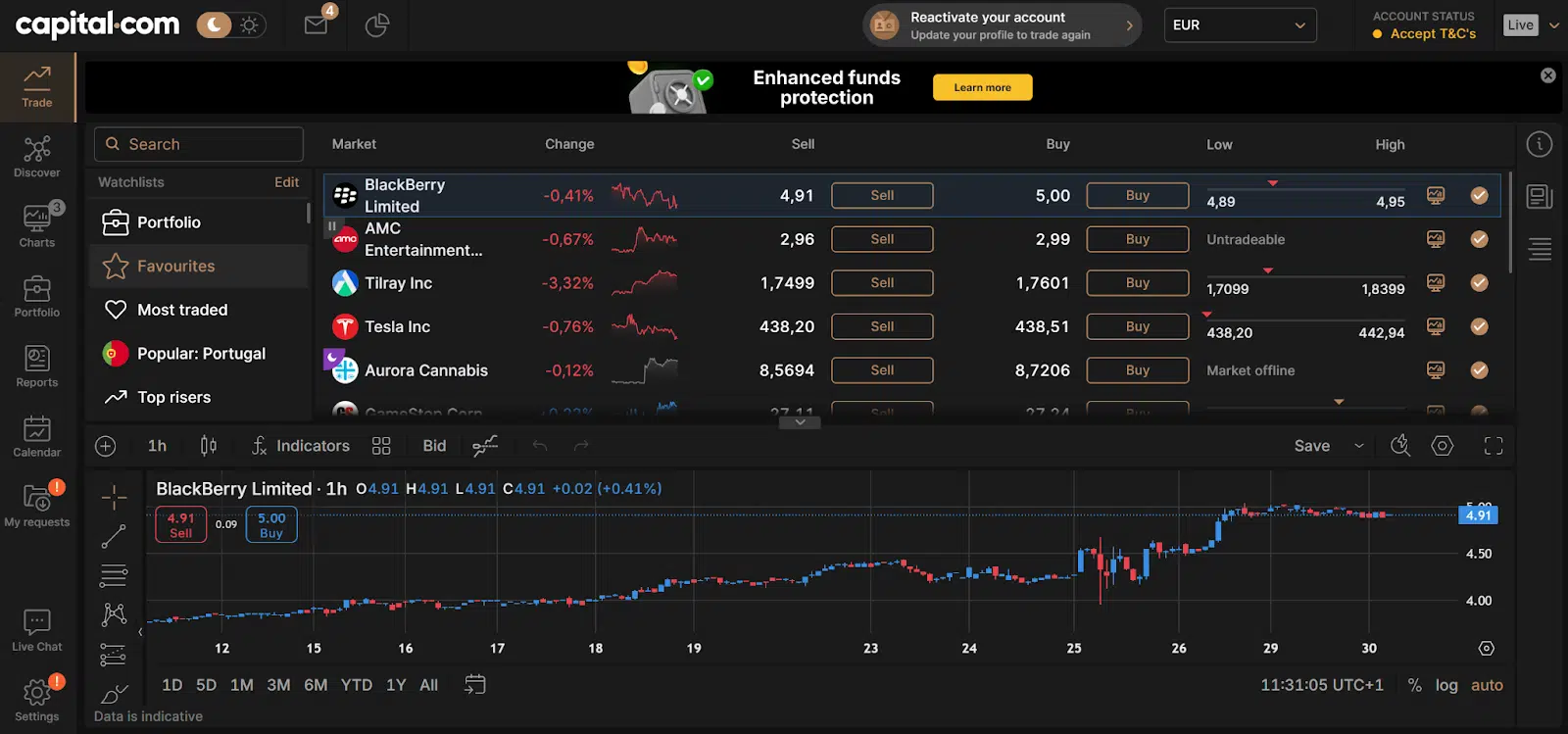
Capital.com doesn’t charge any commission on your trades. However, they charge a fee based on the spread (the difference between the buy and sell prices). Spreads are dynamic and change with underlying market conditions. Apart from spreads, the broker also charges a fee on guaranteed stop-loss orders and on overnight funding (only applicable when you use leverage).
On the downside, as with many CFD-only brokers, it might not be suitable for investors seeking traditional investment products like ETFs, bonds, long-term retirement accounts, or direct ownership of physical assets rather than derivatives.
In terms of regulation, Capital.com is regulated by the Financial Conduct Authority (FCA), under registration number 793714. It holds clients’ funds in segregated bank accounts and provides negative-balance protection for retail clients.
Additionally, all clients are protected by the Financial Services Compensation Scheme (FSCS), which provides up to £85,000 in compensation if something goes wrong with the company (e.g., fraud or operational issues).
Capital.com is a great solution for traders looking for commission-free CFD trading (other fees may apply), spread betting and no-leverage CFDs.
Pros
- Capital Com (UK) Limited (“CCUK”) offers Spread betting to its clients
- Simple account opening process
- Demo Account
- Minimum deposit of €/£20 (by credit card)
- Extended trading hours
- Lots of educational content
- Strong customer support
Cons
- The product offering is still limited to CFDs in most countries (missing bonds and other real assets)
- To trade ETFs, users have to contact customer support to open a separate account for that purpose
- It may be overwhelming for beginners
- Not available in the United States, Canada, Belgium, Spain, and other countries
Pepperstone at a glance
72-95% of retail CFD accounts lose money.
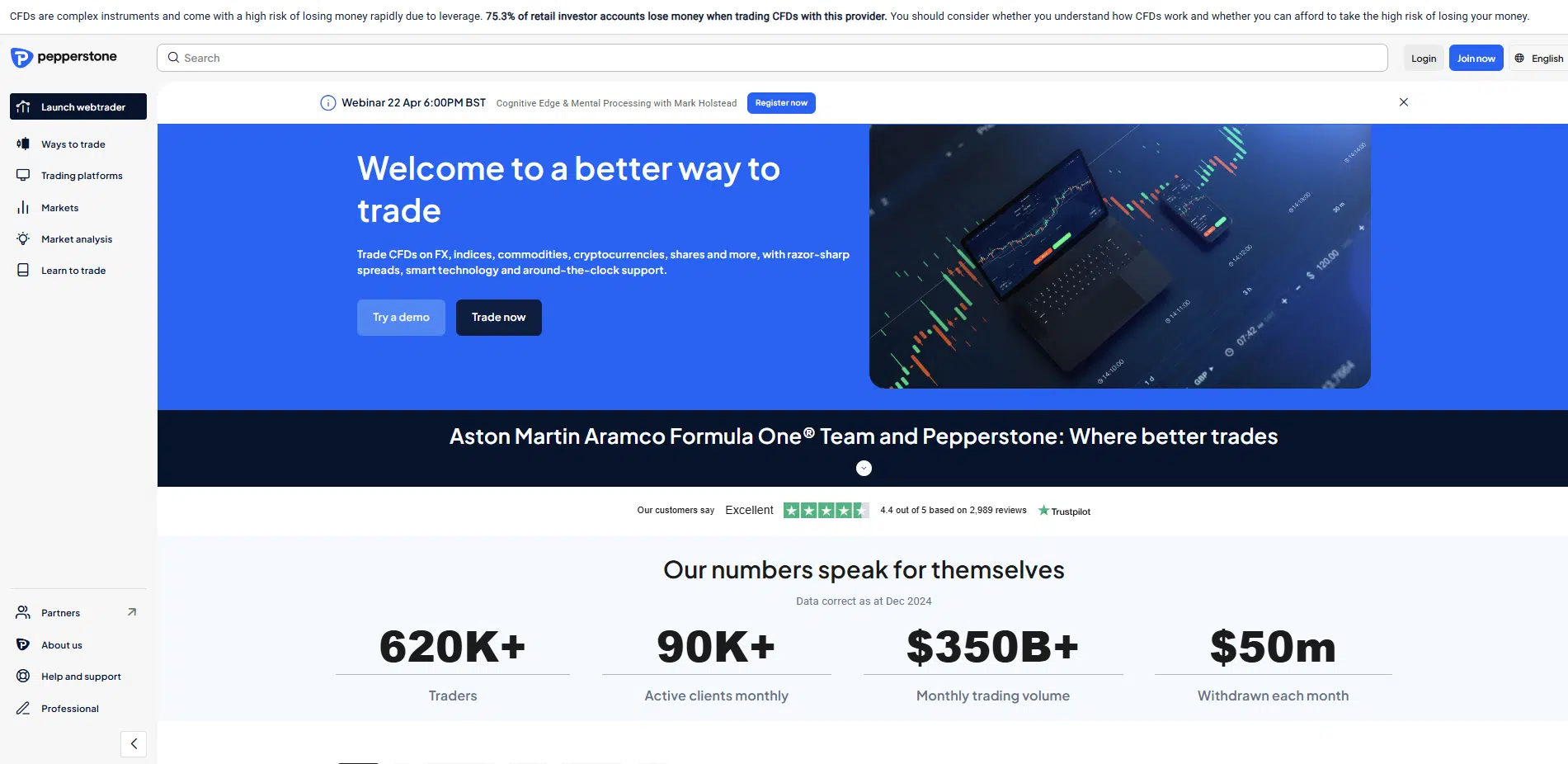
Pepperstone, founded in 2010, has positioned itself as one of the largest Forex and CFD brokers, helping over 400,000 retail trading accounts worldwide. It has earned several rewards for its exceptional services, notably receiving the “Best MT4 and MT5 Broker” award for 2025 by us.
Pepperstone operates under strict regulations from top-tier authorities like ASIC and FCA, reinforcing its dedication to providing a secure and trustworthy trading environment. The broker offers various trading platforms, including MetaTrader 4, MetaTrader 5, and cTrader, with features such as advanced charting and automated trading.
Account types cater to various trader needs. The Razor account, favoured by scalpers and users of Expert Advisors, offers spreads starting from zero pips with a small commission, while the Standard account incorporates commissions into the spread rate and is suitable for those preferring a straightforward approach to trading.
On the downside, it focuses on CFDs – no real stocks, shares, or crypto -, and it offers no interest your cash balances, a valued feature offered by other brokers.
Pepperstone is best for traders focused on CFDs/forex – it is even endorsed by the r/Forex subreddit -the largest forex community on the internet – alongside Interactive Brokers, which further attests to its credibility in the forex/CFD community.
Pros
- Quick customer support response times
- No fees for deposits, withdrawals, or account inactivity
- Competitive spreads in the Razor account with active trader rebates
- Higher leverage options are available depending on region and client categorization
Cons
- Limited to CFD trading; no direct asset ownership
- Higher Forex spreads in the standard account
- Crypto CFDs offerings are limited compared to competitors
- Limited educational resources
eToro at a glance
52% of retail CFD accounts lose money.
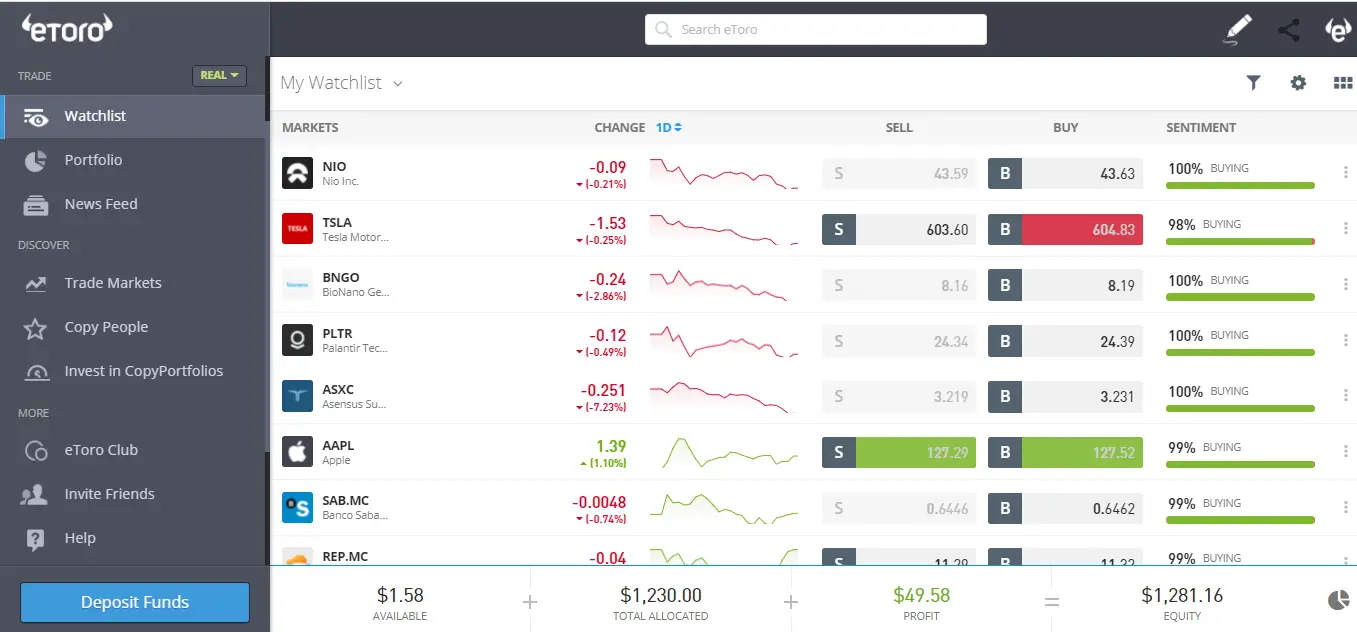
One of the best trading platforms in the UK is eToro, an international online broker with over 35 million users who trade stocks, forex, commodities, cryptocurrencies, CFDs, and ETFs. It is known for its social trading feature, which allows you to copy the trades of other experienced traders. There are thousands of verified traders on eToro, and you can pick the best trader based on past Return on Investment (ROI), risk profile, or other factors.
The eToro platform gives users access to over 3,000 financial instruments, including stocks and ETFs. Additionally, users can invest in ready-made investment portfolios (Smart Portfolios), a group of several assets or traders combined together based on a theme or strategy.
Plus, eToro offers commission-free stock and ETF trading in the UK (other fees apply).
Opening an account and depositing is easy, and you can even try it out with virtual money (a demo account). On the downside, spreads can be high for some products, and there is a withdrawal fee of $5.
eToro is fully regulated and supervised by top-tier regulators such as the UK’s Financial Conduct Authority (FCA) and the Australian Securities and Investments Commission (ASIC) in Australia. The subsidiary in Europe (the one you open an account), formerly known as “eToro (Europe) Ltd,” is authorised and regulated by the Cyprus Securities Exchange Commission (CySEC).
If you want to learn more, check out our eToro Review.
Pros
- Low stock trading fees (from $0 per trade)
- Commission-free ETFs (other fees apply)
- Social trading and other innovative products
- Wide variety of financial products
- Slick, modern, and easy for anyone to use
- European users have access to three account currencies: EUR, USD and GBP
- Top tier regulators
Cons
- Limited disclosed financial information
- Withdraw and inactivity fees
- Spread, overnight, inactivity, and currency conversion fees higher than average
- Doesn’t offer bonds, futures, or options
XTB at a glance
69-80% of retail CFD accounts lose money.
Founded in 2002, XTB is a major player in the brokerage industry with extensive worldwide experience, regulated by the Financial Conduct Authority (FCA) – plus other relevant regulatory bodies – and listed on the Warsaw Stock Exchange.
You can invest through xStation 5 and xStation Mobile in different investment products, such as stocks, ETFs, and CFDs on stocks, Forex, indices, commodities, and cryptocurrencies (this product offering may vary slightly from country to country). It offers a 0% commission on stocks and ETFs in the UK (plus on stock and ETF CFDs).
Opening an account and transferring money is a quick and hassle-free process. For beginners, it presents a demo account where you can trade as if it were real money to help you feel the investment platform firsthand, and you get access to educational tools. Intermediate and advanced investors will find plenty of technical and fundamental tools to help them better assess their investment decisions.
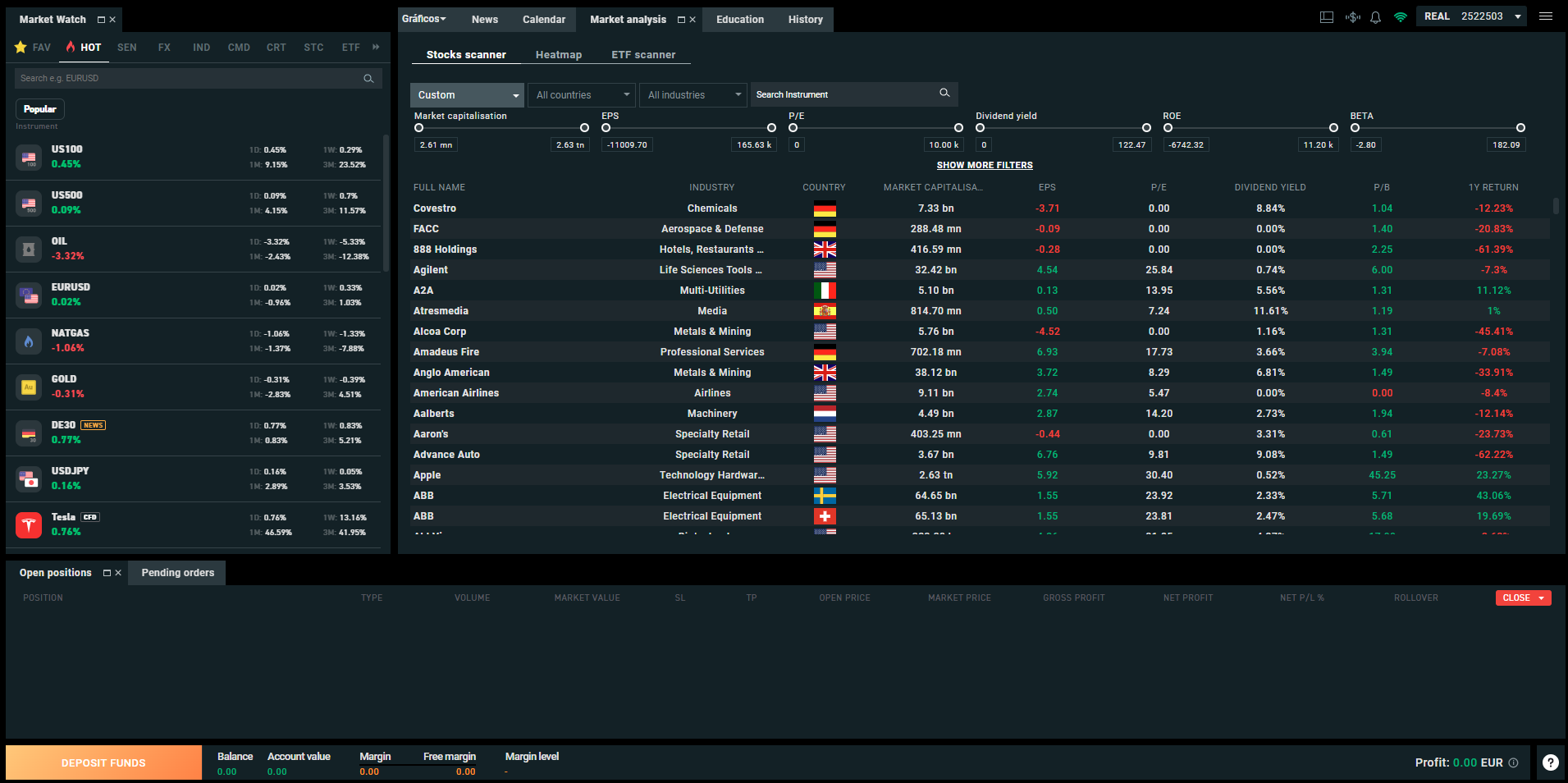
On the downside, you will face an inactivity fee of £10/month after one year of non-trading, and if you have not deposited in the last 90 days, it charges high commissions on CFDs of cryptocurrencies but low costs for Forex.
Want to know more about XTB? Check our XTB Review.
Pros
- Free stocks trading (only applicable to some countries)
- Customizable trading platform (charts and workspace)
- Low Forex Spreads
- Demo account
- No minimum account deposit
- Valuable education materials
- Top-tier Regulators
Cons
- Complex trading platform for a beginner
- High Stock CFD spreads
- Limited product portfolio
- Withdrawal fees for transfers below $100
- Inactivity fee (€10/monthly after 1+ year with no activity plus no deposit in the last 90 days)
Trading 212 at a glance
Capital at Risk. Sponsored Link. To get free fractional shares worth up to 100 EUR/GBP, you can open an account with Trading 212 through this link. Terms apply.
Founded in 2006, Trading 212 is a fintech based in London that aims to democratize the entire investment process through a simple mobile application. The company aims to do this by allowing anyone to invest in over 10,000 stocks and ETFs, Forex, commodities, CFDs, and cryptocurrencies. Over 5 million registered users.
In Trading 212, you will find commission-free stocks, ETFs and crypto trading, fractional shares, and even an automatic investment system. Opening an account is extremely quick and easy. On the downside, it shows limitations regarding available products, such as the lack of bonds and options. It charges a 0.15% currency conversion fee when buying assets in a currency different from your base account.

Within the app, you will notice two distinct sub-platforms: Trading 212 Invest, where you can trade a range of assets free of charge, and Trading 212 CFD, where you may trade leveraged financial products (CFDs).
On Trading 212 CFD, the currency conversion fee (FX fee) is higher (0.50%) than on Trading 212 Invest (0.15%).
The minimum deposit and withdrawal amounts are both €10. There are no deposit fees if you use bank transfer (other options include cards and Google/Apple Pay). For withdrawals, there is no fee, regardless of the method used.
As part of a current promotion, Trading 212 also offers a free fractional share worth up to €100, when you sign up and deposit only €10.
In terms of safety, every Trading 212 is regulated by the following regulators: the Financial Conduct Authority (FCA), the Cyprus Securities and Exchange Commission (CySEC), the Australian Securities and Investments Commission (ASIC) and the Federal Financial Supervisory Authority (BaFin).
If you want to learn more, check our Trading 212 Review.
Pros
- Commission-free real stock, ETFs and crypto trading (other fees may apply. See terms and fees)
- AutoInvest & Pies feature (execution-only service, not financial advice)
- Fast and easy account opening process
- Demo account
- Top Tier Regulators
- Free fractional shares worth up to €100
- High interest on uninvested cash
Cons
- Limited product portfolio (no Options, Bonds, Mutual Funds or Futures)
- No relevant Fundamental tools
- 0.15% of Foreign exchange fees
Risk disclaimer: When investing, your capital is at risk and you may get back less than invested. Crypto-assets are high-risk and volatile. You could lose your invested capital, and these assets are not covered by protection schemes. Make sure you understand the risks before investing and whether you can afford to lose your money. Past performance doesn’t guarantee future results. Pies & Autoinvest is an execution-only service. Not investment advice or portfolio management. Automatic investing refers to executing scheduled deposits. You are responsible for all investment and rebalancing decisions.
DEGIRO at a glance
Investing involves risk of loss.
Founded in 2013, DEGIRO is a low-cost brokerage firm that has become very popular for its low fees. With over 3 million users, the innovative platform is widely known for its “do-it-yourself” philosophy, where you have everything you need to start investing on your own.
It offers a wide range of financial assets for trading, including stocks, ETFs, bonds, options, futures contracts, warrants, investment funds, and leveraged products. For instance, you can trade some ETFs for a flat fee of £1, with no minimum amount required.
The web trading platform is basic but efficient and straightforward to use. In a matter of minutes, you get used to it. The same applies to its mobile app. On the downside, there is no significant fundamental research, a €2.50 annual connectivity fee applies, and there are no pricing alerts.
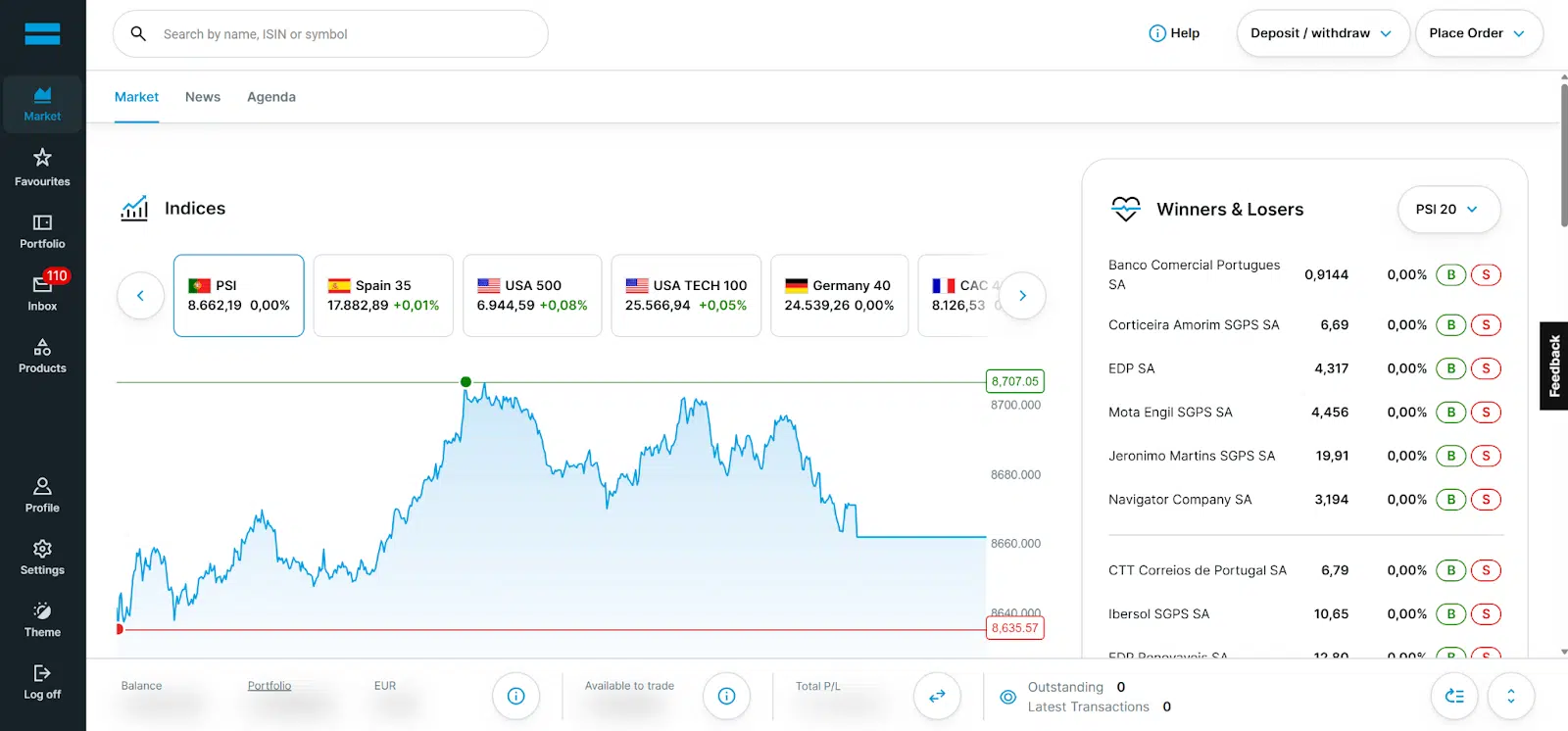
Regarding regulation, DEGIRO is the Dutch branch of flatexDEGIRO Bank AG (a German-regulated bank). It is subject to oversight by the DNB and the AFM (Dutch Authority for the Financial Market).
However, in the unlikely event that the segregated assets cannot be returned to clients, DEGIRO falls under the German Investor Compensation Scheme, which compensates any losses from non-returned assets up to 90% (with a maximum of €20,000). Furthermore, any money deposited in a DEGIRO Cash Account with flatexDEGIRO Bank AG is guaranteed up to €100,000 under the German Deposit Guarantee Scheme.
Still any doubts? Go through our DEGIRO Review!
Pros
-
ETF Core Selection list (external fees apply)
-
User-friendly web and mobile app
-
Wide range of investment options
-
Education material: Investor’s Academy and Investing with DEGIRO
-
Low overall commission structure
- No account opening, inactivity, or withdrawal fees
Cons
-
0.25% currency conversion fee (charged if invested in a different currency than your base currency)
-
£1 flat handling fee (charged in most transactions)
-
£2.50 connectivity fee (paid annually), per exchange where you’re invested
-
No ISA account (for UK residents)
- No interest paid on cash balances
Webull UK at a glance
Investing involves risk of loss.
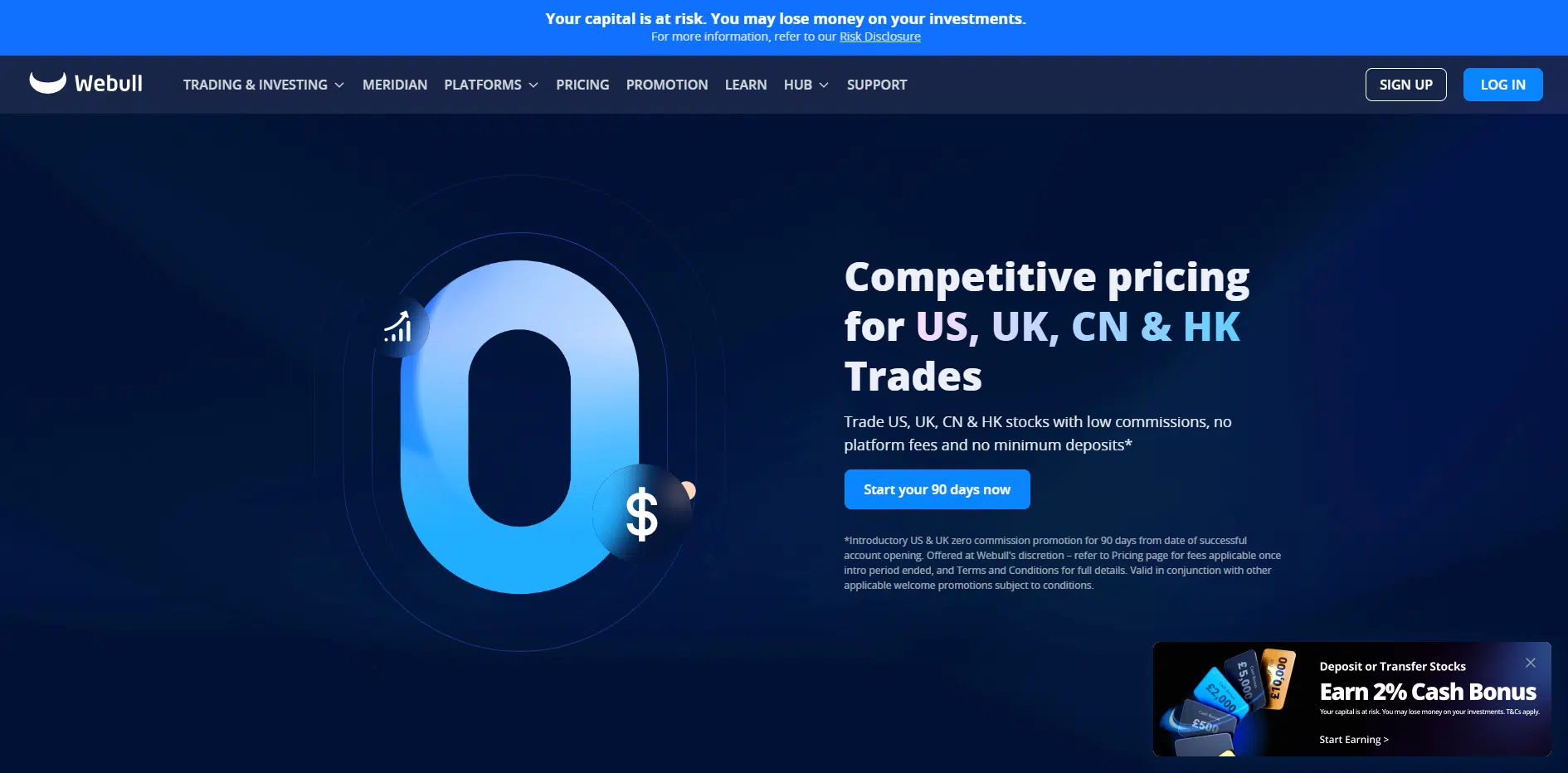
Founded in 2017 in the US and launched in the UK in July 2023, Webull joins the British brokerage industry with low commissions. At the moment, it only offers access to US stocks (over 10,000). New users get a free 2% match bonus when depositing or transferring stocks.
As a UK user, you also have access to a demo account where you can buy and sell as you would with real money. You can only deposit in pounds sterling (GBP), which means that when investing in US stocks (traded in US dollars), you will be charged a currency conversion fee of 0.35%.
The offering of fractional shares is also crucial since most US stocks trade at high market values per share. Still, the limited range of asset types (no ETFs, bonds, options,…) and only offering a general investment account (no tax-efficient accounts like Stocks and Shares ISA) may affect users also looking for broader solutions.
Finally, Webull UK is authorised and regulated by the Financial Conduct Authority (FCA). As such, it is also under the Financial Services Compensation Scheme (FSCS) protection, which protects your money (assets + cash) up to £85,000.
Pros
- Acessible and responsive platform
- Low spreads
- No dealing commissions
- Demo Account
- Top-tier regulators
Cons
- No ETF offering
- Inactivity fee ($10 per month after no login activity in 3 months)
- High overnight funding fees
- Very little research and education provided
Saxo at a glance
62% of retail CFD accounts lose money.
Launched in 1992, Saxo Bank is one of the most solid financial entities in the brokerage industry, with a proven track record of success. It lets you trade over 71,000 financial instruments through their trading platforms: SaxoTraderPRO (for PC) and SaxoTraderGO (on mobile).
The wide range of cash and margin trading products across global markets includes stocks, ETFs, bonds, mutual funds, cryptos, options, futures, CFDs, forex, and more! Saxo Bank presents its advanced research tools for “Buy and hold or trade on leverage”.
The Saxo Bank account tiers are the following:
- Classic: No minimum deposit is required, giving you access to tight spreads and customer and technical support 24/5.
- Platinum: A minimum £200,000 deposit is required. In addition to Classic features, it also lowers trading prices by up to 30% and prioritizes local-language customer support.
- VIP: A minimum £1,000,000 deposit is required. Here, you will find the best prices, access to trading experts, and exclusive event invitations.

The pricing structure will vary according to your account tier. For instance, a US stock order will be 0.08% of the trade value, with a minimum of $1 in Classic. However, within the VIP tier, the same trade would be 0.03% of the trade value with the same minimum of $1. Plus, for accounts with stocks, ETFs/ETCs, or bond positions, a custody fee of up to 0.15% p.a. will apply.
The listed prices are approximate and will differ based on the resident country. For precise pricing details, refer to the platform’s trade tickets for a comprehensive overview.
Saxo Bank is a fully licensed European bank under the supervision of the FCA in the UK, through Saxo Capital Markets UK Ltd.
Do you want to know more about Saxo? Check out our Saxo review!
Pros
- Excellent research materials
- Outstanding trading platforms (SaxoInvestor and SaxoTrader)
- Extensive range of investment products and commercial offers
- Long track record
- Supervised by worldwide top-tier regulators
Cons
- $0 in most countries; higher minimums in some regions (e.g. $5,000 in MENA)
- Fees higher than average
- Fee structure is complex
- Does not accept US residents
Freetrade at a glance
With over 1.5 million users, Freetrade is a UK-based online brokerage firm established in 2016. It offers a straightforward and user-friendly platform that enables individuals to easily invest through four account types: stocks and shares ISA, general investment accounts (GIAs), self-invested personal pension(SIPP) and UK Treasury Bills (for some reason, Freetrade includes this last one in their “accounts” tab).
The pricing model of Freetrade is straightforward: investors can trade UK and US stocks, as well as ETFs, without paying any commission in any selected plan, including the “basic” one. The other plans, “Standard” and “Plus,” require a monthly payment starting at £4.99 and £9.99, respectively. These plans include higher interest on uninvested cash (up to 5%), advanced fundamental data, and lower currency conversion fees (from 0.99% to 0.39%).
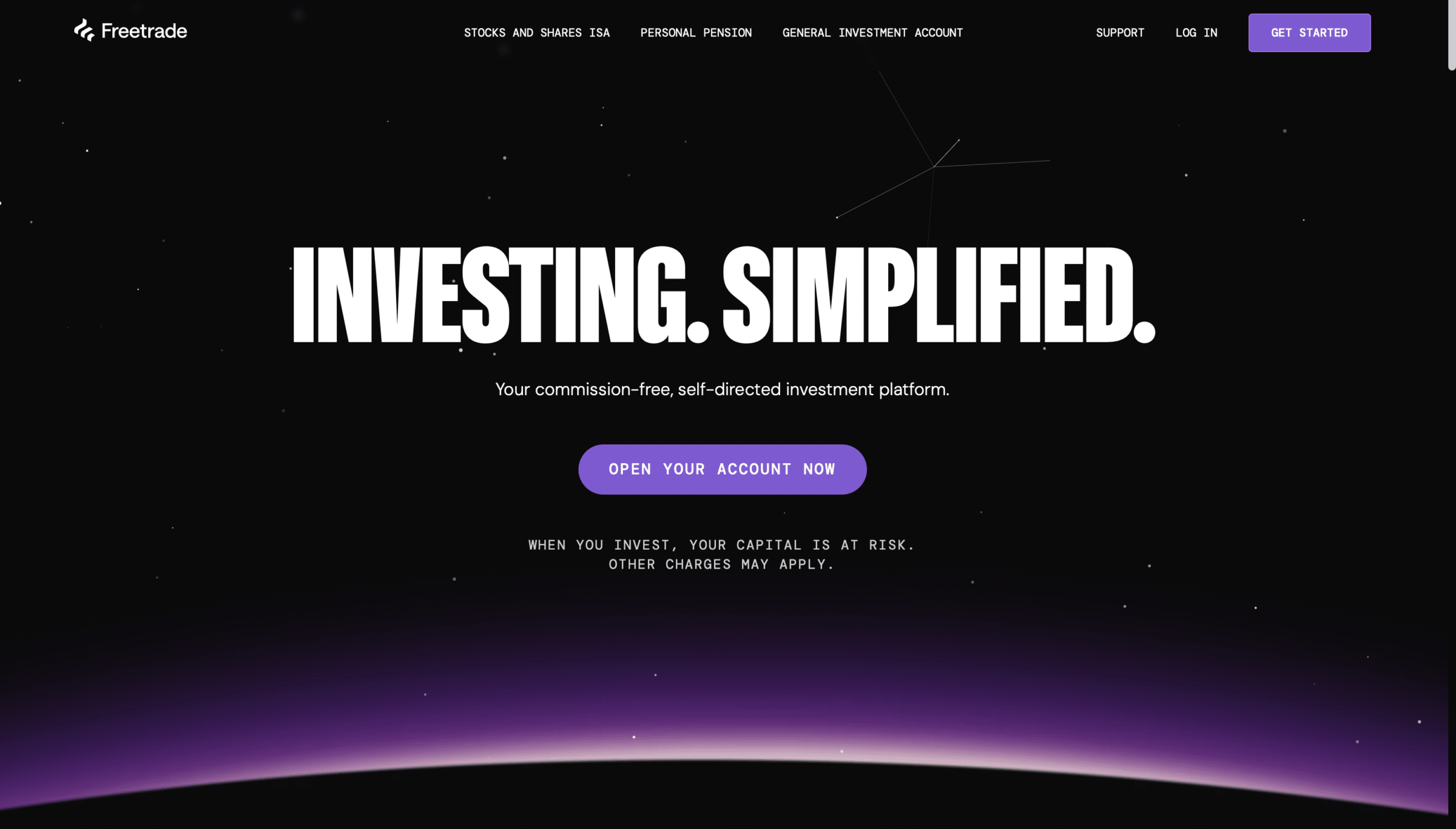
New users can sign up for a free share worth up to £100. Freetrade also supports fractional investing in US stocks only, allowing users to own shares in high-value stocks (such as Apple, Google, and Amazon). On the education side, it offers a valuable section called “Become a better investor”, which will help you get an introduction to some financial concepts.
A potential drawback is that Freetrade focuses primarily on the UK, US and European markets, which might limit investors interested in broader international exposure. Additionally, Freetrade does not offer a demo account for new users to practice trading.
Finally, Freetrade is authorised and regulated by the UK Financial Conduct Authority (FCA), ensuring a high level of security and compliance with financial regulations. The clients’ assets and money are in segregated accounts (meaning no connection with the Freetrade balance sheet), and every client’s assets are protected under the Financial Services Compensation Scheme (FSCS), which means you are entitled to compensation of up to £85,000 if something goes wrong with Freetrade.
If you want to learn more, check out our Freetrade Review.
Pros
- Free stock and ETF trading
- GIA, ISA, and SIPP
- No inactivity, account, or withdrawal fees
- No minimum deposit
- Great community (forum) – where users share ideas and learn about investing
- Nice and user-friendly app
Cons
- Limited asset classes (only stocks, ETFs, REITs, and investment trusts)
- Limited research and education
- Graphs and portfolio tracking still need some development
- No phone support – however, live chat support is very fast and efficient
InvestEngine at a glance
When investing your capital is at risk.
With more than 200,000 investors, InvestEngine is a UK-based investment platform launched in 2020, designed to make low-cost ETF investing accessible to everyone. It offers two main ways to invest: DIY portfolios, where users choose their own ETFs, and Managed portfolios, where InvestEngine builds and rebalances a diversified portfolio on the investor’s behalf. Investors can open General Investment Accounts (GIAs), Stocks and Shares ISAs, and Business accounts, making it suitable both for individuals and limited companies looking to invest excess cash.
One of InvestEngine’s biggest strengths is its pricing model. DIY investing is completely commission-free: there are no trading fees, no custody fees, and no platform charges. Managed portfolios come with a single 0.25% annual management fee, which remains one of the lowest in the market. Since InvestEngine specialises exclusively in ETFs, it also offers powerful tools such as a portfolio builder, automatic rebalancing, and commission-free ETF buy/sell orders, including fractional units, so you can invest with any starting amount.
To help new users get started, InvestEngine typically offers welcome bonuses. Although InvestEngine focuses purely on ETFs, ideal for long-term, diversified investing, this means it does not support individual stocks, mutual funds, bonds, or crypto assets. Additionally, there is no SIPP currently available, which may be a drawback for retirement-focused investors.
On the educational side, the platform provides a growing library of guides, market explainers, and a helpful portfolio analysis dashboard that breaks down allocation, risk exposure, and diversification. Its clean and minimalist interface makes it easy for beginners to understand what they hold and how their portfolio is performing.
From a safety perspective, InvestEngine is authorised and regulated by the UK Financial Conduct Authority (FCA). Client money and assets are held in segregated accounts, meaning they are kept fully separate from InvestEngine’s finances.
If you want to learn more, check out our InvestEngine Review.
Pros
- Simple and intuitive investment platform
- No ISA fees
- No deposit or withdrawal fees
- Fractional Investing
- One-click rebalancing
- Auto-invest
Cons
- Only offers ETFs: no bonds, shares, and other products
- No interest on cash balances (still you can invest in money market funds)
Are these platforms authorised by the Financial Conduct Authority (FCA)?
Every broker in our article is authorised by the FCA, the UK’s financial regulator responsible for supervising firms that provide investment services.
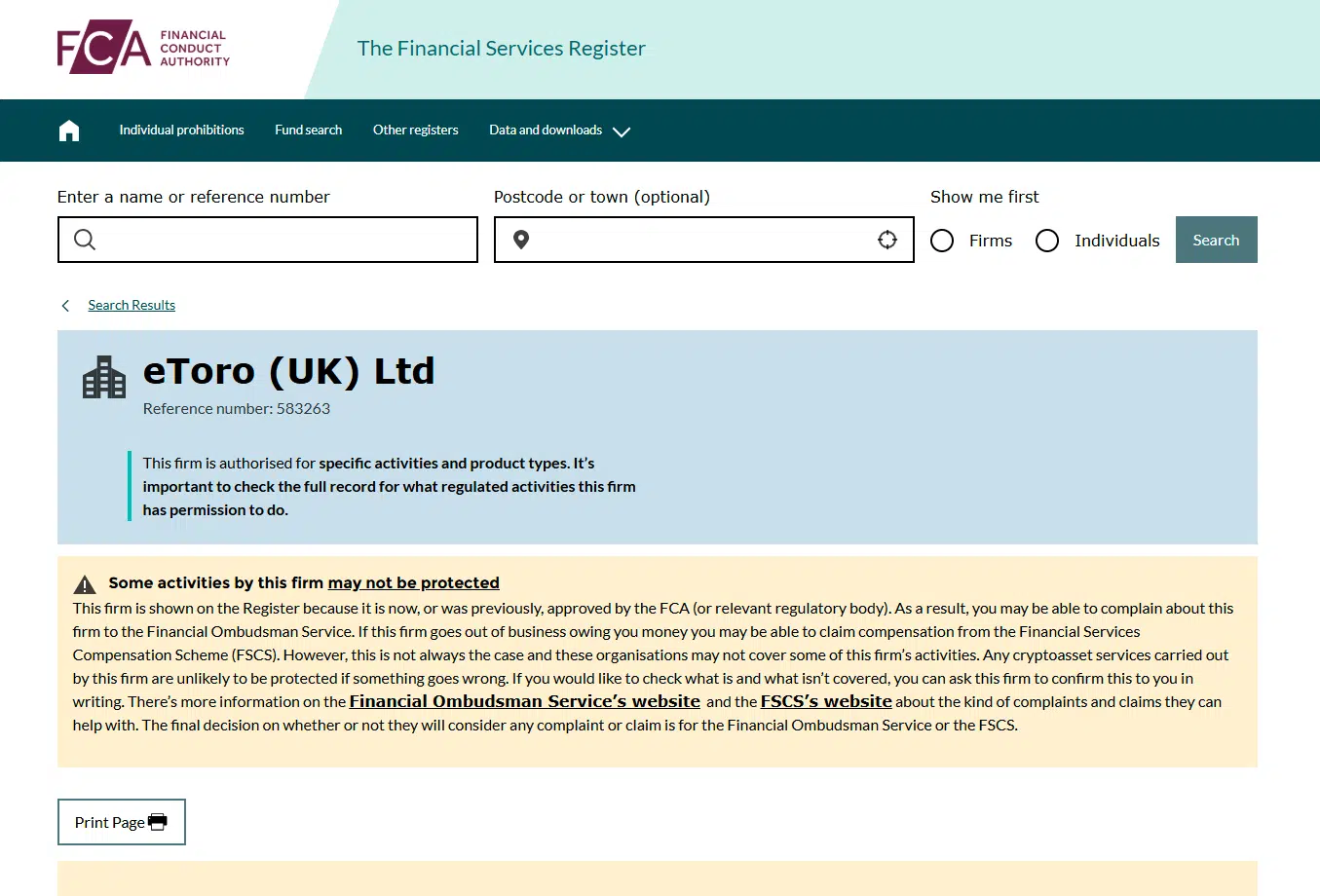
For example, eToro operates in the UK under its entity “eToro (UK) Ltd”, which is directly authorised and regulated by the FCA.
If you visit the FCA Financial Services Register and search for “eToro,” you will see the details associated with eToro (UK) Ltd, including its permissions and regulatory status.
How to buy stocks in the UK (Step-by-step)
Buying stocks in the UK involves several steps. Here’s a step-by-step guide:
- Educate Yourself: Before investing, educate yourself about the stock market, various investment options, and understand your risk tolerance.
- Create a Financial Plan: Develop a financial plan that includes your investment goals, time horizon, and risk tolerance. This will help guide your investment decisions.
- Choose a Broker: Select a reputable stock brokerage platform. Popular options in the UK include Interactive Brokers, Trading 212, Freetrade and so on. Consider factors such as fees, user interface, and available features.
- Open a Brokerage Account: Once you’ve chosen a broker, you’ll need to open an account. This typically involves providing personal information, proof of identity, and linking a bank account.
- Deposit Funds: Fund your brokerage account with the amount you’re comfortable investing. Most brokers allow bank transfers for this purpose.
- Research Stocks: Conduct thorough research on the stocks you’re interested in. Consider the company’s financial health, performance, and future prospects.
- Place an Order: Once you’ve decided on the stocks to buy, log in to your brokerage account and place an order. You can choose between market orders (buy at the current market price) or limit orders (set a specific price).
- Review and Confirm: Before confirming your order, review the details to ensure accuracy. Confirm the transaction.
- Monitor Your Investments: Keep an eye on your investments regularly. Monitor market trends, company news, and any developments that might affect your stocks.
- Consider a Diverse Portfolio: To manage risk, consider diversifying your portfolio by investing in different sectors and types of assets.
- Stay Informed: Stay informed about market trends, economic developments, and any changes in your chosen stocks. Continuous learning is key to successful investing.
Remember, investing in stocks always carries risks, and past performance is not indicative of future results. It’s advisable to consult with a financial advisor if you’re uncertain about your investment decisions.
Bottom line
As we finish exploring the best brokers in the UK, it’s clear that you have diverse options. Whether you prefer eToro’s social trading, Interactive Brokers’ advanced tools, or Trading 212’s low fees, there is something for everyone.
Remember, the right choice depends on what you need and like. Take a close look at each option, think about what matters most to you, and get ready for a successful investment journey in the UK. Good luck with your investments!
Other FAQs about brokers in the UK
What are the types of investments you can make with a brokerage account?
You can trade stocks, ETFs, Forex, Bonds, Futures and CFDs on stocks, ETFs, indices, cryptocurrencies, commodities.
What is the cheapest stock broker in the UK?
Trading 212 is widely regarded as one of the cheapest stock brokers in the UK, offering a low-cost platform with competitive fees for trading stocks, ETFs, and other financial instruments.
Is Forex trading legal in the UK?
Yes, forex trading is legal in the UK. It is regulated by the Financial Conduct Authority (FCA). Traders can engage in forex trading through authorized and regulated brokers in compliance with UK financial laws.
Where to invest in the UK?
Consider investing in diverse options like stocks, bonds, or real estate in the UK. Evaluate your risk tolerance, financial goals, and time horizon. Consult with financial advisors or use reputable online brokers like eToro or Interactive Brokers to access various investment opportunities in the Dutch market.