Investing in the stock market is easier than ever, thanks to a wave of online trading apps. But with so many options in the Philippines, how do you choose the right one?
We’ve tested and compared the top apps to help you cut through the noise and find the best fit for your needs.
Best stock trading apps in the Philippines
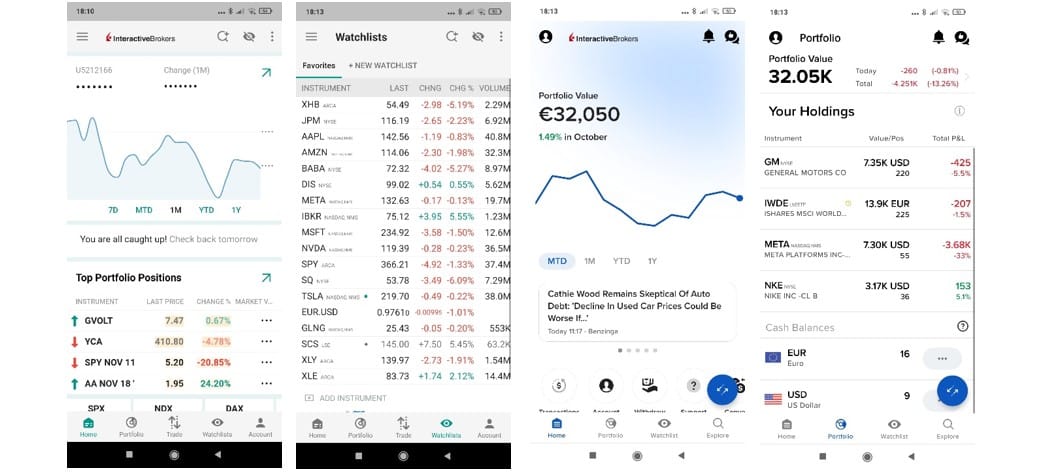
Interactive Brokers: Best trading app overall
Online broker with a sophisticated trading platform that offers a wide range of products. The company, founded in the US, provides the app IBKR GlobalTrader, ideal for beginners.
XTB: Best for beginners
Headquartered in Poland and listed on the Warsaw Stock Exchange, XTB offers access to a range of CFD on stocks on its trading app where you can also trade Forex at a competitive price.
Saxo Bank: Best trading app for advanced traders
Full-service broker who offers stocks, ETFs, bonds, derivatives, crypto, and other products. You can access 36 different markets overseas from the Philippines using their powerful trading apps.
Pepperstone: Best app for CFDs trading
Broker founded in 2010 that offers a range of investment products, including CFDs on stocks, forex, indices, commodities, cryptocurrencies, and ETFs. Their trading app is popular due to its user-friendly interface, competitive prices, and access to the global financial markets.
Best stock trading apps in the Philippines compared


#1 Interactive Brokers at a glance

Interactive Brokers has proven to be one of the most reliable brokers in the market. Founded in 1978 and publicly listed on NASDAQ (ticker: IBKR), the company has weathered every major financial crisis since its founding – a track record that makes it a well-established and trustworthy choice for Filipino investors, regulated by multiple top-tier authorities worldwide. Clients in the Philippines are typically served by Interactive Brokers Singapore Pte. Ltd., regulated by the Monetary Authority of Singapore (MAS).
IBKR offers powerful trading apps with sophisticated tools, an exceptionally wide product range (stocks, ETFs, options, futures, bonds, currencies, and more across 150+ markets in 30+ countries), and competitive low pricing. The broker provides several different mobile apps and web platforms suited to different experience levels. The IBKR GlobalTrader mobile app is user-friendly and well suited to beginners – it simplifies the investing experience without sacrificing the powerful execution the broker is known for.
If you want to take full advantage of IBKR’s deeper tools, you can use the IBKR Mobile app, a complete and sophisticated trading app where you can do far more than just buy and sell stocks. Because the features can be overwhelming for newer investors, we’d recommend IBKR GlobalTrader if you don’t have much experience yet.
Alongside the mobile apps, IBKR also offers a desktop application (Trader Workstation) and a web-based platform with advanced trading tools, giving you access to global financial markets – including major US exchanges, the Philippine Stock Exchange (PSE), Singapore (SGX), Hong Kong (HKEX), Japan (TSE), and most major European and Asian markets. Overall, we believe Interactive Brokers offers some of the best stock trading apps in the Philippines – whatever your experience level, you’ll likely find an app that suits your needs.
Check out our Interactive Brokers review for a closer look at this broker.
#2 XTB at a glance

69-80% of retail CFD accounts lose money.
XTB is a broker founded in 2002 in Poland and listed on the Warsaw Stock Exchange. In the Philippines, XTB operates through its International entity (XTB International Limited), authorised and regulated by the Financial Services Commission of Belize (IFSC). XTB is also licensed across multiple jurisdictions by top-tier authorities including the FCA (UK), KNF (Poland), CySEC (Cyprus), and DFSA (Dubai), and serves over 1.9 million clients globally.
The award-winning trading platform xStation 5 (available on web, desktop, and mobile) lets you trade a wide range of instruments, with access to powerful technical analysis tools, comprehensive educational resources, and social-trading-style features. For Filipino clients trading via the International entity, the product range is primarily CFDs on stocks, ETFs, indices, forex, commodities, and cryptocurrencies – meaning you don’t take direct ownership of the underlying assets but gain leveraged exposure to their price movements. Importantly, CFDs are complex, higher-risk instruments and a majority of retail investor accounts lose money trading CFDs.
With no commission on stock CFDs (costs are built into the spread), no minimum deposit, and a free demo account to practise with, XTB is a strong, reliable option for both beginners and more experienced investors – which places it third on our list of the best stock trading apps in the Philippines. For more, check our XTB review.

#3 Saxo at a glance

62% of retail CFD accounts lose money.
Saxo is a Danish multi-asset broker founded in 1992 that operates in the Philippines and is a reliable option for both advanced traders and beginners, offering strong safety, competitive pricing, and powerful tools. In 2025, Saxo was majority-acquired by the Swiss private bank J. Safra Sarasin, reinforcing its long-term stability.
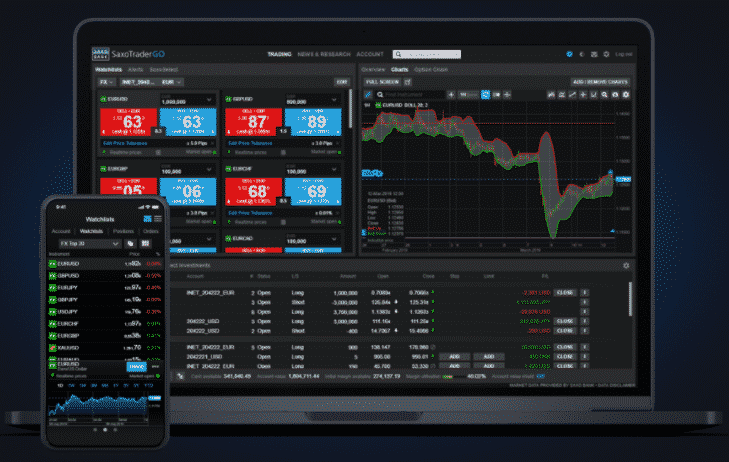
Saxo now offers two main trading platforms designed to meet the needs of different types of investor:
- SaxoInvestor: a simple, user-friendly investment platform ideal for beginners and long-term investors, with curated stock lists, trending investment themes, and easy access to stocks, ETFs, mutual funds, bonds, and managed portfolios across desktop, tablet, and mobile.
- SaxoTrader: Saxo’s flagship platform for active and advanced traders, unified from the former SaxoTraderGO and SaxoTraderPRO in 2025. It offers a fully customisable workspace across mobile, web, and a downloadable professional client – with features like algorithmic orders, one-click trading, comprehensive charting, options chains, and advanced multi-screen layouts (supporting setups across multiple monitors).
With strong educational resources, competitive pricing, and an impressive range of more than 71,000 tradable instruments across stocks, ETFs, bonds, forex, commodities, options, and futures, Saxo earns second place on our list of the best stock trading apps in the Philippines. Notably, Saxo removed its minimum deposit requirement for the entry-level Classic tier in 2024 – so new clients can now start investing with no minimum (a significant change from its previous $2,000 minimum). Higher tiers (Platinum and VIP) unlock lower fees and additional premium services, with eligibility based on portfolio size.
Interested in learning more? Read our Saxo review.
#4 Pepperstone at a glance

72-95% of retail CFD accounts lose money.
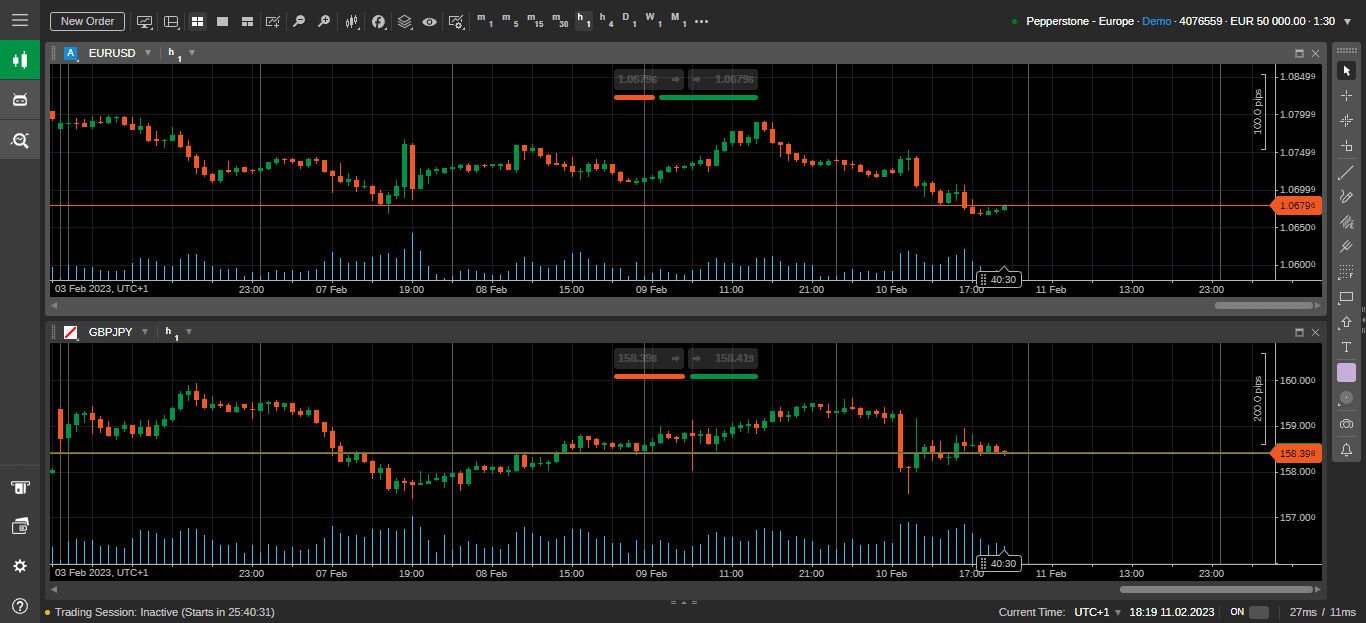
Pepperstone is an Australian brokerage company founded in 2010 and regulated by multiple top-tier authorities including the FCA (UK), ASIC (Australia), CySEC (Cyprus), BaFin (Germany), DFSA (Dubai), and SCB (Bahamas), serving over 400,000 retail trading accounts worldwide. Filipino clients are typically served by Pepperstone Markets Limited, the broker’s SCB-regulated Bahamas entity. Pepperstone supports the popular MetaTrader 4 and 5 platforms, alongside cTrader and TradingView integration – available on iOS, Android, web, and desktop – giving you flexibility across the most widely used trading platforms.
The broker also provides access to social trading features through DupliTrade, where you can automatically copy trading strategies from other traders via your MetaTrader account, plus a free demo account to practise with.
One important caveat: Pepperstone is a CFD broker. CFDs are leveraged instruments that need to be traded with care – they can magnify both gains and losses, and a majority of retail investor accounts lose money trading CFDs. They’re best suited to experienced traders who fully understand the risks of leverage, not to long-term buy-and-hold investors looking for real share ownership.
Interested in learning more? Read our Pepperstone review.
Methodology
When putting this list together, our goal was to help investors in the Philippines make an informed choice when picking the best stock trading app. Each app we’ve presented has its own strengths, and we’ve tried to provide a diverse list that suits different investor profiles. Here are the criteria we considered:
- Pricing: price isn’t the only factor when choosing a trading app, but it’s an important one – you don’t want to pay more for a service when you can get equivalent quality at a lower cost. Watch for commissions, spreads, FX conversion fees, and any inactivity charges.
- Educational resources: high-quality educational content is a real advantage, especially for beginners who can build their skills before putting real money at risk.
- Range of products and markets: does the app offer real stocks and ETFs, or only CFDs? Does it support fractional shares, bonds, or cryptocurrencies? Does it provide access to local exchanges like the Philippine Stock Exchange (PSE), alongside global markets such as US, Hong Kong (HKEX), and Singapore (SGX)?
- Customer service: whichever app you choose, problems will occasionally come up – so it’s important to pick a broker whose support team can actually help when they do, ideally during the hours you trade.
- The trading app itself: we considered each platform’s overall functionality, usability, mobile experience, and standout features.
- Security and regulation: every platform on this list is regulated by top-tier authorities, with client assets held in segregated accounts and, where applicable, additional investor protection schemes.
What is the difference between a stock and a stock CFD?
While the stock gives you a property right over a share of the company, the CFD does not. A stock CFD is a derivative contract in which the underlying asset is the stock, and the broker promises to pay you back the difference in value between when you opened the position and when you close it. CFDs have a leverage effect: if you buy a stock CFD and its price goes down, you will need to borrow money from the broker to keep the position open. This makes the instrument a risky option that is not suitable for beginners.
For more details, read our article “CFDs vs real shares“.
Bottom line
To summarize, here’s the list of “Best stock trading apps in the Philippines”:
Interactive Brokers
Best OverallXTB
Best for beginnersSaxo Bank
Best for advanced tradersPepperstone
Best app for CFD trading
Choosing the right stock trading app in the Philippines can be tough.
We’ve helped many people in the same spot, and we’re here to help you too. Below, we highlight some of the best trading apps, comparing features and strengths to guide your decision.
Remember: trading can lead to financial freedom, but it also comes with risks. Study, know your profile, and invest wisely.