Widely known in Europe, Trading 212 has attracted the attention of many Belgian investors, offering interest on uninvested cash, a slick and modern app, low commissions, and a free fractional share signup bonus.
Want to know if Trading 212 is available in Belgium, why Belgium is treated differently from every other EU country, and which alternatives Belgian investors can actually use? We’ve got you covered.
Is Trading 212 available in Belgium? 🇧🇪
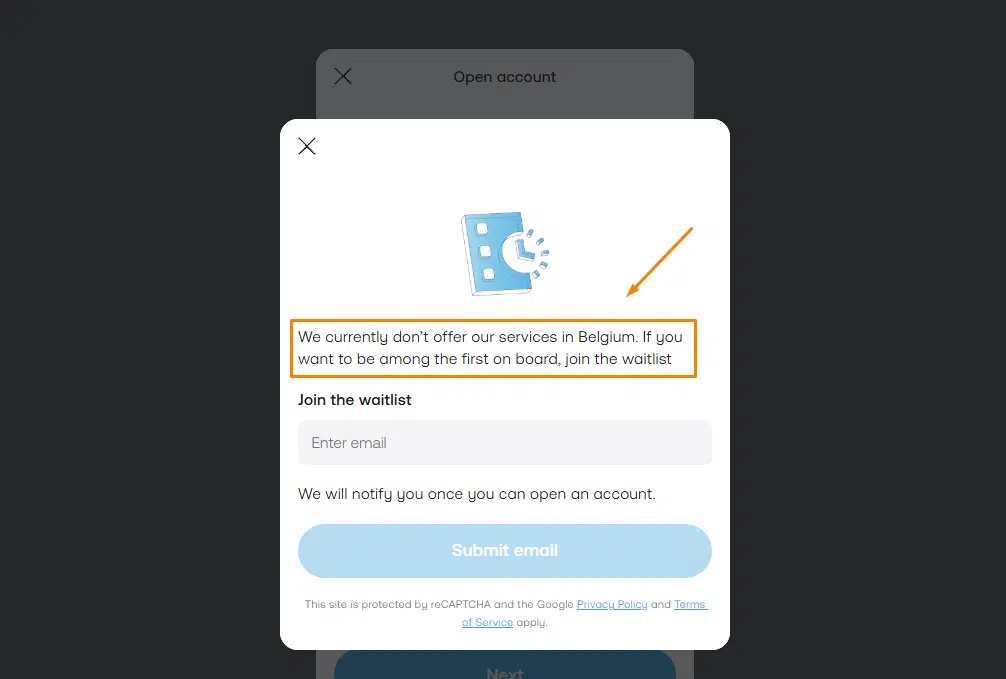
No. Trading 212 does not currently onboard new clients resident in Belgium.
The platform is widely used across the rest of Europe, which makes this look arbitrary, and Belgium is in fact the only EU country where Trading 212 blocks registrations. Some Belgian residents who opened accounts before the block still hold them, but new sign-ups are not accepted.
The company has acknowledged the situation and keeps an open waiting list for Belgian investors, though it has not published a date or committed to opening.
Why is Belgium treated differently?
Trading 212 has not published a detailed explanation, but the Belgian regulatory environment is unusual in ways that make the country awkward for app-based brokers, and the same pattern shows up elsewhere: XTB also lists Belgium as its only restricted EU market.
Three features stand out:
- The 2016 ban on leveraged retail products. A FSMA regulation prohibits the distribution of CFDs, binary options and similar leveraged instruments to Belgian retail clients. For a broker whose model pairs a commission-free Invest account with a CFD arm, that removes part of the business in a single market;
- Local tax obligations at the broker level. Belgium levies a stock exchange tax (taxe sur les opérations de bourse, or TOB) on every transaction, and Belgian investors generally expect their broker to withhold and remit it. Foreign brokers rarely do, which shifts the paperwork onto the client and makes the product less attractive locally;
- Reporting requirements. Belgian residents must declare foreign securities accounts to the Central Point of Contact at the National Bank of Belgium and on their annual tax return, adding friction that does not exist in most neighbouring countries.
None of this makes serving Belgium impossible, and plenty of brokers do. It does mean the market needs dedicated work for a comparatively small number of clients, which is the likeliest reason it keeps ending up at the back of the queue.
Trading 212 alternatives in Belgium
- Interactive Brokers: best overall
- Saxo: best for experienced investors
- Lightyear: best for beginners and interest
One thing to weigh before choosing, since it is specific to Belgium: none of these three withholds the TOB for you, so you handle the declaration yourself. Belgian domestic platforms such as Bolero, run by KBC, do it automatically. That convenience comes at a higher cost per trade, so the trade-off is admin against fees, and which side wins depends on how often you trade and how much you dislike paperwork.


62% of retail CFD accounts lose money.

Terms apply, seek guidance if necessary. When you invest, your capital is at risk.
What a Belgian investor should check before opening a foreign account
Whichever broker you pick, these obligations follow you rather than the platform:
- TOB (taxe sur les opérations de bourse). A transaction tax applies to purchases and sales, at rates that vary with the instrument. If your broker does not withhold it, you file and pay it yourself, within the deadline that applies to foreign accounts;
- Reynders tax. A withholding tax applies to the interest component of certain bond-heavy funds when you sell. It is a common surprise for investors who assumed only dividends were taxed;
- Withholding on dividends. Belgian withholding applies to dividend income, with a partial exemption available on certain dividends via your annual return;
- Account declaration. Foreign securities accounts must be reported to the Central Point of Contact at the National Bank of Belgium and mentioned in your tax return;
- Securities account tax. An annual tax applies to securities accounts above a threshold value, foreign accounts included.
None of this makes a foreign broker a bad choice, and many Belgian investors use one happily. It does mean the cheapest platform on paper is not automatically the cheapest in practice, and it is worth speaking to an accountant if the amounts are meaningful. Rates and thresholds change, so confirm the current position on the FPS Finance site before acting.
Conclusion
If you want to open a Trading 212 account from Belgium, you are out of luck for now. Joining the waiting list costs nothing, but there is no published timeline, so we would not plan around it.
The good news is that Belgian investors are not short of options. Interactive Brokers gives you the widest market access, Saxo suits more experienced investors, and Lightyear is the closest in spirit to what draws people to Trading 212 in the first place. If handling the TOB yourself is a dealbreaker, a domestic platform is worth a look instead.
Explore their sites and decide for yourself. If you haven’t found a match, you can still look at our comparison of online brokers available by country.
Risk disclaimer: when investing, your capital is at risk and you may get back less than invested. Past performance doesn’t guarantee future results. This article is information only and is not investment or tax advice.