
Futures trading is an increasingly popular investment option among Malaysians looking to take positions on the future prices of commodities, currencies, equity indices, and other financial instruments. However, finding the right online platform to trade on can be challenging, particularly when balancing local Bursa Malaysia Derivatives access with global market exposure.
That’s where we come in. We’ll compare the best futures brokers’ fees, features, and trading platforms, providing the essential information you need to choose the one that best fits your requirements.
Futures are leveraged instruments, so a small move in the underlying price can produce large gains or losses, including losses larger than your initial margin. Read on to discover the top futures brokers in Malaysia, updated for October 2026.
The best futures brokers in Malaysia
- Interactive Brokers: Best overall futures broker with its iconic Trader Workstation platform.
- Saxo: Best for a wide-ranging futures offering through its SaxoTrader platform.
- Kenanga: Best for Malaysian futures through its KDF TradeActive platform.


62% of retail CFD accounts lose money.

Brokers comparison
Before we delve into the specific capabilities offered by each of the trading platforms, let’s compare how the three brokers stack up:
| Broker | Minimum deposit | Futures offering | Futures commission | MYR base currency |
| Interactive Brokers | $0 | Agriculture, currency, energy, equity index, fixed income, metals, volatility and crypto futures, including Bursa Malaysia (FCPO, FKLI) | From USD 0.10 per contract (micro contracts, Tiered), USD 0.85 for standard contracts (Fixed) | No (USD, EUR, GBP, SGD, and 20+ other base currencies supported) |
| Saxo | $0 (Classic tier) | Around 250 futures covering equity indices, energy, metals, agriculture, rates and FX | From USD 1 per contract (depending on account tier) | No |
| Kenanga Futures | MYR 3,000 initial margin (subject to change) | Bursa Malaysia Derivatives, CME Group and HKEX futures and options | Not published on its website | Yes |
Sources: IBKR futures commissions, Saxo futures commissions and Kenanga KDF TradeActive, October 2026. Exchange and regulatory fees are charged on top.
Interactive Brokers (IBKR) is a strong option for retail investors focused on optimising trading commissions across a broad multi-asset platform. It suits professionals seeking access to 170 markets in 40 countries, with regulatory oversight including the SEC, FINRA, FCA, Central Bank of Ireland, ASIC and MAS. IBKR is listed on Nasdaq (ticker: IBKR) and joined the S&P 500 in August 2025. It also gives access to Bursa Malaysia futures, including crude palm oil (FCPO) and FBM KLCI index (FKLI) futures, so Malaysian traders can combine local and global contracts in one account.
On the downside, the main Trader Workstation (TWS) platform can feel overwhelming for newer investors, with extensive menus and configurations. You can check IBKR’s dedicated futures website for more information on the broker’s futures offering.
Saxo has a product offering similar to IBKR’s, with higher headline commissions but a more refined platform experience. The Swiss private bank J. Safra Sarasin became its majority owner in March 2026 and its sole owner in July 2026, and Saxo Bank holds an A- credit rating from S&P. Its SaxoTrader platform is best suited to sophisticated investors who can take full advantage of its features. Saxo also has a dedicated website detailing its futures offering.
Kenanga Futures offers access to both local Malaysian futures (Bursa Malaysia Derivatives) and global futures markets (CME Group and HKEX). It describes itself as the top Malaysian listed derivatives broker since 2003, and it is regulated locally by the Securities Commission Malaysia. It is a strong option for investors primarily focused on the local market, but for global markets it doesn’t provide the same range as IBKR or Saxo.
The ability to open an account in MYR may help you save on currency translation fees if you trade only the local futures market. For global markets, you will still need to convert your cash to USD or HKD.
Interactive Brokers at a glance
Trader Workstation (TWS), the proprietary platform of Interactive Brokers, is one of the most innovative trading platforms developed by a brokerage firm. It includes two subsets: TWS Mosaic, which displays a fully customisable workspace, and Classic TWS, where you can find more advanced tools for experienced traders.
You get comprehensive order management, technical charts, watchlists, and other portfolio tools in a single view. You can organise your trading activity by asset class and, at the same time, stay current with relevant market news. TWS offers powerful tools like ComboTrader, which helps traders build proprietary combination order strategies or choose from multiple templates with predefined programmes to execute futures trades.
Interactive Brokers also offers a web-based alternative called Client Portal, a “light” version of TWS that lets you track portfolio performance and other essential features with fewer constraints. The same applies to its mobile app, which provides on-the-go access to your account, alongside the simpler IBKR GlobalTrader app aimed at beginner investors.
IBKR’s pricing starts at USD 0.10 per contract for micro contracts on its Tiered plan, and standard US futures cost USD 0.85 per contract on the Fixed plan, among the lowest rates on the market. IBKR has no platform fees or account minimums, but exchange and regulatory fees are charged on top under the Tiered plan, and the rate you pay falls with your monthly traded volume. You can learn more on IBKR’s futures pricing page.
Below, we present a selection of futures contracts available on IBKR and their commissions:
| Market | Contract | Commission per contract |
| United States | Standard futures (e.g. E-mini S&P 500) | USD 0.25 to USD 0.85 |
| United States | E-micro futures (e.g. MES, MNQ) | USD 0.10 to USD 0.25 |
| United States | E-micro FX futures | USD 0.05 to USD 0.15 |
| United States | CME Micro Bitcoin futures | USD 0.43 to USD 0.85 |
| Canada | Futures | CAD 0.30 to CAD 2.40 |
| Germany | Mini DAX futures | EUR 0.28 to EUR 0.80 |
Source: IBKR futures commissions, October 2026. Ranges go from the lowest Tiered rate to the Fixed rate. Exchange and regulatory fees not included.
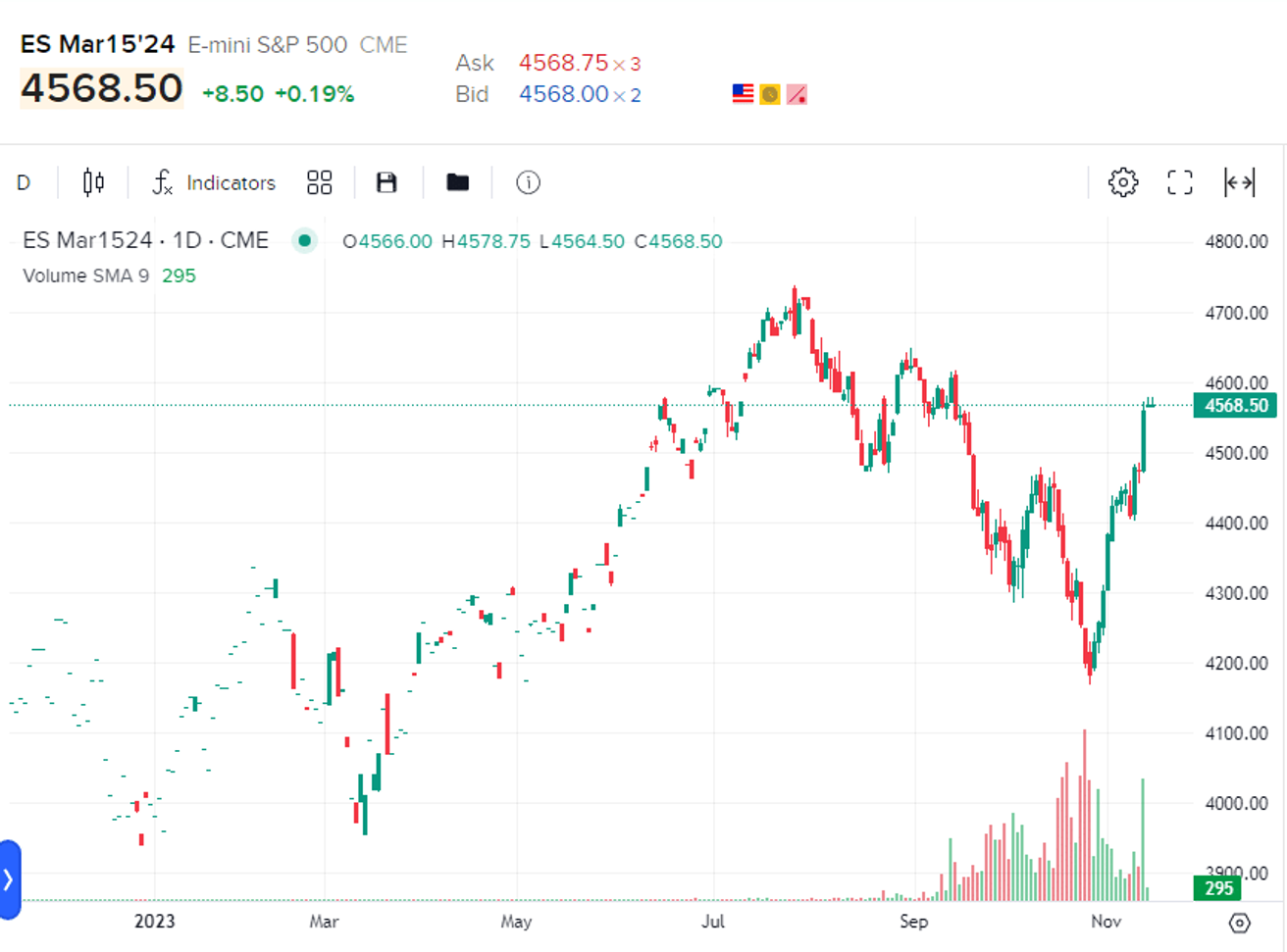
View from Interactive Brokers Web Trader
SaxoTrader at a glance
62% of retail CFD accounts lose money.
Saxo now offers two platforms with a single login: SaxoInvestor, for long-term investing, and SaxoTrader, which brings together the former SaxoTraderGO and SaxoTraderPRO and is the one you use for futures.
SaxoTrader, available on web, mobile and desktop, includes fundamental and technical analysis tools, an extensive charting package, performance analytics, a comprehensive account overview and a clean user interface.
When trading futures, you will have access to a comprehensive all-in-one screen where you can manage investments across asset classes, currencies, and markets. Saxo has a dedicated futures trading page available here.
The fee on futures contracts will depend on your account tier and monthly traded volume. According to Saxo’s futures commission page, commissions start at USD 1 per contract, apply to each buy, sell or expiry, and exclude exchange fees.
Below, we present Saxo’s commissions per contract by contract currency, from Classic (entry tier) to Platinum and VIP for larger accounts:
| Contract / currency | Classic | Platinum | VIP |
| AUD | AUD 3.00 | AUD 2.00 | AUD 1.00 |
| USD | USD 3.00 | USD 2.00 | USD 1.00 |
| CAD | CAD 6.00 | CAD 4.00 | CAD 2.00 |
| EUR | EUR 3.00 | EUR 2.00 | EUR 1.00 |
| GBP | GBP 3.00 | GBP 2.00 | GBP 1.00 |
Source: Saxo commission schedule. Exchange fees not included.
Saxo offers advanced tools for trading futures contracts. The Futures Spread Trading feature lets you place orders to buy and sell multiple contracts simultaneously, while the Depth Trader feature shows all the buy and sell orders waiting to be executed so you can manage your trades more effectively.
You can also monitor real-time futures prices and trade directly from the exchange via the Time and Sales feature. Saxo provides educational resources for all trader levels, while VIP clients also receive priority service and exclusive event invitations.
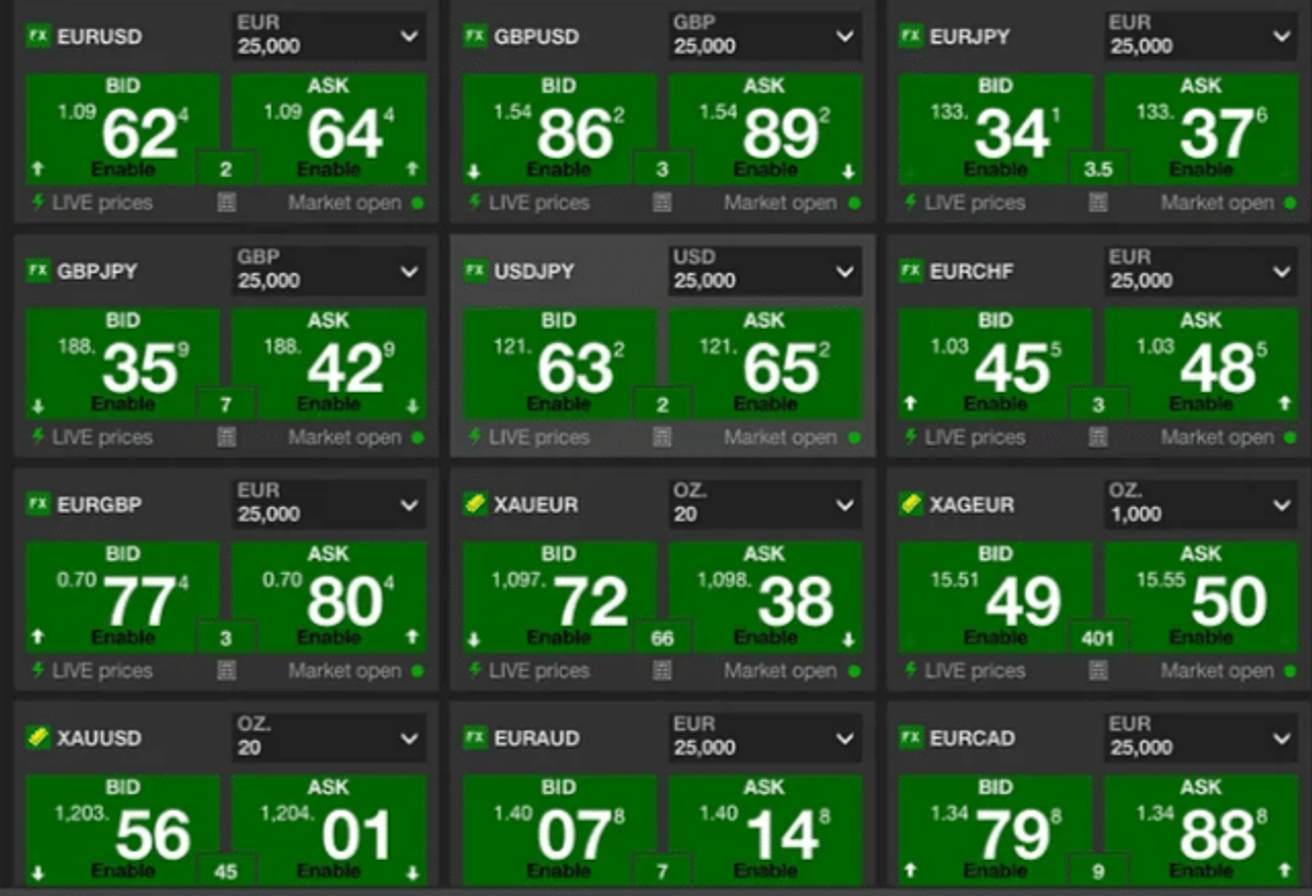
View from SaxoTraderGO
CFDs are complex instruments and come with a high risk of losing money rapidly due to leverage. 62% of retail investor accounts lose money when trading CFDs with this provider. You should consider whether you understand how CFDs work and whether you can afford to take the high risk of losing your money.KDF TradeActive at a glance
KDF TradeActive is Kenanga Futures’ flagship derivatives trading platform. The platform offers a desktop and a mobile version that share a single set of login credentials, although you can only be active on one of the two platforms at a time (logging into one automatically logs you out of the other).
The platform is distinctive in that it offers access to both the local Bursa Malaysia Derivatives Market and strategic global markets such as the Chicago Mercantile Exchange (CME) and the Hong Kong Futures Exchange (HKFE), part of HKEX.
The platform offers a wide range of charting tools and real-time indicators to help you make informed trades, alongside the ability to hold cash in several currencies (including MYR, USD, and HKD).
To help you get acquainted with KDF TradeActive and the macro news driving futures markets, Kenanga maintains a regularly updated e-learning section available here. Kenanga lists an initial margin of MYR 3,000 to start trading through KDF TradeActive, subject to change, and also runs a virtual trading platform where you can practise. A downside is that its website doesn’t publish commissions, which makes broker-to-broker comparisons more difficult than for IBKR or Saxo, so ask Kenanga for its current rates before you open an account.
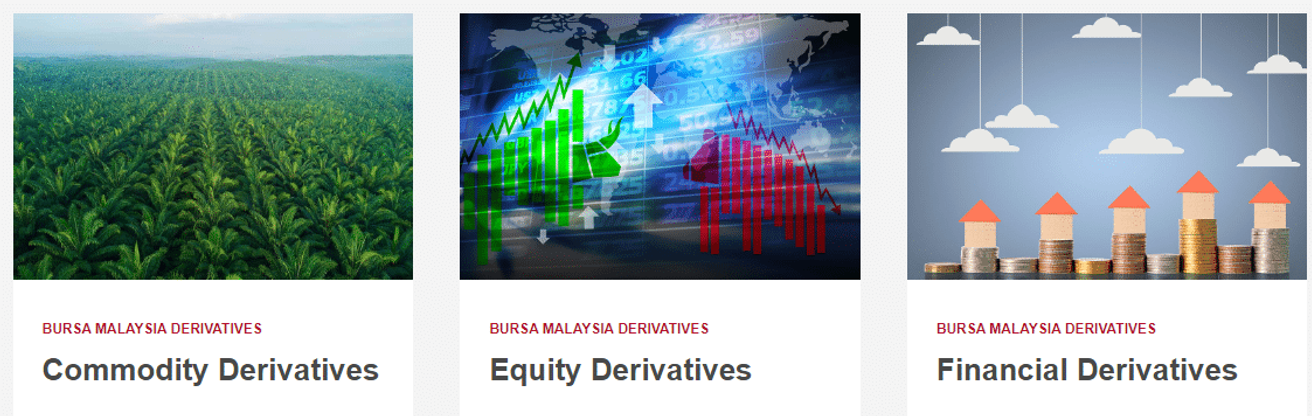
Bursa Malaysia derivatives available on KDF TradeActive
Key Bursa Malaysia futures contracts
The two most traded Malaysian futures are crude palm oil futures (FCPO), the global benchmark for palm oil prices, and FBM KLCI futures (FKLI), which track Malaysia’s main stock index. Both are available at Kenanga and, since IBKR added Bursa Malaysia, at Interactive Brokers:
| Specification | FCPO (crude palm oil) | FKLI (FBM KLCI index) |
| Contract size | 25 metric tons | FBM KLCI × MYR 50 |
| Minimum price move | MYR 1 per ton (MYR 25 per contract) | 0.5 index points (MYR 25) |
| Settlement | Physical delivery | Cash |
| Day trading hours (Malaysia time) | 10:30 to 12:30 and 14:30 to 18:00 | 08:45 to 12:45 and 14:30 to 17:15 |
| After-hours session | Monday to Thursday, 21:00 to 23:30 | Monday to Thursday, 21:00 to 02:30 |
Source: Interactive Brokers, Bursa Malaysia futures, October 2026.
Bottom line
To sum it up, here’s a brief overview of our findings on the best futures brokers in Malaysia:
Interactive Brokers
Best overallSaxo
Best for a wide-ranging futures offeringKenanga
Best for Malaysian futures
With our comparison complete, here is what you need to do to get started on trading futures:
- Find a suitable broker: make sure the broker accepts residents of Malaysia. Consider the fees and market access of the broker if you are interested in trading niche futures contracts.
- Open an account and deposit money: after deciding which broker’s trading platform to use, you must go through the account opening process and deposit money.
- Start trading futures: once your account is funded, start with small positions and make sure you understand the margin requirements, since losses can exceed your initial margin.
Do your research to find the strategy that suits you best.