A UK limited company has to keep its money separate from its directors’ personal money, so one of the first jobs after incorporation is opening a business bank account. Today you can choose between app-based banks that open an account in a day with no monthly fee and high street banks with branches and cash handling.
This article presents our picks for the best business bank accounts in the UK for limited companies, based on fees, deposit protection, features and how easy they are to open. All fees were checked on the providers’ own websites in October 2026. We also explain which accounts to avoid for some types of business, so you don’t end up paying for features you never use.
Best business bank accounts in the UK
Revolut Business (Best overall)
Multi-currency account with free currency exchange within the plan allowance, team cards, card payment acceptance and savings, from £10 a month. FSCS protected up to £120,000 since March 2026. New businesses get a £200 Revolut Business bonus when they open the account through our link.
Starling (Best free account)
No monthly fee, free UK payments and free UK cash withdrawals from a fully licensed bank. Suits companies that mainly use pounds.
Monzo Business (Best for small companies)
Free Lite plan with instant UK transfers and Tax Pots on Pro (£9 a month). Over a million businesses use it.
Tide (Best for admin tools)
Free plan plus paid plans with invoicing, accounting and payroll tools. Accounts powered by ClearBank are FSCS protected.
NatWest (Best for cash and branches)
Two years of free everyday banking for start-ups and switchers, branches and a full range of loans and overdrafts.
Comparison table
| Account | Monthly fee | UK transfers | Protection |
| Revolut Business | From £10* | 10 to 1,000 free, then £0.20 | FSCS up to £120,000 |
| Starling | £0 | Free | FSCS up to £120,000 |
| Monzo Business | £0 (Lite), £9 (Pro), from £25 (Team) | Free | FSCS up to £120,000 |
| Tide | £0 to £69.99 | 5 free on Free plan, then 20p | FSCS up to £120,000** |
| NatWest | £0 for 2 years*** | Free during the offer | FSCS up to £120,000 |
Checked on the providers’ websites in October 2026. Fees can change.
*£10 (Basic), £35 (Grow) or £125 (Scale) a month. Grow and Scale are cheaper billed annually.
**For Tide accounts powered by ClearBank. Some Tide members hold e-money accounts with PrePay Technologies, which are safeguarded rather than FSCS protected.
***For start-ups with turnover under £1m, or for businesses that switch with turnover under £2m. NatWest’s standard tariff applies afterwards.
Revolut Business account at a glance

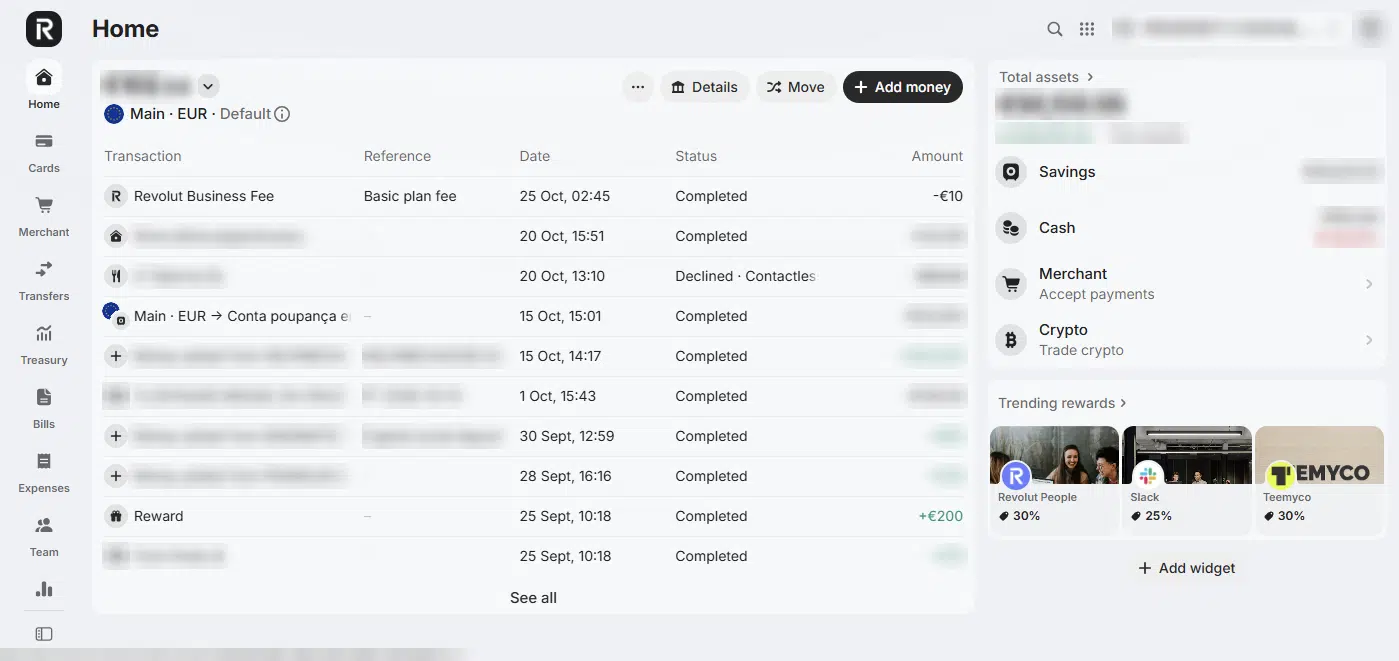
Revolut Business is our top pick for most limited companies, and it is the account we use as the only bank of one of our own companies. It served 767,000 businesses at the end of 2025, according to its 2025 annual results, and since Revolut received its full UK banking licence in March 2026, eligible deposits are protected by the FSCS up to £120,000.
What sets it apart is that it covers everything a growing company needs in one app. You can hold and exchange more than 25 currencies, with free exchange at the interbank rate within your plan allowance (£1,000 on Basic, £15,000 on Grow and £60,000 on Scale). You also get unlimited team members with cards, invoices and payment links, and you can take card payments online or in person from 0.8% + £0.02. From the Grow plan, spare cash earns 2.15% AER (variable).
The plans, as listed on Revolut’s pricing page, are:
- Basic (£10 a month): 10 free local transfers and £1,000 of free exchange
- Grow (£35 a month, or £30 billed annually): 100 local and 5 international transfers, £15,000 of exchange, spend approvals, bulk payments and savings
- Scale (£125 a month, or £90 billed annually): 1,000 local and 25 international transfers and £60,000 of exchange.
On the downside, there is no free plan, exchanges at weekends cost 1% and ATM withdrawals cost 2%. Revolut also restricts accounts during compliance checks more often than people expect, so answer document requests quickly. UK accounts get local details in GBP and EUR only.
New businesses that open their first account through our link and add £0.01 get a £200 welcome bonus, which covers 20 months of the Basic plan. For the full breakdown of fees and plans, read our Revolut Business review. If you are weighing it against Wise, see our Wise Business vs Revolut Business comparison.
Pros
- Free currency exchange at the interbank rate within the plan allowance (£1,000 to £60,000 a month)
- Card payment acceptance online and in person in the same account
- FSCS protection up to £120,000 and savings from 2.15% AER on Grow
- Unlimited team members with card controls and approvals
- £200 welcome bonus for new businesses
Cons
- No free plan: Basic costs £10 a month
- 1% fee on weekend exchange and 2% on ATM withdrawals
- Accounts can be restricted during compliance checks
Starling business account at a glance

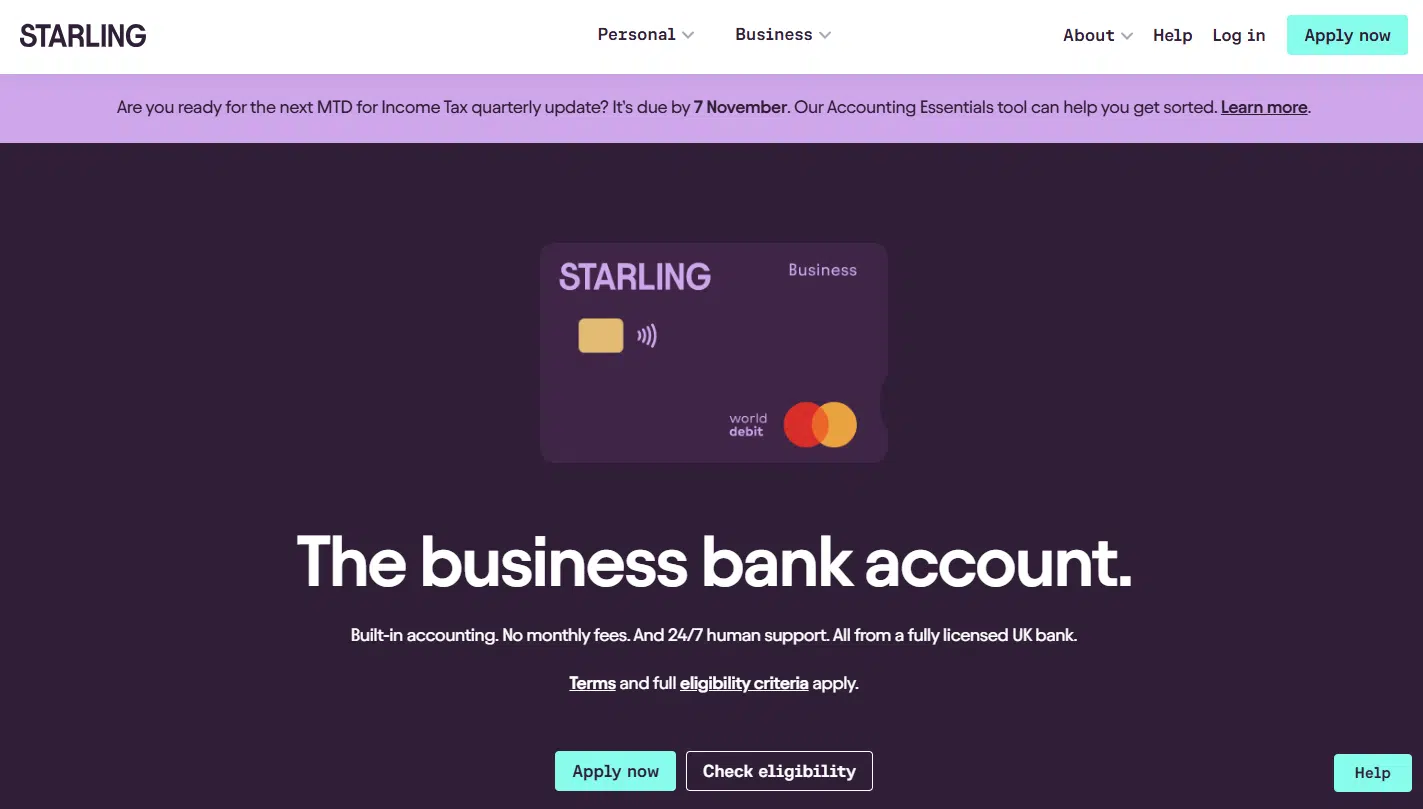
Starling is a fully licensed UK bank and its business account has no monthly fee. Faster Payments, Direct Debits and standing orders are free, and so are UK cash withdrawals. It is open to UK limited companies (limited by shares) and LLPs, while sole traders have a separate account.
You get up to five free expense cards for your team, integrations with Xero, QuickBooks and FreeAgent, and Tap to Pay on iPhone for 1.6% per transaction. Eligible deposits are FSCS protected up to £120,000.
The costs show up when you leave pounds. Sending money abroad or moving it to a foreign-currency account costs a 0.4% conversion fee, a euro account costs £2 a month and Starling is not accepting new applications for US dollar business accounts at the moment. CHAPS payments cost £20, Post Office cash deposits cost 0.7% (minimum £3), and balances in the current account earn no interest. Bulk payments are a £7 monthly add-on, according to Starling’s business account fee schedule.
For a company that invoices and pays in pounds, Starling is the cheapest solid option on this list.
Pros
- No monthly fee and free UK payments
- Fully licensed UK bank with FSCS protection up to £120,000
- Free UK cash withdrawals and up to five free expense cards
- Integrations with Xero, QuickBooks and FreeAgent
Cons
- 0.4% conversion fee on international payments
- Cash deposits at the Post Office cost 0.7% (minimum £3)
- No interest on current account balances and CHAPS costs £20
Monzo Business account at a glance

Monzo Business has more than one million business customers and works much like Monzo’s personal app. The free Lite plan includes instant UK transfers, cash and cheque deposits, international payments, payment links, Making Tax Digital software and 24/7 support. Eligible deposits are FSCS protected up to £120,000.
- Pro (£9 a month, first month free, per Monzo’s plans page) adds invoicing, accounting integrations, virtual cards, Tax Pots to set money aside for tax, and team access levels.
- Team (from £25 a month) adds expense cards, payment approvals and bulk payments.
Monzo is a good choice for a small limited company with one or two directors that wants a simple app and tax tools. If you pay suppliers abroad or get paid in other currencies, Revolut Business is built for that.

Pros
- Free Lite plan with instant UK transfers
- FSCS protection up to £120,000
- Tax Pots, invoicing and accounting integrations on Pro (£9 a month)
- 24/7 customer support and Making Tax Digital software included
Cons
- Invoicing and accounting integrations require the paid Pro plan
- Expense cards, approvals and bulk payments only on Team (from £25 a month)
- Not built for multi-currency banking
Tide business account at a glance

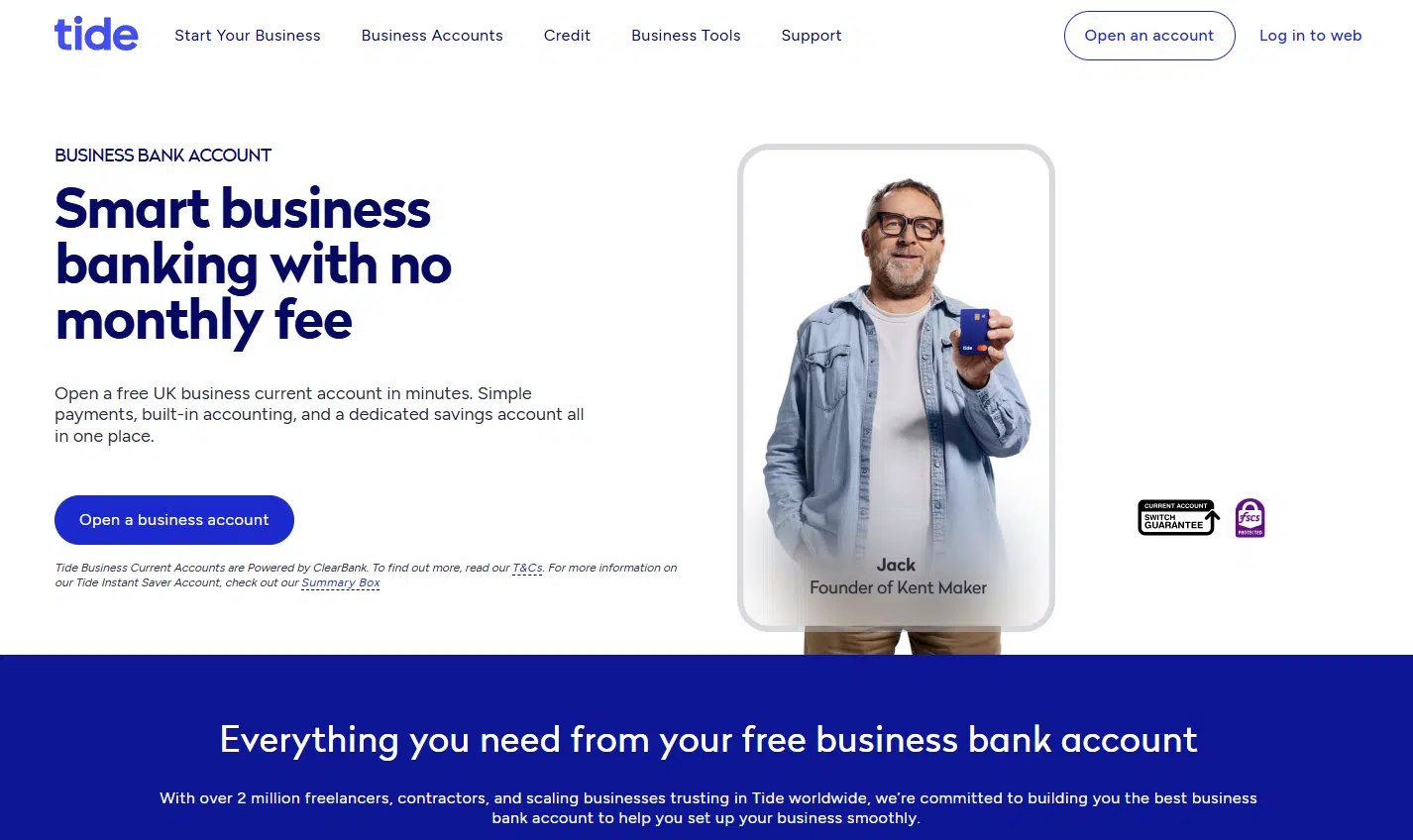
Tide is not a bank itself. It is authorised by the FCA as an e-money issuer, and its current and savings accounts are powered by ClearBank, so eligible deposits are FSCS protected up to £120,000. Some members hold e-money accounts with PrePay Technologies instead, which are safeguarded but not FSCS protected, so check which one you have.
The Free plan includes 5 bank transfers a month, then 20p each, and 3 invoices a month. Paid plans add more transfers (30 on Smart, unlimited on Pro and Max), team cards, a business phone number, accounting tools and, on Max, payroll and 0.5% cashback. Savings pay from 1.5% AER on Free to 3.25% on Max (variable).
Watch the small fees. On the Free plan, card payments in foreign currency cost 2.75%, cash withdrawals cost £1, and cash deposits cost £2.50 at the Post Office (up to £500) or 3% at PayPoint. Cheques cost 90p each, as listed in Tide’s fee guide.
Tide makes sense if you want invoicing, accounting and payroll in the same app as your bank account and you pick a paid plan.
Pros
- Free plan available, with paid plans from £12.49 a month
- Invoicing, accounting and payroll tools in the same app
- Savings from 1.5% to 3.25% AER depending on the plan
- ClearBank-powered accounts are FSCS protected up to £120,000
Cons
- Free plan includes only 5 transfers a month, then 20p each
- 2.75% fee on foreign-currency card payments on the Free plan
- Cash deposits cost up to 3% through PayPoint
- Some members hold e-money accounts without FSCS protection
NatWest business account at a glance

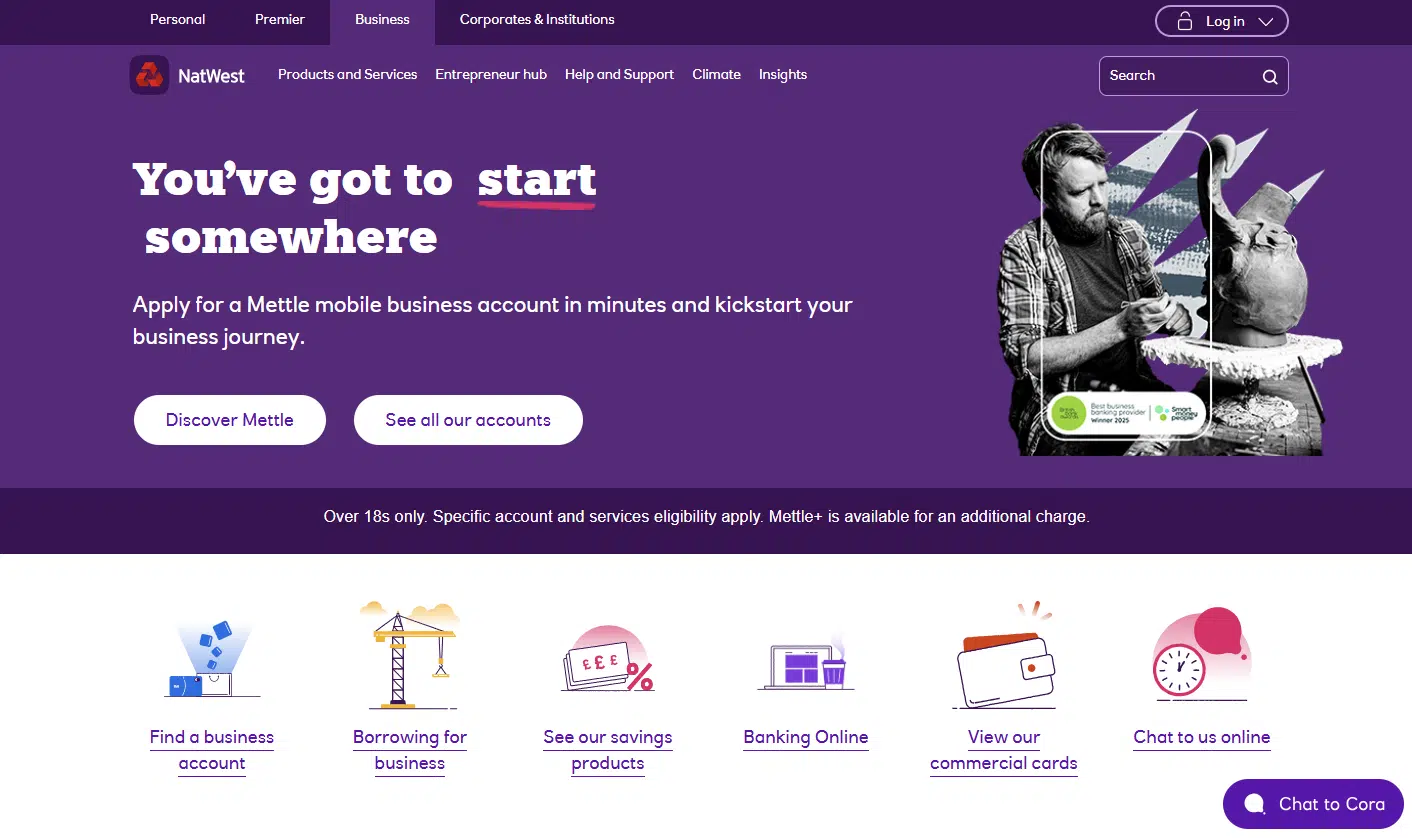
NatWest is the high street option on our list. Start-ups trading for less than a year with turnover under £1m get two years of free everyday banking, and so do established businesses with turnover under £2m that switch through the Current Account Switch Service. You get branches, cash and cheque handling, business loans and overdrafts.
The free banking covers everyday transactions only. International payments, Bankline and extra services are charged, and after two years the standard tariff applies, with fees on everyday banking.
NatWest also owns Mettle, a free app-based account for sole traders and limited companies with up to two owners. NatWest suits businesses that handle a lot of cash or want a branch and a lender in the same place.
Pros
-
Two years of free everyday banking for start-ups and switchers
-
Branches with cash and cheque handling
-
Business loans and overdrafts from a high street bank
- FSCS protection up to £120,000
Cons
-
Standard tariff with fees applies after the free period
-
International payments and extra services are charged during the offer
- Free banking only for turnover under £1m (start-ups) or £2m (switchers)
Which business bank accounts should you avoid?
No account on this list is a bad account, but some are a poor fit for certain businesses. These are the situations where we would look elsewhere:
Large reserves in an e-money account: e-money accounts, such as the ones some Tide members hold with PrePay Technologies, safeguard your money but are not covered by the FSCS. If your company holds more than a few months of costs, keep the reserve with a licensed bank such as Revolut, Starling, Monzo or NatWest.
Per-transaction plans for busy companies: Tide’s Free plan includes 5 transfers a month and then charges 20p each, plus 2.75% on foreign-currency card payments. A company making 50 payments a month pays £9 in transfer fees alone, close to the price of a paid plan with a bigger allowance.
Cash-heavy businesses on app-only accounts: depositing cash costs 0.7% at Starling, and up to 3% at Tide through PayPoint. If you take a lot of cash, a high street account with branches is often cheaper.
High street accounts once the free period ends: if you don’t need branches or cash, the standard tariff after a two-year offer can cost more than an app-based account that stays free.
A personal account for company money: a limited company is a separate legal entity, and mixing its money with yours makes bookkeeping and tax returns harder. Most personal account terms also don’t allow business use.
Revolut or Monzo for business?
It depends on how international your company is. Monzo Business has a free plan and simple tax tools, which suits a small company that bills in pounds. Revolut Business costs from £10 a month but includes multi-currency accounts, free exchange within the allowance, card payment acceptance and savings from 2.15% AER on Grow.
If you pay suppliers or staff abroad, or sell online, Revolut usually works out cheaper. If you only use pounds and want to pay nothing, Monzo or Starling are better.
What do you need to open a business bank account?
Most providers ask for the same information. Your company has to be registered at Companies House and active, and the directors usually need to be over 18 and UK residents for app-based banks. Expect to provide:
- Company name, registration number and registered address
- Details of every director and of any shareholder with 25% or more
- Photo ID for the directors, and sometimes proof of address
- A description of what the company does, its expected turnover and where its money comes from
- Documents such as the Certificate of Incorporation, if the provider asks for them.
App-based accounts usually open within a few days. Revolut says business verification can take up to 5 business days, while high street banks can take longer, especially for new companies.
Is my money safe in a business bank account?
The Financial Services Compensation Scheme (FSCS) protects eligible deposits up to £120,000 per bank if a UK bank fails, and most small companies count as eligible depositors. Revolut, Starling, Monzo, NatWest and Tide’s ClearBank-powered accounts are covered. You can check any provider’s authorisation on the FCA register.
E-money institutions work differently. They are authorised by the FCA but not by the Prudential Regulation Authority, which supervises banks. They must keep customer money separate from their own and hold it in safe assets (safeguarding), but there is no FSCS guarantee if they fail. That’s fine for money moving through the account, and less so for long-term reserves.
The limit applies per banking licence, so a company with more than £120,000 can spread it across banks. To earn more on spare cash, see our guide to the best business brokerage accounts.
Bottom line
For most UK limited companies, Revolut Business is the most complete account: multi-currency accounts, free exchange within the allowance, team cards, card payments and savings in one app, with FSCS protection and a £200 welcome bonus for new businesses. If you only use pounds and want to pay nothing, Starling and Monzo’s free plans are the best value. Tide is the pick for built-in admin tools, and NatWest for cash and branches.
Please remember that the above should not be construed as financial advice and is intended only as an information resource. Compare the fees against how your company actually uses its account before you choose.
Disclaimer: Fees, interest rates and offers are variable and were checked in October 2026. The Revolut Business welcome bonus is for new businesses only, runs until 31 December 2026 and is subject to Revolut’s terms. Revolut Business plans have monthly fees.