According to its 2025 annual report, Revolut has more than 80 million retail customers worldwide and $67.5 billion in customer balances. In 2026, it also received its UK banking licence.
It has built a huge audience that now has access to interest on uninvested cash in three currencies: EUR, USD and GBP.
Revolut calls this service “Savings”, and in this article we take a deep dive into how you earn that interest, where it comes from, the risks involved and more.

Key points
- No minimum or maximum amount;
- You can add or withdraw money at any time;
- You are investing in a money market fund managed by Fidelity, not depositing money in a bank account;
- You can set up recurring transfers into your savings every day, week or month;
- Covered by the Lithuanian investor insurance scheme up to €22,000, which protects against Revolut failing, not against investment losses;
- This service is not covered by the European deposit guarantee scheme of €100,000;
- Rates vary by plan: the free Standard plan pays up to 1.45% in EUR, 3.06% in GBP and 2.87% in USD, and the Ultra plan pays up to 2.03% in EUR (March 2026 rates);
- Rates also vary with market conditions, and the return is compounded.
What is “Savings”?
There are several reasons to use Revolut: exchanging currencies, managing day-to-day money and investing. All of them have something in common: there’s usually some cash sitting idle in the account.
Savings is the feature that lets you earn a return on that cash, whether your balance is €1 or €1,000,000.
One important detail before we go further: despite the name, this isn’t a savings account in the traditional sense. Your money is invested in a money market fund, which is why the return is variable and why the protection is different from a bank deposit.
What are the interest rates offered?
Rates depend on your plan and on market conditions. These were the rates per currency as of March 2026:
| Currency / plan | Standard (free) | Plus | Premium | Metal | Ultra |
| EUR | 1.45% | 1.78% | 1.86% | 1.93% | 2.03% |
| USD | 2.87% | 3.22% | 3.33% | 3.47% | 3.82% |
| GBP | 3.06% | 3.48% | 3.64% | 3.73% | 3.88% |
Plan prices vary by country and change over time, so check the current pricing in the app. Rates are variable and may have changed since March 2026, especially after the European Central Bank started raising rates again in 2026.
How does Revolut offer these rates?
Revolut can offer these rates because it invests your money in money market funds. These funds hold low-risk, short-term debt, such as government bonds and commercial paper, and aim to keep a stable share price.
Money market funds are widely used by institutional investors, such as pension funds, insurers and banks. In Europe, more than a trillion euros are invested in these vehicles.
The fund Revolut uses for euro cash is the Fidelity Funds – Euro Cash Fund Class R Flex Distributing Shares:
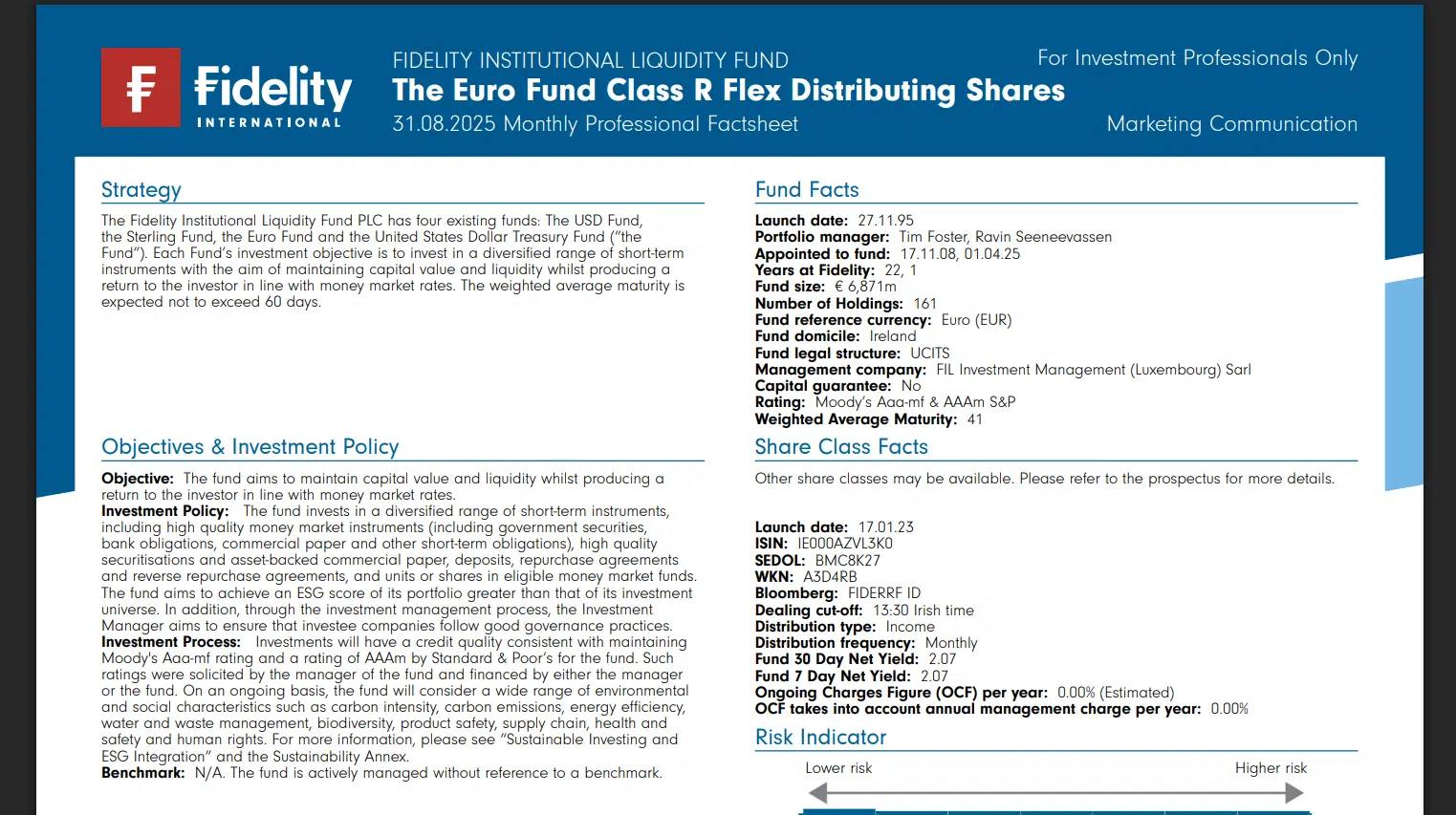
The fund itself yields more than what Revolut passes on to you. The difference between the fund’s yield and the rate you receive is effectively Revolut’s fee, and it’s larger on the free plan than on the paid ones. Revolut doesn’t present it as a fee, which is why it’s worth comparing the fund’s yield with the rate shown in your app.

To get Revolut’s highest rate, you need the Ultra plan, which is the most expensive one. Before paying for a plan just for the rate, do the maths: the extra return only covers the monthly fee if your balance is large enough.
Is it safe?
As we said, your money goes into low-risk short-term debt. These are the holdings of the Fidelity fund:
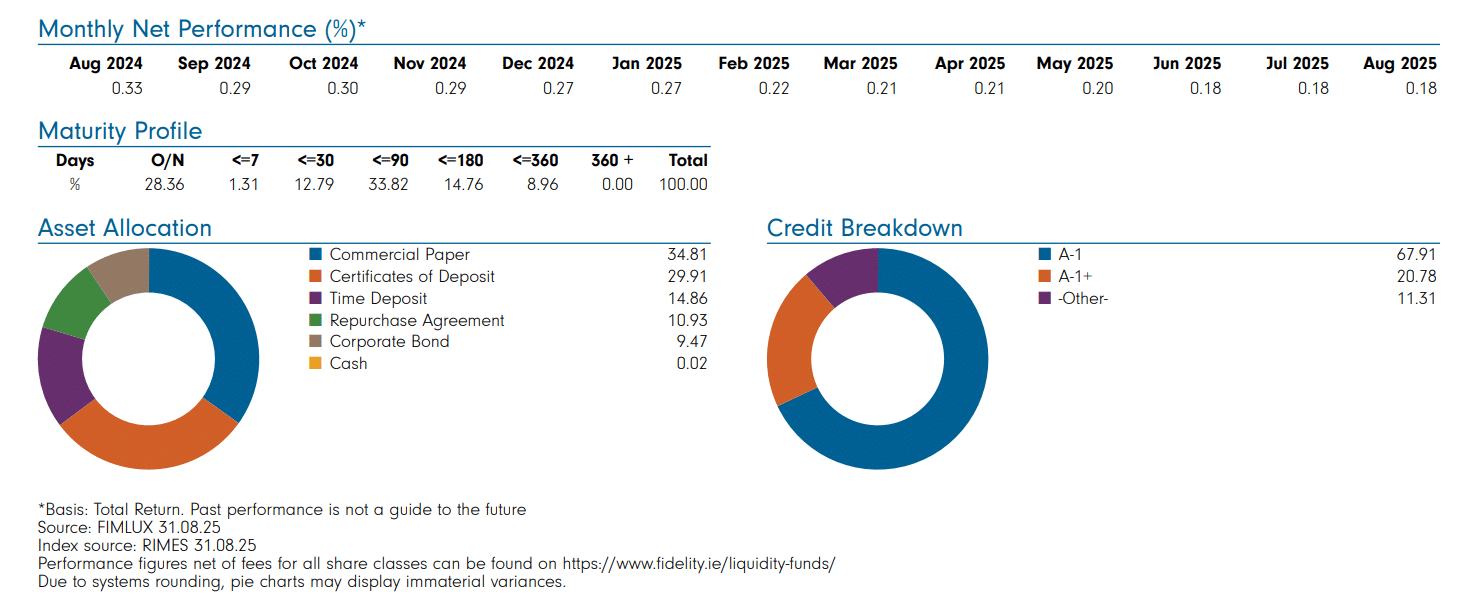
The credit quality is good and most of the bonds mature in less than 90 days, which keeps the risk low. Even so, a money market fund is an investment, not a deposit: its value can fall, although that is rare for this type of fund.
If something were to happen to Revolut (an insolvency, for example), the money in Savings is covered by the Lithuanian investor insurance scheme, up to €22,000 per investor. This protects you if your assets can’t be returned, not against investment losses.
The key point: this service is not covered by the European deposit guarantee scheme, which protects bank deposits up to €100,000. If protection matters more to you than convenience, a bank account or a broker holding your cash in bank deposits may suit you better.
Note that Revolut is a bank in several markets, including the UK since 2026, but Savings is an investment product, not a deposit, wherever you are.
Pros and cons of Revolut Savings
Pros
-
Competitive returns compared with most traditional bank accounts
-
The return compounds, since it stays invested in the fund
-
Easy to manage in the app, with instant deposits and withdrawals
-
No minimum or maximum balance
- Well integrated with the rest of Revolut, including budgeting and investing
Cons
-
Not a deposit: it is an investment in a money market fund, with no deposit guarantee
-
Protection limited to €22,000 under the Lithuanian investor scheme
-
The best rates require a paid plan
-
Revolut keeps part of the fund's yield, and doesn't present it as a fee
-
Rates are variable and can change at any time
- Not available in every country
How can I activate this service?
In the Revolut app, on the “Home” tab, scroll down until you find “Savings”:

You will then see the rates for your plan. Ours is Standard, so these are the rates shown:
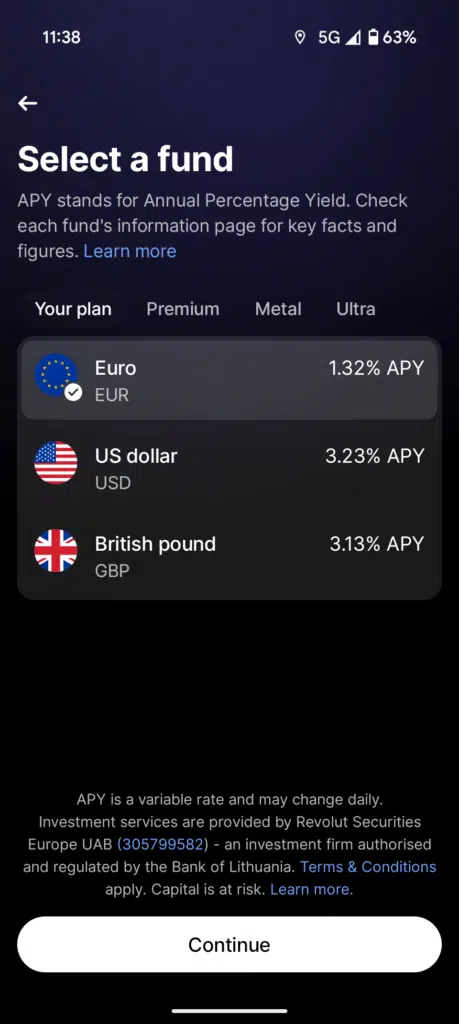
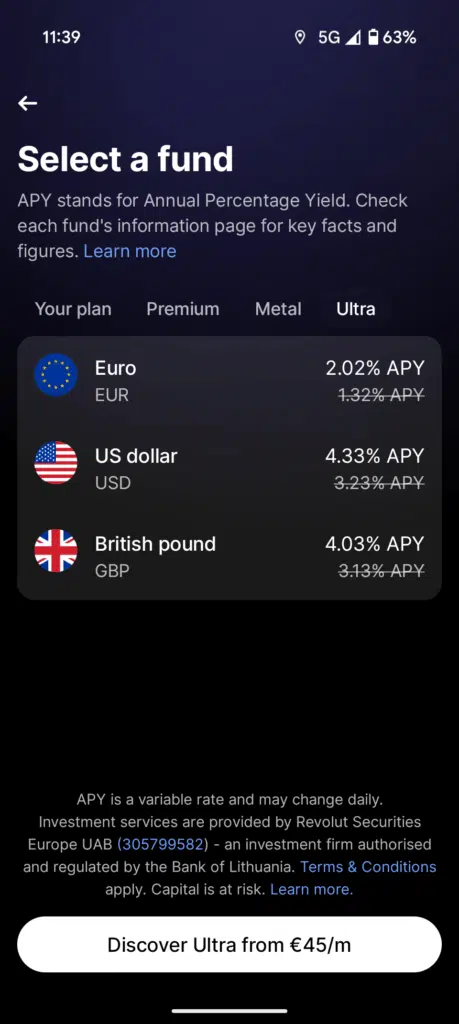
If you scroll right through the plans, up to “Ultra”, you’ll see the highest rates for each currency:
We went ahead with the Standard plan and, after tapping “continue”, we were shown the details of the money market fund we were about to invest in:
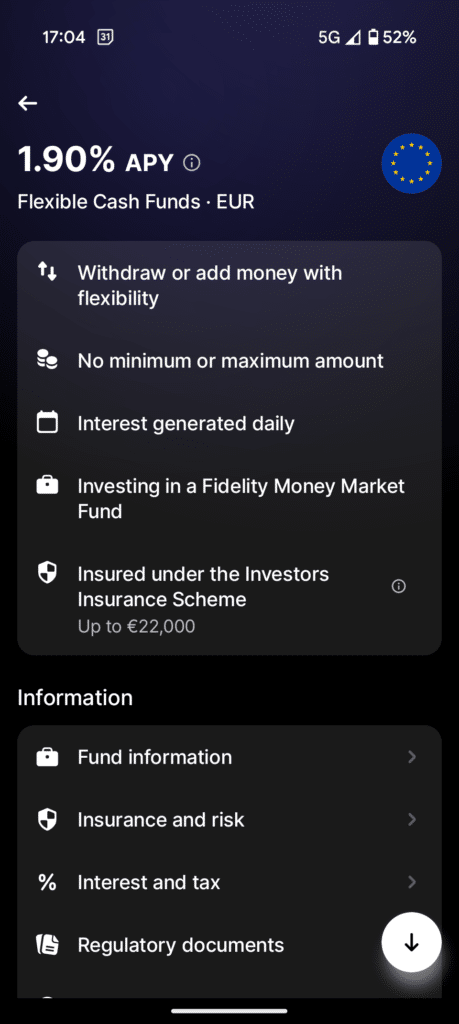
Once everything is set up, you get the “Flexible Cash Funds” page:
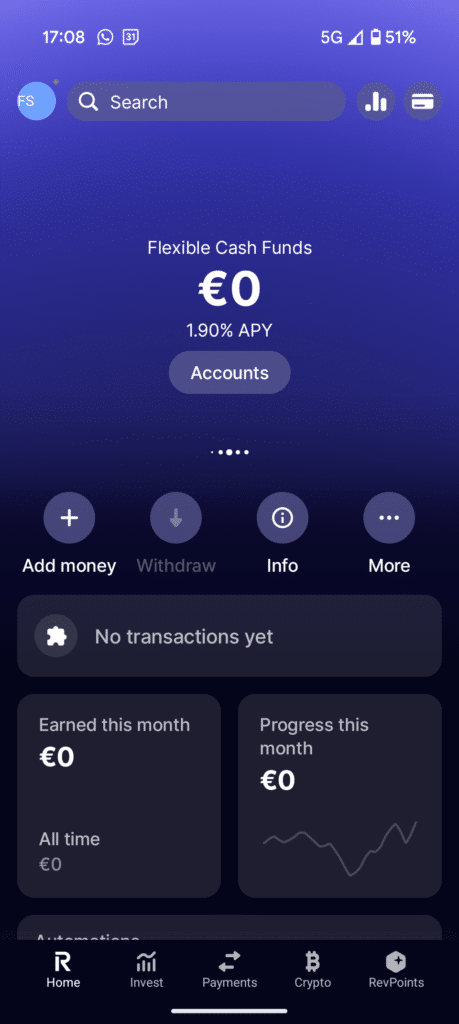
We set this account up in euros. If you want the same in pounds or dollars, follow the same process and choose the other currency instead.
Revolut Savings alternatives
If you’re looking for alternatives to Revolut Savings, check our articles on the best brokers and digital banks paying interest on cash in EUR, USD and GBP, as well as our comparison of the best savings accounts in Europe.
Some of those options hold your cash in bank deposits, which come with the €100,000 guarantee, rather than in money market funds. If you’re also interested in other products on Revolut, take a look at our review of Revolut’s ETFs.
Bottom line
Revolut Savings is a convenient way to earn a return on money you’d otherwise leave idle in the app, with no minimum, instant access and a simple setup.
The trade-offs are worth understanding: it’s a money market fund rather than a deposit, the protection is €22,000 rather than €100,000, the best rates require a paid plan, and Revolut keeps part of the fund’s yield.
If convenience is what you value, it does the job well. If you want the highest return on your cash, or the strongest protection, compare it with the alternatives above before moving your money.
Disclaimer: When investing, your capital is at risk and you may get back less than invested. Money market funds are investments, not deposits, and are not covered by deposit guarantee schemes. Rates are variable. This article is for information only.