You’ve probably heard about the Robinhood app on YouTube or social media and want to know if it’s available in Canada, right?
Robinhood is a modern, easy-to-use investment app from the US that helped popularise commission-free trading in stocks, ETFs, and options – alongside competitors like Webull, E*TRADE (now part of Morgan Stanley), and Schwab (which absorbed TD Ameritrade in 2023-2024).
Want to know if Robinhood is available in Canada, its expansion plans, and the strongest alternatives for Canadian investors? We’ve got you covered.
Is Robinhood available in Canada?
Unfortunately, Robinhood is not yet available in Canada.
Outside the US, Robinhood is only available in the UK and in Europe.
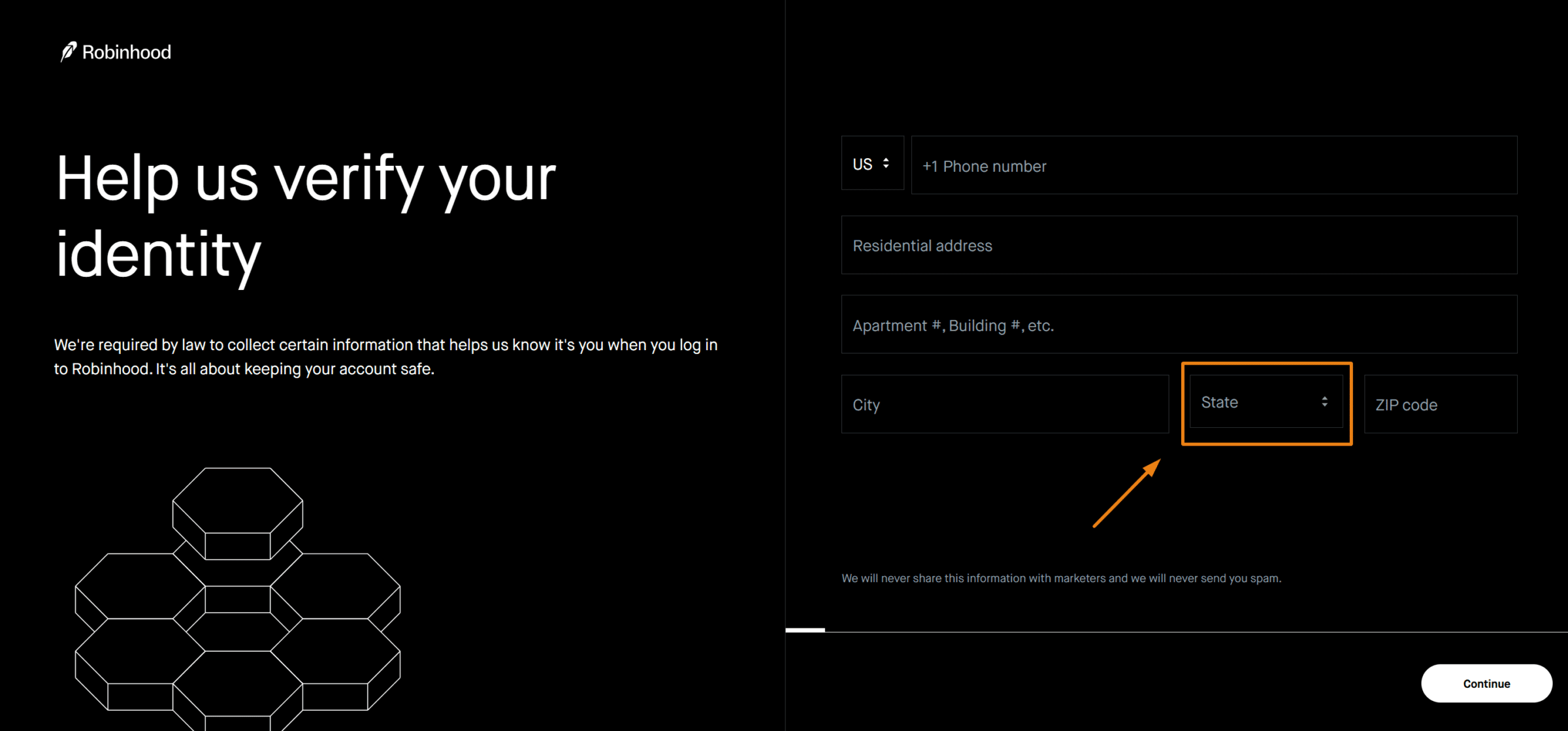
Currently, Robinhood has show no indications to expand to Canada. While it is a great market for brokers, it is also a highly regulated and competitive market.
Robinhood alternatives in Canada
If you’re in Canada and want access to strong brokerage and investing options, there are several alternatives to Robinhood that offer more flexibility and access to Canadian markets specifically. Here are some of the best brokerages available to Canadian investors:
- Interactive Brokers | Sophisticated trading tools
A global online broker with a sophisticated trading platform offering an exceptionally wide product range across 150+ markets in 30+ countries. Active in Canada for decades, IBKR is regulated by CIRO (formerly IIROC) and also offers the simpler IBKR GlobalTrader app for newer investors. - Plus500 | CFD trading platform
Regulated in Canada by CIRO (via Plus500CA Ltd), with a clean proprietary platform for trading CFDs on shares, ETFs, forex, indices, commodities and crypto. Unlike Robinhood’s commission-free share dealing, Plus500 is CFD-only, you speculate on price movements rather than owning the assets, so it fits active traders rather than buy-and-hold investors. - Questrade | Strong Canadian platform
A leading Canadian brokerage offering both self-directed investing and pre-built portfolios. It’s a popular low-cost option that lets you invest in stocks, ETFs, options, mutual funds, FX, CFDs, and more, with strong support for Canadian registered accounts like TFSA and RRSP. - XTB | Cheap for stocks and ETFs
Headquartered in Poland and listed on the Warsaw Stock Exchange, XTB now serves over 1.9 million clients globally. Canadian residents are accepted via the French branch (XTB FR), offering access to thousands of instruments including real stocks and ETFs, CFDs, indices, and forex at competitive prices. - Wealthsimple Trade | Mobile-first commission-free trading
Canada’s homegrown commission-free trading app – the closest direct Robinhood analogue. Offers commission-free trading on Canadian and US stocks and ETFs, plus crypto, with seamless support for TFSA, RRSP, and FHSA accounts. Particularly popular with newer Canadian investors. - Qtrade | Simple fee structure
Based in Canada with over 20 years of experience, Qtrade lets Canadian investors trade stocks, ETFs, mutual funds, and options. It offers a few different pricing plans and commission-free trading on a curated list of 100+ ETFs.
| Broker | Fees for US stocks | Minimum deposit |
| Interactive Brokers | Tiered: from $0.0035/share ($0.35 min per trade) | $0 |
| Plus500 | No commission; costs built into the spread (CFDs only). Additional fees may apply. | $100 |
| Questrade | $0.01 CAD per share (min $4.95, max $9.95) | $1,000 |
| XTB FR | 0% commission on real stocks and ETFs up to €100k monthly turnover (then 0.2%, €10 min) | $0 |
| Wealthsimple Trade | $0 commission on US/Canadian stocks and ETFs (FX conversion fee applies on US trades unless USD account used) | $0 |
| Qtrade | $6.95-$8.75 CAD (commission-free on 100+ selected ETFs) | $0 |
#1 Interactive Brokers

Interactive Brokers at a glance
Interactive Brokers is an exceptional broker available to Canadian traders and investors. Founded in 1978 and publicly listed on NASDAQ (ticker: IBKR), the company launched in Canada in 2000 through its legal entity Interactive Brokers Canada Inc. (IB Canada), regulated by CIRO (formerly IIROC) and a member of the Canadian Investor Protection Fund (CIPF). Since its arrival, IB Canada has become one of the most reliable brokers in the country.
Thanks to its sophisticated and powerful tools, exceptionally wide product range (stocks, options, futures, bonds, ETFs, forex, and more across 150+ markets in 30+ countries), and competitive pricing, Interactive Brokers typically attracts active and advanced traders. However, the IBKR GlobalTrader mobile app is user-friendly and well-suited to beginners, simplifying the investing experience without sacrificing the powerful execution the broker is known for.
IBKR offers attractive features for Canadian clients including low commissions on US stocks, a paper trading account for practising strategies risk-free, a wide range of tradable assets, multi-currency support (including CAD base accounts), and access to the Toronto Stock Exchange (TSX) alongside major US, European, and global markets.
#2 Plus500

Plus500 at a glance
81% of retail CFD accounts lose money.
Plus500 is a different kind of alternative to Robinhood. Robinhood built its name on commission-free trading of real stocks and ETFs; Plus500 in Canada is a CFD-only platform, meaning you trade on whether a price will rise or fall without owning the underlying asset. That makes it a fit for active, short-term traders, but not for investors who want a buy-and-hold portfolio or registered accounts (RRSP/TFSA).
Founded in 2008 and listed on the London Stock Exchange (LSE:PLUS), Plus500 is a FTSE 250 company. It obtained a CIRO licence in June 2025, and Canadian clients trade through Plus500CA Ltd.
The proprietary WebTrader platform is clean and beginner-approachable (beginners must use the demo account and the Trading academy to gain experience before trading with real capital due to the risks involved), with guaranteed stop-loss orders, price alerts and an integrated economic calendar – though there’s no MetaTrader/cTrader support and research tools are limited. New Canadian clients may be eligible for a welcome bonus* – terms and conditions apply.
You can read our full Plus500 review for more detail.
*This information is NOT relevant to EU residents who are to be serviced by EU subsidiaries of the Plus500 Group, such as Plus500CY Ltd, authorised by CySEC (Reg. 250/14). Different regulatory requirements apply in Europe such as leverage limitations and bonus restrictions.
#3 Questrade

Questrade at a glance
Questrade is a Canadian broker that’s been helping investors since 1999 as an alternative to the big banks. It’s available exclusively to Canadian residents, regulated by CIRO and a member of the Canadian Investor Protection Fund (CIPF).
You can invest via the mobile app or web desktop, and choose from a few different plans – including the competitively priced Questwealth Portfolios (pre-built ETF portfolios) for hands-off investors. Cash can be held in CAD or USD, and the broker supports all major Canadian registered accounts (TFSA, RRSP, FHSA, RESP, RRIF), making it a solid choice for both beginners and more advanced investors. Questrade also offers strong research and analytical resources, including up-to-date market data, fundamentals, and charting tools.
#4 XTB

XTB at a glance
69-80% of retail CFD accounts lose money.
XTB is a Polish company founded in 2002 and listed on the Warsaw Stock Exchange, now serving over 1.9 million clients globally. Canadian investors can open an account through XTB’s French branch, XTB FR, regulated by France’s Autorité des Marchés Financiers (AMF) and Autorité de Contrôle Prudentiel et de Résolution (ACPR).
Alongside real stocks and ETFs (with 0% commission up to €100,000 of monthly turnover), XTB offers CFDs on forex, equities, indices, commodities, and cryptocurrencies. CFDs are leveraged, higher-risk instruments and a majority of retail accounts lose money trading them – so they’re best suited to experienced traders who fully understand the risks.
With a wide range of investment options, a well-designed platform (xStation 5), no minimum deposit, and competitive fees, XTB is a credible alternative for Canadian investors looking for international market access. If you want to learn more, check our XTB review.
#5 Wealthsimple

Wealthsimple at a glance
Wealthsimple Trade is Canada’s homegrown commission-free trading app, launched in 2014 and the closest direct equivalent to Robinhood available to Canadian investors. It’s owned majority by Power Corporation of Canada, regulated by CIRO, and a member of the Canadian Investor Protection Fund (CIPF), with over 3 million customers and more than $100 billion in assets under administration across its broader product suite.
Wealthsimple offers $0 commission trading on Canadian and US-listed stocks, ETFs, and options (with a $1.25 per-contract options fee), alongside cryptocurrencies, with full support for major Canadian registered accounts (TFSA, RRSP, FHSA, RESP, RRIF, LIRA). It also offers a Wealthsimple Cash account paying interest on uninvested funds and a managed-portfolio service (Wealthsimple Managed Investing) for hands-off investors.
The main caveat is the 1.5% currency conversion fee on US-listed trades from a CAD account – which can add up for active US-stock investors. This can be avoided by upgrading to the Wealthsimple Plus tier ($10/month), which includes a native USD account, unlimited free instant deposits, and a higher cash account rate. With its clean, modern mobile-first interface, no minimum deposit, and tight integration across investing, banking, and tax products, Wealthsimple Trade is an excellent choice for Canadian investors who want a simple, low-cost platform – particularly if their portfolio is CAD-denominated or held in registered accounts.
#6 Qtrade

Qtrade at a glance
Qtrade is a Canadian brokerage that’s been operating since 2000. You can sign up for a 30-day free trial account and choose between two main plans, with the Investor plan being the most accessible for typical retail investors (the Investor Plus plan is geared toward active traders with larger portfolios). Qtrade is regulated by CIRO and is a member of the Canadian Investor Protection Fund (CIPF).
Canadian investors can trade stocks, ETFs, options, mutual funds, and bonds/debentures, with support for all major Canadian registered accounts (TFSA, RRSP, FHSA, RESP, RRIF). Commissions are flat for most trades, with commission-free trading on 100+ selected ETFs.
Qtrade is a strong alternative to Robinhood for Canadian investors thanks to no minimum deposit, a free trial account, a simple and transparent fee structure, and a solid track record – including consistent recognition for customer service quality.
Which platform should you choose?
When choosing an online broker in Canada, some key factors to consider include the fees charged, whether the broker is regulated by trusted authorities (such as CIRO – the successor to IIROC since 2023) and a member of CIPF, the range of products available (not all platforms offer Canadian stocks or registered accounts like the TFSA, RRSP, and FHSA), the quality of the trading platform, and customer support.
The best online broker for you will depend on your profile, preferences, and investment objectives. Explore the platforms above and decide which one fits you best.
A reminder that the above should not be seen as investment advice and should be considered information only. Investors should do their own research and diligence about the best-suited services and opportunities for their risk, returns, and impact strategy.
FAQs
Can I use Robinhood from Canada with a VPN?
No, Canadian investors cannot use a VPN to open a Robinhood account. Upon account opening, Robinhood requires specific documentation that proves that you are a US citizen.
How exactly does Robinhood make money?
The online broker earns money from interest earned on customers’ cash balances (money in your account not invested), by selling order information to third parties (high-frequency traders, for instance), and margin lending.
Regarding the selling of orders, the US Securities and Exchange Commission (SEC) is still investigating Robinhoodfor not fully disclosing its practice of selling clients’ orders to high-speed trading firms.
Until October 2018, Robinhood would not clearly state that it was receiving payments for order flows. By law, any financial company must reveal all the material facts an investor would want to know before making any investment decision.