Choosing the right trading platform can make all the difference in the fast-paced world of financial markets. Beyond basic tools, top platforms offer fast order execution, real-time alerts, news updates, and customizable watchlists.
In this article, we review and compare the best trading platforms in Malaysia, looking at the trading platforms, pricing, support, and security to help you find the right fit. We also explain which entity serves Malaysian residents and what protection you get when you use a foreign broker.
Best trading platforms in Malaysia
Interactive Brokers | Best for intermediate and advanced investors
Interactive Brokers offers a comprehensive range of trading platforms. Their investment platform, Trader Workstation (TWS), is an advanced desktop platform designed for active investors who engage in multi-product trading. Additionally, IBKR provides an easy-to-use mobile app called IBKR GlobalTrader.
Saxo Bank | Best for powerful trading tools
Saxo offers a range of trading platforms suitable for different needs. From the simple SaxoInvestor platform to the advanced SaxoTrader (available on web, mobile, and desktop), you can access powerful trading tools tailored to your preferences.
XTB | Best for forex and CFDs
XTB is a reputable online broker known for its xStation 5 trading platform, available on the web, desktop, and mobile. It provides an intuitive interface with access to advanced tools and customization options, making it suitable for Forex and CFD investors.
Pepperstone | Best for MetaTrader4 (MT4) and MetaTrader5 (MT5)
Pepperstone is a popular broker that offers several trading platforms like TradingView, MetaTrader4 (MT4), MetaTrader5 (MT5), and cTrader, plus its own Pepperstone platform and copy trading features.
Best trading platforms in Malaysia compared
| Broker | Interactive Brokers | Saxo | XTB | Pepperstone |
| Products available | Stocks, ETFs, options, futures, forex, commodities, bonds, and funds | Stocks, ETFs, options, futures, forex, commodities, bonds, and funds | Real stocks and ETFs (in select markets), plus CFDs on stocks, ETFs, indices, commodities, forex, and cryptocurrencies | CFDs on stocks, ETFs, forex, indices, commodities, and cryptocurrencies |
| Minimum deposit | $0 | $0 (Classic tier) | $0 | $0 |
| Deposit methods | Bank transfer | Bank transfer, credit/debit card | Bank transfer, credit/debit card, Skrill | Bank transfer, credit/debit cards, PayPal, Apple Pay, Google Pay, Neteller, Skrill, and more |
| US stock fees | Tiered: from $0.0035 per share ($0.35 min per order) | Classic: ~0.08% (min $1), lower for Platinum and VIP clients | 0% commission on real stocks and ETFs up to €100,000 monthly turnover (then 0.2%, €10 min) | ~$0.02 per share each side for US CFD shares; 0.07-0.20% per side for international CFD shares |
In the following reviews, we discuss the features of each trading platform, where each broker differs in terms of pricing, accessible markets and instruments, and other special features.
#1 Interactive Brokers

Interactive Brokers at a glance
Founded in 1978, Interactive Brokers is one of the largest international brokers, listed on NASDAQ (ticker: IBKR), with more than 5.5 million client accounts (September 2026) and no minimum deposit requirement. It gives access to more than 170 markets in 40 countries, and since August 2024 Malaysian investors can also trade Bursa Malaysia stocks and ETFs (Main and ACE markets) in MYR from the same account.
Interactive Brokers supports various account-based currencies, including USD, EUR, and other major currencies. However, funding these accounts is limited to bank transfers. IBKR offers tight spreads, and on the Tiered plan the commission depends on your monthly trading volume (from $0.0035 per US share, minimum $0.35 per order). The Fixed plan costs $0.005 per share, with a $1 minimum.
Interactive Brokers offers a comprehensive range of trading platforms to cater to the diverse needs of traders. These platforms include the web-based Client Portal, the GlobalTrader Mobile app, and the professional-grade Trader Workstation (TWS), offering a wide array of features and tools to meet the diverse needs of traders.
The web-based Client Portal is designed to be user-friendly, making it accessible to both beginners and experienced investors. It provides real-time monitoring, customizable watchlists, alerts, and a range of advanced features, such as over 120 technical indicators for advanced technical analysis. Traders can create personalized templates, access advanced charting tools, utilize various order types, and benefit from Smart Routing, which selects the optimal trading route for each trade.

For traders who prefer to trade on the go, Interactive Brokers offers the IBKR Mobile app, providing convenience and advanced functionality. A notable feature of IBKR Mobile is the chatbot IBot, which allows users to quickly access basic information and execute or close orders directly through the chat interface. IBot serves as a natural language trading interface, enabling traders to complete key trading tasks in TWS using plain English commands. This feature enhances the user experience and simplifies trading activities.
IBKR GlobalTrader is another mobile trading app offered by Interactive Brokers that allows traders to engage in simple and worldwide trading. The app lets you buy fractional shares from $1, making trading accessible to traders of all levels. You can also practise with an IBKR paper trading account, pre-funded with $1 million in simulated buying power, before trading with real money.
On the downside, you might be overwhelmed by the number of buttons and features available on each platform, especially if you are new to trading. However, Interactive Brokers offers a lot of educational materials and video tutorials to assist you in navigating and utilizing their platforms effectively. These resources can be beneficial regardless of the specific platform you are trading or using.
We recommend you check out our comprehensive Interactive Brokers review.
#2 Saxo

Saxo Bank at a glance
62% of retail CFD accounts lose money.
Saxo is a distinguished multi-asset broker founded in 1992, renowned for its trading platform experience and an extensive range of more than 71,000 tradable instruments. It offers a comprehensive suite of trading tools, in-depth research, and premium features. The Swiss private banking group J. Safra Sarasin completed the purchase of a majority stake in Saxo in March 2026 and in July 2026 agreed to buy the remaining shares from founder Kim Fournais, subject to regulatory approval.
In Asia, Saxo serves clients through Saxo Capital Markets Pte Ltd (Saxo Markets Singapore), regulated by the Monetary Authority of Singapore (MAS). Note that Saxo’s Singapore website states that its products and services are not intended for residents of Malaysia, so check with Saxo whether you can open an account before applying.
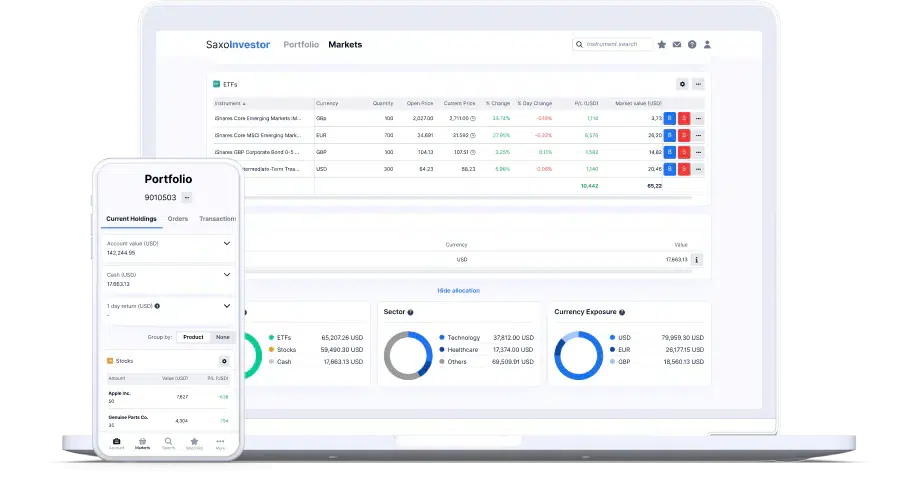
Saxo offers two main trading platforms designed to meet the needs of different types of investor:
- SaxoInvestor is a simple, easy-to-use investment platform ideal for beginners and long-term investors. It provides curated stock lists, trending investment themes, and access to a wide range of asset classes, including stocks, ETFs, mutual funds, bonds, and managed portfolios, across desktop, tablet, and mobile.
- SaxoTrader is Saxo’s flagship platform for active and advanced traders, which replaced the former SaxoTraderGO and SaxoTraderPRO. It offers enhanced trade tickets, comprehensive charting, options chains, performance analysis, fundamental and technical analysis tools, and a fully customisable workspace across mobile, desktop (web), and a downloadable professional client, with features like algorithmic orders, one-click trading, and advanced multi-screen layouts.
Saxo also provides connectivity to third-party platforms, letting you extend the experience with custom tools tailored to your specific trading needs, such as asset-specific analysis tools, advanced strategy backtesting, and hyper-responsive charting. Traders can also connect to Saxo’s capital markets infrastructure via FIX API or OpenAPI for tailored multi-asset liquidity and seamless access to market data.
Saxo lets you open an account in a wide range of currencies, including USD, EUR, GBP, SGD, and other major currencies. Saxo’s entry-level Classic tier has no minimum deposit and no inactivity fee. Higher tiers (Platinum from SGD 300,000 and VIP from SGD 1.5 million on the Singapore site) unlock lower fees and additional services.
#3 XTB

XTB at a glance
69-80% of retail CFD accounts lose money.
XTB, a global broker operating since 2002, had more than 2.8 million clients at 30 June 2026. The company is listed on the Warsaw Stock Exchange and is regulated by several authorities, including the KNF (Poland), FCA (UK), and CySEC (Cyprus). Malaysian residents open their accounts with XTB International Limited, regulated by the Financial Services Commission (FSC) of Belize, where the maximum leverage is up to 1:500. Real stocks and ETFs are available with 0% commission up to €100,000 of monthly turnover (0.2%, minimum €10, above that), and a 0.5% currency conversion fee applies. XTB gives you access to trade a diverse range of CFD instruments, including Forex, indices, commodities, shares, ETFs, and cryptocurrencies, all offered at competitive pricing with low spreads.
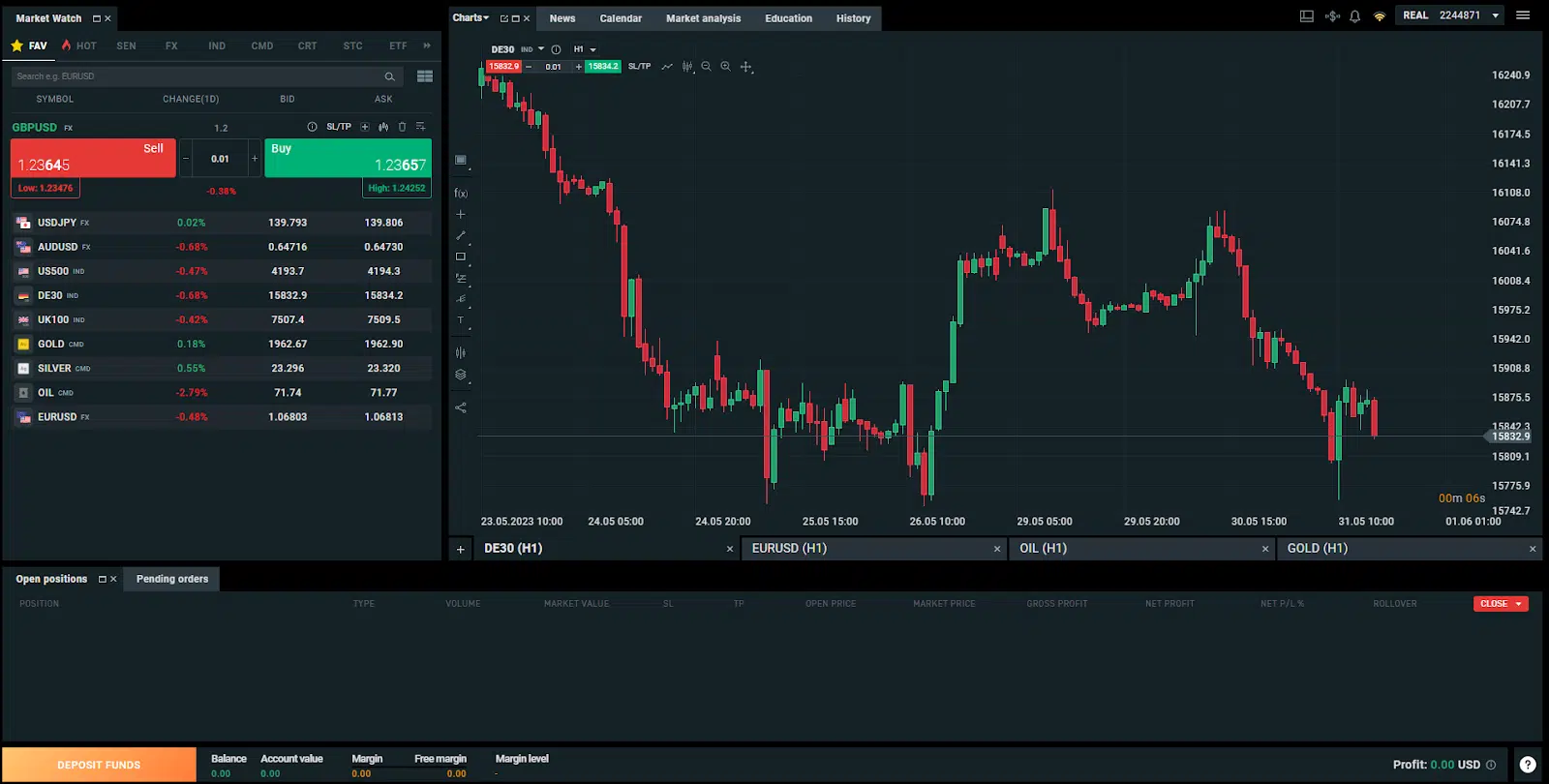
XTB offers beginner and experienced traders a dynamic trading experience with its two trading platforms, xStation5 (desktop-based) and xStation (mobile), which have advanced charting tools and indicators. xStation 5 provides a user-friendly interface and customizable features with several advantageous features, including a trader calculator that facilitates margin and commission calculations for each trade. You can set up alerts and notifications simply and conveniently, allowing you to receive email, SMS, or push notifications for specific events such as margin calls, deposits, or withdrawals.
Additionally, you can generate daily email reports and get regular updates on your account’s performance. xStation 5 also offers an extensive array of chart analysis tools with over 34 indicators and the ability to compare charts. Moreover, you have the flexibility to customize the toolbar according to your preferences, allowing you to display only the analytical tools you frequently use.
XTB stands out among its peers regarding educational materials and client support. It has a comprehensive online library with many videos that help you enhance your trading skills and knowledge. Furthermore, XTB provides excellent customer service via live chat, phone support, and email.
On the downside, XTB International charges a $30 fee on bank withdrawals below $50 (free from $50). It also charges an inactivity fee of €10 per month if you haven’t traded for 12 months and haven’t deposited in the last 90 days.
Read our XTB review for further insights.
#4 Pepperstone

Pepperstone at a glance
74-89% of retail CFD accounts lose money.
Pepperstone was founded in 2010 and now serves more than 900,000 traders worldwide. It’s a strong CFD broker for Malaysian traders looking to use the popular MetaTrader 4 and MetaTrader 5 platforms while benefiting from free deposits and withdrawals. Pepperstone offers CFDs across a wide range of asset classes, including forex, shares, indices, commodities, ETFs, currency indices, and cryptocurrencies. Retail forex leverage under the Bahamas entity goes up to 200:1 (20:1 on shares and crypto), and higher leverage can amplify losses as well as gains.
With Pepperstone’s range of trading platforms, you get access to reliable technology, fast execution, and a diverse set of tools. In addition to MT4 and MT5, Pepperstone offers cTrader and integrates with TradingView. Here’s a brief overview of each platform:
- MetaTrader 4 (MT4): the long-established forex trading platform, highly customisable, supports Expert Advisors coded in MQL4 for automated strategies, and includes a wide range of indicators plus Pepperstone’s own Smart Trader Tools.
- MetaTrader 5 (MT5): the newer platform from MetaQuotes with enhanced functionality, advanced features, and easier coding via MQL5. It offers faster processing, more built-in indicators, 21 timeframes, and broader asset coverage than MT4.
- cTrader: an intuitive, user-friendly platform with advanced features that give you fine-grained control over slippage and order fills. It offers FIX API connectivity, C# coding via cTrader Automate, powerful charting, and extensive customisation.
- TradingView: Pepperstone now offers direct TradingView integration, giving you access to TradingView’s industry-leading charting and its social network where traders share ideas with a large global community.
One important caveat for Malaysian readers: crypto CFDs are restricted in several jurisdictions (including not being available to UK retail clients under FCA rules), so the exact product range available to you will depend on the Pepperstone entity you open an account with. Pepperstone is regulated globally by authorities including the FCA (UK), ASIC (Australia), CySEC (Cyprus), BaFin (Germany), DFSA (Dubai), and the SCB (Bahamas), the SCB entity (Pepperstone Markets Limited) is the one behind Pepperstone’s international website, used by clients outside its regulated home markets.
CFDs are complex instruments and come with a high risk of losing money rapidly due to leverage. 79.6% of retail investor accounts lose money when trading CFDs with this provider. You should consider whether you understand how CFDs work and whether you can afford to take the high risk of losing your money.
Using a foreign broker from Malaysia
None of the four brokers above holds a licence from the Securities Commission Malaysia (SC). They serve Malaysian residents from abroad, so the SC’s investor protection and complaint channels don’t apply to these accounts. Your protection comes from the regulator of the entity that holds your account:
| Broker | Entity for Malaysians | Regulator | Accepts Malaysians |
| Interactive Brokers | Interactive Brokers LLC | SEC and FINRA (US) | Yes |
| Saxo | Saxo Capital Markets Pte Ltd | MAS (Singapore) | Check first (excluded on its website) |
| XTB | XTB International Limited | FSC (Belize) | Yes |
| Pepperstone | Pepperstone Markets Limited | SCB (Bahamas) | Yes (international site) |
Entities and regulators for Malaysian residents as of October 2026. Sources: each broker’s legal and account opening pages.
If you prefer a locally licensed broker, SC-licensed platforms include Moomoo Securities Malaysia, Webull Securities (Malaysia), and Rakuten Trade, and you can check any firm on the SC’s list of licensed persons. Be careful with clones: the SC’s Investor Alert List includes fake websites and Telegram channels using the Interactive Brokers, XTB, and Webull names, so only open accounts through the brokers’ official websites.
On taxes, Malaysian resident individuals don’t pay capital gains tax on shares (the capital gains tax introduced in 2024 applies only to companies and similar entities), and foreign-sourced income remitted to Malaysia by resident individuals is exempt until 31 December 2036, subject to conditions. Check the rules that apply to you with the Inland Revenue Board (LHDN) or a tax adviser.
What makes a good trading platform?
A well-designed, efficient trading platform can significantly enhance your trading experience and improve your chances of success in the financial markets. Here are some key factors that make a trading platform stand out:
- User-friendly interface: an intuitive, easy-to-navigate platform with a clear and organised layout makes day-to-day trading smoother, especially for newer investors.
- Order execution: fast and efficient execution with minimal slippage, and support for a range of order types (market, limit, stop, stop-limit, trailing stops, and others) to suit different trading strategies.
- Regulation and safety: oversight by reputable financial authorities ensures compliance with industry standards and helps protect your interests, alongside features like segregated client funds and (where available) investor compensation schemes.
- Pricing and fees: competitive spreads, transparent commissions, and no hidden costs, including FX conversion fees and any deposit/withdrawal charges, which can quietly eat into returns over time.
- Customisation and personalisation: the ability to save customisable watchlists, create personal trading templates, and set up tailored alerts. Active and professional traders typically want platforms that are highly customisable across multiple screens.
- Customer support: multiple support channels (live chat, email, phone) staffed by knowledgeable, responsive representatives, ideally available during the hours you actually trade.
- Products available: a diverse selection of assets lets you explore different markets, diversify your portfolio, and capture different investment opportunities. Pick a platform that covers the main products you want to trade, including any Malaysian or regional Asian markets if those matter to you.
Bottom line
Identifying the best trading platform in Malaysia can be challenging given the number of options available. In this review, we’ve highlighted the key features of the top trading platforms for Malaysian investors, summarised below:
- Interactive Brokers, best for intermediate and advanced investors looking for wide global market access
- Saxo, best for powerful trading tools and a premium platform experience (check eligibility first)
- XTB, best for forex, CFDs, and commission-free real stocks and ETFs
- Pepperstone, best for MT4, MT5, and active CFD trading
To find the broker that best suits your needs, our BrokerMatch tool is a useful starting point. You can also refer to our comprehensive comparison table for an in-depth side-by-side look at the key features offered by different global brokers, or check our individual broker reviews for a deeper analysis of each platform.
Whether you’re a new investor or a seasoned professional, we hope this article has helped answer some of your questions. Before committing real money, we recommend opening a demo account with your chosen broker and testing the platform’s features to make sure it fits how you actually want to trade.
FAQs
Is online trading legal in Malaysia?
Yes, online trading is legal in Malaysia, and the Securities Commission Malaysia (SC) supervises the capital markets. You can trade through SC-licensed brokers or open an account with an international broker. Foreign brokers without an SC licence are supervised by their home regulators, so SC protection doesn’t apply to those accounts.
What is the minimum balance to start trading in Malaysia?
Many brokers have no minimum deposit, and some, like Interactive Brokers, let you buy fractional shares from $1.
Can I trade Forex in Malaysia?
Yes, you can trade Forex in Malaysia. You can check our article on the best Forex brokers in Malaysia which provides an in-depth comparison and analysis of various Forex brokers.
Can I trade multiple asset classes on trading platforms in Malaysia?
Yes, many trading platforms in Malaysia offer access to multiple asset classes, including stocks, bonds, commodities, and Forex.
Can I use demo accounts on trading platforms in Malaysia to practice trading before investing real money?
Yes, many trading platforms offer demo accounts that allow you to practise trading strategies and get familiar with the platform without risking real money. All the trading platforms mentioned in this article offer demo or paper trading accounts.
Can I buy Bursa Malaysia shares with a foreign broker?
Yes, with Interactive Brokers, which has offered Bursa Malaysia stocks and ETFs (Main and ACE markets) and some Bursa futures since August 2024. Local SC-licensed brokers also give access to Bursa Malaysia.
Do I pay tax on gains from foreign brokers in Malaysia?
Individuals don’t pay capital gains tax on shares in Malaysia, and foreign-sourced income remitted by resident individuals is exempt until 31 December 2036, subject to conditions. Tax rules can change, so confirm your situation with LHDN or a tax adviser.