MetaTrader 4 (MT4) remains one of the most widely used trading platforms in the world, with millions of traders using it for forex, CFDs, and other instruments. Although MetaTrader 5 is technically more advanced, many traders stay with MT4 because their expert advisors and strategies are built for it.
Since MetaQuotes discontinued sales of full MT4 licences in 2018, a white label solution is now the only route to offering clients an MT4 platform. Choosing a provider comes down to a few factors: reputation, platform features and tools, and cost.
In this article, we review the leading MT4 white label providers and explain how to select the right one for your business.
What is a MetaTrader 4 (MT4) white label broker?
An MT4 white label broker is a brokerage that offers the MetaTrader 4 platform under its own branding through a licensing agreement. The broker controls the branding, customisation, and client-facing services, while the technology and infrastructure are supplied by the white label provider.
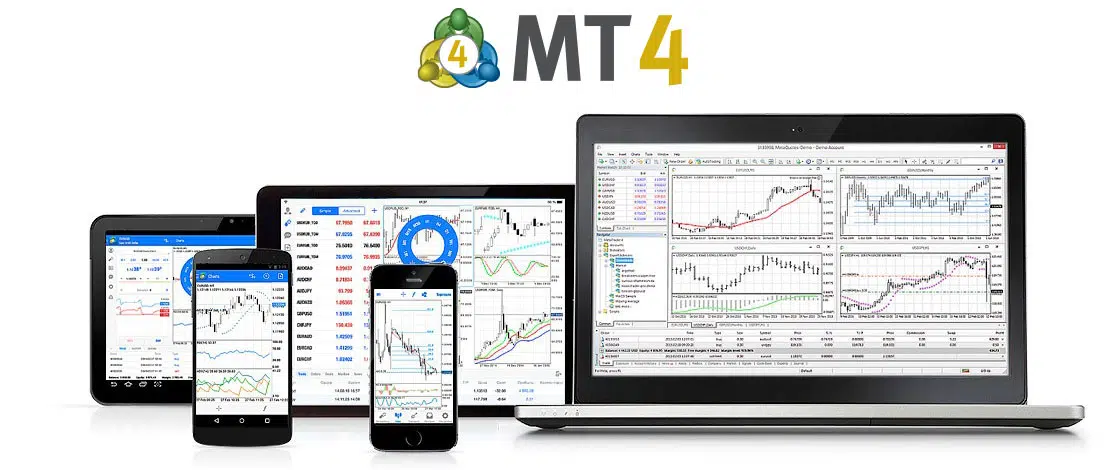
MT4 is valued for its user-friendly interface, advanced charting, automated trading via expert advisors, and extensive library of technical indicators – a combination that suits both new and experienced traders across multiple markets.
Going white label lets you launch on an established, trusted platform without building trading software from scratch, freeing you to focus on client acquisition, support, and the services that differentiate your brand.
Best MT4 White Label brokers and providers
X Open Hub
A white label provider offering advanced technology, liquidity solutions, and customisable trading platforms, including MT4. Pricing is transparent and competitive, and the platform’s stability and support are consistently well reviewed.
Leverate
A well-established brokerage technology and services provider with a full suite of solutions covering forex, CFDs, crypto, and social trading. The MT4 white label solution is available as a standalone package, with legal and liquidity support available as add-ons.
Match-Trader
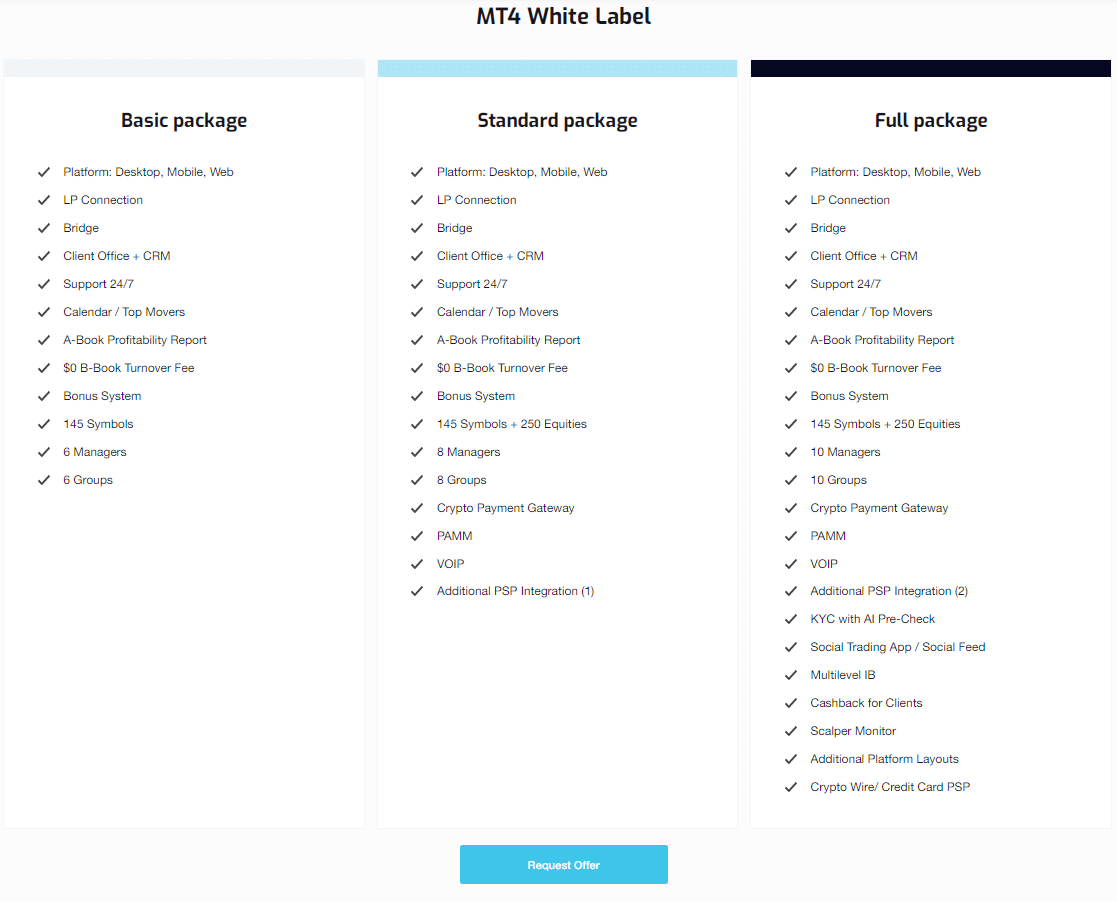
Offers the MT4 white label platform across three packages: basic, standard, and full. Each includes integration with a Client Office and CRM system, which helps manage clients and streamline day-to-day operations.
Tickmill Prime
Tickmill Prime is a liquidity provider and prime broker serving institutional clients and professional traders. It offers MT4 white label solutions to firms building forex and CFD businesses, with a setup fee of $5,000 and a monthly fee of $1,000. Verify current pricing directly, as these figures are subject to change.
X Open Hub at a glance

69-80% of retail CFD accounts lose money.
X Open Hub is a UK-based fintech providing multi-asset liquidity and trading technology to banks, brokers, and startups. With over 15 years of experience, offices in 11 countries, and a team of 600+ professionals including 200 IT specialists, its licences are passported to over 20 countries. As an EU-regulated company, it meets EU and international regulatory standards.
X Open Hub stands out as an MT4 white label supplier through the breadth of instruments in its liquidity pool. Partnering with them covers platform and liquidity support, letting you focus on sales, marketing, and customer service. Their Smart B-Book Executors deliver fast, fully automatic execution with ultra-low latency and a multi-asset feed, so retail brokers can offer an enterprise-grade experience from launch.
The partnership gives access to all MT4 features, including Expert Advisors, automatic order monitoring, advanced charts, and the Strategy Tester. They also provide xRisk, a risk management tool supporting individual trade hedging, exposure limits by client, client group, or instrument, and detailed reporting to help you optimise your trading book.
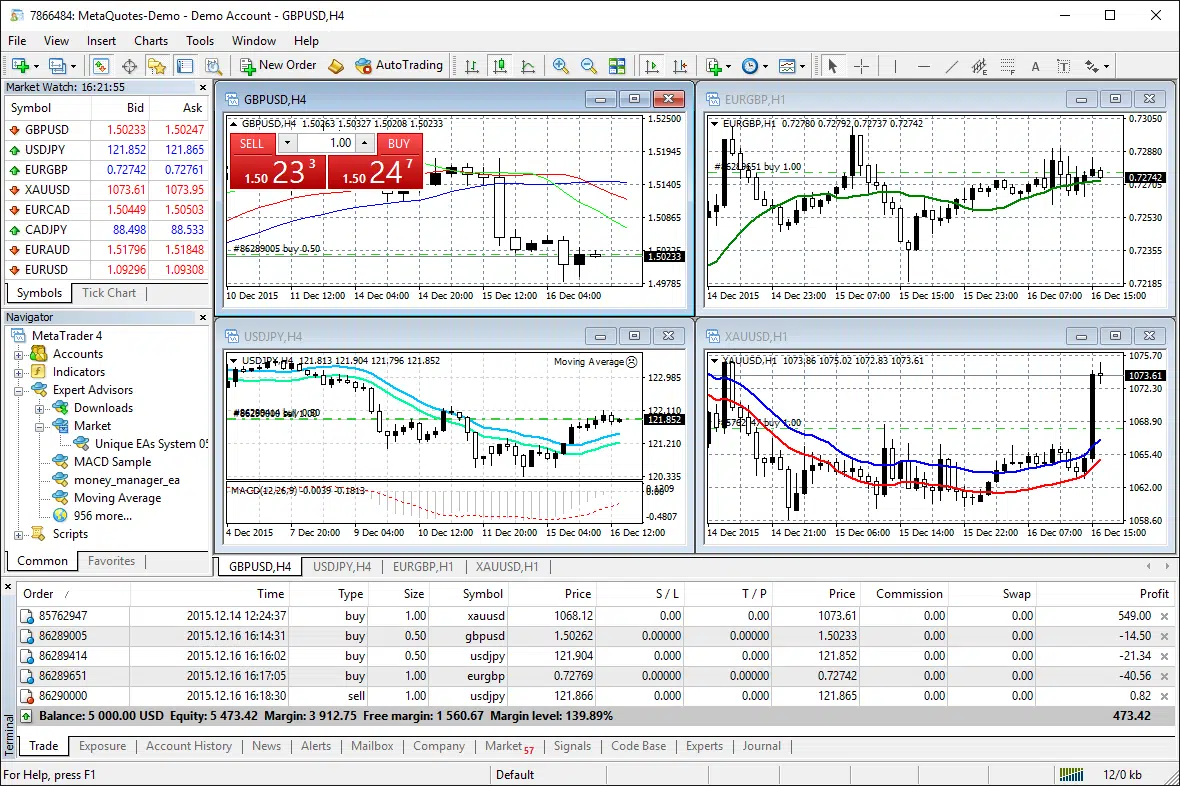
X Open Hub also offers liquidity solutions built specifically for MT4 brokers, reducing maintenance and trading costs. Features include no volume commissions, over 5,000 instruments across asset groups, ultra-low institutional swaps, negative balance protection, no minimum deposit, and spread rebates – an attractive combination for partners running STP/ECN models. Their MT4 liquidity is used by international institutions, banks, and brokers.
To become a partner, contact their sales department about the MT4 white label proposal. An express start-up package can be completed in under two weeks, covering the trading platform, back office system, and liquidity access.
Pricing starts at $1,000 per month, with bundles you can match to your needs and budget. X Open Hub also provides consulting on initial requirements, regulatory standards, training, and marketing, plus 24/7 account manager support.
Leverate at a glance

Founded in 2008, Leverate is an established brokerage technology provider serving forex, CFD, and crypto brokers. Its flagship product is LXSuite, an all-in-one platform covering web and mobile trading and CRM, alongside dedicated MT4 white label solutions.
With over 150 employees and round-the-clock support, Leverate has built a reputation for customer service, working with more than 200 brokers serving over 65,000 traders.
Leverate offers two main packages: LXSuite and LXLite.
LXSuite provides the fuller toolset for forex, CFD, and crypto brokers:
- MT4 white label;
- Branded website and mobile apps;
- Robust data security;
- Social trading via Sirix Social;
- Sirix Web Trader white label;
- Top-tier liquidity access;
- CRM optimised for brokerages;
- Automated trading capabilities;
- Lead generation.
LXLite is the more cost-effective option, covering the essentials:
- MT4 white label;
- Sirix Web Trader white label;
- Marketing and lead generation;
- Global payment providers;
- LXCapital liquidity access;
- Broker-optimised CRM;
- Reliable market data feeds.
To get started, contact Leverate by phone, email, or social media. A success manager helps you select the right package while the technical team handles implementation, with dedicated training provided. Additional services cover affiliate marketing, payment solutions, and website development.
Leverate’s MT4 back office gives brokers full control over trading conditions, role-based manager permissions, client groups and market segments, and platform customisation through dedicated APIs – letting you tailor the environment to your business model.
Match-Trader at a glance

Match-Trade Technologies is a fully integrated forex technology provider focused on helping brokers optimise operations and profitability. With 10 years in the industry, it operates from seven offices across the USA, Europe, and Asia with a team of 150 specialists.
Match-Trade offers MT4 and MT5 white label solutions, letting brokers launch a new white label or migrate an existing one. Solutions are structured to minimise start-up costs and ongoing operational expenses.
Alongside a fully branded MT4 platform, key features include:
- A-Book and B-Book execution: both models are supported with fully automated execution, and connecting to your partner liquidity provider is free;
- Technical documentation: a comprehensive library covering everything from basic setup to advanced platform management, written clearly and supported by videos and screenshots;
- Business support tools: dedicated registration forms for client onboarding, multiple deposit options, and a Client Office with CRM for tracking withdrawals and managing relationships.
Match-Trade provides technical support including software maintenance, IT support, and hosting, with direct access to their team rather than a ticketing system.
Packages are tiered to suit brokers of different sizes, with the level determining the number of account managers and groups, plus access to features such as a Crypto Payment Gateway and PAMM accounts.
Tickmill Prime at a glance

70% of retail CFD accounts lose money.
Tickmill Prime is a forex and CFD liquidity provider serving institutional clients globally. Its MT4 white label solution lets brokers and financial institutions launch and scale forex and CFD businesses quickly and cost-effectively.
The solution gives you full control and confidentiality while delivering a quality trading experience. Key features include:
- Customised branding: personalise the MT4 client platform with your logo and corporate details;
- Client management tools: a personal MT4 Manager program for onboarding, monitoring, and supporting clients;
- Multi-account management (MAM): a reliable MAM tool for money managers handling multiple trading accounts;
- Seamless customisation: request trading setting updates through an online technical spreadsheet;
- Ongoing support: access to an experienced support team for technical guidance.
On pricing, the setup fee is $5,000 with a monthly fee of $1,000. Adding the mobile app carries no setup cost, with an additional $750 per month. Verify current pricing directly, as these figures are subject to change.
Requirements for an MT4 white label solution
Requirements vary by provider and by your own circumstances, but these are the common conditions set by MetaQuotes:
- Certificate of incorporation: white label providers may only serve companies engaged in investment services, trading of financial instruments, online forex, brokerage, or related financial activities. Your company must be registered before obtaining an MT4 white label, and a brokerage licence may be required depending on your jurisdiction;
- Register of directors and shareholders: recent certified documents are required, including a copy of the director’s passport and a selfie with the passport. Identity verification via video recording may also be needed;
- Registered and physical address: the registered address comes in the standard document set, but proof of physical address is separately required – typically a certified utility bill. Companies older than six months may also need a recent certificate of good standing;
- Domain ownership confirmation: the domain must be registered under the full company name;
- Corporate account verification: a certified reference letter or bank statement confirming an active corporate bank account, including the company registration number and registered address.
Pros and cons of White Label MT4 brokers
Pros
-
Established platform: MT4 is an established and widely recognised trading platform with a strong reputation in the industry and is known for its intuitive and user-friendly interface.
-
Customisation options: You have the flexibility to customise the MT4 platform to align with your brand identity, incorporating your logo, colour schemes, and other branding elements.
-
Technical infrastructure: You can leverage the provider’s robust technical infrastructure, including server maintenance, data feeds, and connectivity. This allows you to focus on client acquisition and business operations.
-
Access to tools and features: MT4 offers a wide range of tools, indicators, and analysis features. Traders can benefit from advanced charting, automated trading options, and a vast library of technical indicators. Additionally, the strategy tester allows traders to backtest their trading strategies on historical data for performance assessment and optimisation.
-
Community support: The MT4 platform has a large and active community of traders and developers, which provides support, resources, and a marketplace for additional plugins and expert advisors, expanding the functionality and possibilities for white label brokers. Traders can access a marketplace of custom indicators, expert advisors, and scripts, enhancing the functionality and possibilities of the platform.
- Cost considerations: White label solutions can be more cost-effective than developing a proprietary trading platform. There can still be associated costs, such as licensing fees, setup fees, and revenue-sharing agreements with the platform provider.
Cons
-
Dependency on provider’s server: White label brokers depend on the MT4 platform provider for technical support, updates, and infrastructure maintenance. Any issues or delays on the provider’s end can impact the broker’s operations and client experience.
-
Limited brand differentiation: While white label brokers can customise certain aspects of the platform, they still operate within the framework of the MT4 platform. This means that the core features and user interface remain consistent across various brokers, making it difficult for them to stand out from the competition.
-
Limited scalability: As your business grows, scalability can become a challenge. The platform provider may have limitations on the number of clients, trading volume, or customisation options, requiring additional negotiations or migration to a different solution.
-
Outdated design: MT4 has been around for a while, and its user interface design may appear outdated compared to newer trading platforms. Some traders may prefer more modern and visually appealing platforms.
-
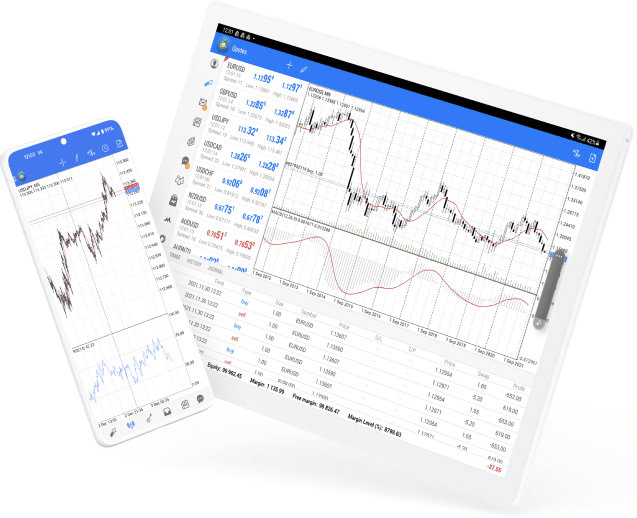
Mobile app limitations: While MT4 has a mobile app for trading on the go, the mobile version may have fewer features and functionalities compared to the desktop version. Traders who heavily rely on mobile trading may find the mobile app’s limitations restrictive.
- Limited offering: The MT4 platform does not have native support for trading stocks. It was primarily designed for Forex trading, and its default installation does not include stock market instruments.
Factors to consider when choosing an MT4 White Label provider
While MT4 is a standard platform, some providers offer additional features, customization levels, or other services that can make your brokerage firm more efficient. Here are some key factors to consider:
- Reputation: Look for a provider with a good reputation in the industry. Check reviews and testimonials, and ask for referrals to get a sense of their performance and reliability.
- Regulatory compliance: This is one of the most important factors to consider when choosing a white label brokerage provider. Check that the provider is licensed and supervised by recognised regulatory authorities to ensure compliance with all applicable laws and regulations.
- Customer support: Consider the quality of customer support the provider offers. Look for a provider that offers 24/7 support via multiple channels, such as email, phone, and chat.
- Range of trading instruments: Consider the range of trading instruments offered by the provider, including Forex pairs, commodities, indices, and cryptocurrencies. Look for a provider that offers a diverse range of instruments to meet your client’s needs.
- Pricing and fees: Review the provider’s pricing and fee structure, including spreads, commissions, and account maintenance fees. Compare this to other providers to ensure that you get competitive pricing.
- Customisable trading conditions: Choose a provider that allows you to create your own trading conditions with commissions, markups, swaps, margins, and risk settings. Also, ensure you can adjust swaps, dividends, markups, and spreads to meet your client’s needs.
- Integration with third-party providers: Consider the provider’s ability to integrate with third-party providers such as payment processors, liquidity providers, and risk management systems. This can help streamline your trading operations and improve efficiency.
By evaluating these features, you can choose a provider that best suits the needs of your potential customer base and business.
Conclusion
MT4 remains a strong choice in a competitive market thanks to its robust feature set, familiar interface, and breadth of tradable instruments. With MetaQuotes no longer issuing new MT4 licences, a white label solution is the only route to offering clients a branded MT4 platform.
When selecting a provider, weigh reliability, customisation options, integration capabilities, support quality, and scalability – and be realistic about which of these matter most for the stage your business is at. A provider that suits a startup brokerage may not suit one scaling to several thousand clients, and migrating later is costly.
It is also worth considering the longer-term question: MT4 has not received major feature development since MT5 launched, and MetaQuotes has clearly signalled where its priorities lie. If your client base is not tied to legacy MQL4 expert advisors, evaluating providers that offer both MT4 and MT5 gives you room to move later without changing supplier.
The providers covered here each offer proven track records and comprehensive feature sets. Compare them against your own requirements rather than headline pricing alone.
FAQs
What is the cost of establishing a white label MT4 brokerage?
White label brokers typically charge a one-time setup and monthly subscription fee for using the MT4 platform. The fees vary depending on the client base, level of customisation, support, and scope of services.
How much can I make as a white label MT4 broker?
The potential earnings of a white label MT4 broker vary based on client base, trading volume, fee structure, market conditions, competition, costs, and value-added services. It’s challenging to predict specific earnings, but effective marketing, customer service, and business growth strategies are key to maximising potential earnings. Developing a comprehensive business plan and seeking professional advice can provide valuable insights.
Is a license required to start an MT4 white label?
The white label model allows you to utilise the MetaTrader 4 trading platform under your own branding without needing t a separate license from MetaQuotes. Instead, you typically enter into agreements with technology providers or liquidity providers who offer the MT4 platform as a white label solution. These providers handle the licensing and provide the necessary infrastructure for brokers to offer the platform to their clients. However, it’s important to note that you may still need to comply with relevant regulatory requirements and obtain the necessary licenses to operate as a brokerage business in your jurisdiction.
Do UpTrader and B2Broker offer MT4 white label solutions?
UpTrader and B2Broker are well-known providers of white label solutions in the financial industry. They both used to offer MT4 as a white label solution, but currently, they are not offering it anymore. If you’re specifically looking for MT4 white label solutions, we suggest exploring alternative providers mentioned in this article.