In today’s connected world, financial transparency is the norm. For Wise users – whether for daily spending, transfers, or investing – the big question is:
Does Wise report to tax authorities?
With the Common Reporting Standard (CRS) in place, Wise must share data with tax authorities globally.
But what does this mean for you? What financial data is being shared? How does CRS reporting work, and could it impact your tax obligations?
In this article, we’ll explore Wise’s CRS reporting responsibilities and what they mean for financial privacy, helping you stay informed and compliant.
What is CRS Reporting?
The Common Reporting Standard (CRS) is a global framework developed by the OECD to combat tax evasion. Its core idea is simple: if you hold financial accounts outside your country of tax residence, your home country’s tax authority should know about it.
Under CRS, financial institutions – including banks, brokers, and platforms like Wise – are required to collect account holder information and report it annually to the relevant tax authorities.
Here’s how it works:
- Wise collects your information: When you open an account, you must provide your name, address, and tax ID. It also collects your year-end account balance (December 31st), gross proceeds from all sales, interest income, dividend income, and other income;
- Information is shared with the appropriate tax authority: Once a year, Wise sends your account information to the tax authority of the country where the Wise subsidiary is based (until the 30th of June of each year);
- The tax authorities share the information globally: The information is shared with the country where you live or are considered a tax resident.
Please note you don’t need to take any action yourself since everything is handled by Wise (and the tax authorities).
Does Wise participate in CRS reporting?
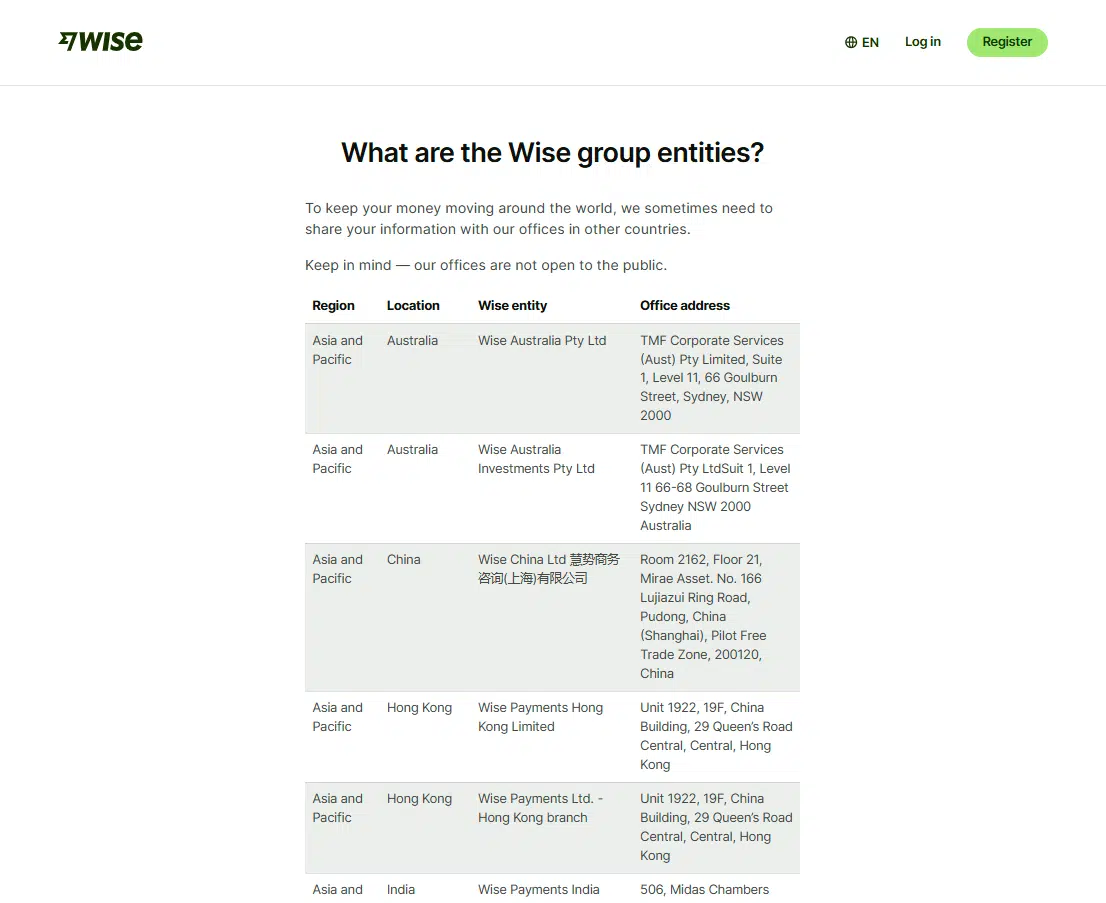
Yes, it must participate in the CRS Reporting since it operates through several countries which adheres to the CRS reporting. So, all of Wise’s subsidiaries are subject to it, as shown in their own website:
What information does Wise report?
Wise does not “choose” what information to share. According to CRS regulations, it must provide:
- Account number;
- Name;
- Full address;
- Date of birth;
- Tax ID Number;
- Tax residency country;
- Year-end account balance;
- Gross proceeds from all sales, interest income, dividend income, and other income.
You can check more information on Wise website, as follows:

Where can I get my CRS in Wise?
You cannot get access to the CRS in Wise. However, Wise does show you a tax statement of the previous year to let you know about your earnings:

Still, there are other platforms like Interactive Brokers that allow you to access your CRS:

Which countries are affected?
Over 100 countries are involved in cooperating for higher transparency standards, including all European Union (EU) countries, China, India, and Hong Kong.
The United States is a notable exception. It is not included in the CRS ecosystem. Instead, it actively controls its citizens’ foreign financial assets through the Foreign Account Tax Compliance Act (FATCA), which requires that foreign financial Institutions report on the foreign assets held by their U.S. account holders.
Since Wise only operates in countries under the CRS, except the US, you are automatically involved with this legislation.
How CRS reporting differs from FATCA (for US users)
We have detailed a comparison side by side to help you understand the differences:
| Information | CRS | FATCA |
| Who created it? | Developed by the OECD | Enacted by the US government under the IRS |
| Who does it apply to? | Applies to residents of over 100 participating countries (excluding the US) | Applies to US citizens, US residents, and certain non-US entities with US ownership |
| Purpose | To prevent global tax evasion by requiring financial institutions to share account information with tax authorities | To prevent US taxpayers from hiding assets and income in foreign financial institutions |
| Which information is shared? | Account holder’s name, address, account balance, income, and tax residency status | Similar information as CRS: account balances, income, and US taxpayer identification |
| Who receives the data? | Tax authorities of the account holder’s country of tax residence | The IRS receives data directly from foreign financial institutions |
| Which financial institutions must report? | Financial institutions in participating CRS countries | Foreign financial institutions dealing with U.S. persons |
How does CRS affect Wise Business accounts?
CRS applies to business accounts in the same way as personal accounts. When a business account is opened, Wise collects details about the company and its controlling persons (owners, directors, shareholders). This information is then subject to the same annual reporting obligations.
For businesses with international ownership structures, this is particularly relevant: the tax residency of the business and each controlling person determines where and how the information is reported.
What happens if there’s a discrepancy?
This is where CRS has real teeth. If the income or account balances Wise reports to your local tax authority don’t match what you declared on your own tax return, it can trigger a review or audit.
This isn’t a reason to panic – it’s simply a reason to make sure your declarations are accurate and consistent with what Wise is reporting. If you’re unsure how your Wise income should be declared, consulting a local tax adviser is the safest route.
Bottom line
All in all, Wise does report to tax authorities under the Common Reporting Standard (CRS). This applies to both personal and business accounts held by users who are tax residents of participating countries.
CRS reporting ensures that financial institutions like Wise share relevant account information with local tax authorities, helping to prevent tax evasion.
Do you have any questions? Feel free to reach out to us!