Are you trying to decide between Exness and Pepperstone as a broker for your trading needs?
In this side-by-side comparison, we look at how Pepperstone and Exness stack up across the most important features, so you can make an informed decision about which one fits you best.
Below, you’ll find a quick comparison table, the pros and cons of each broker and a head-to-head look at regulation, fees, platforms, instruments and more.
Pepperstone vs Exness
- Pepperstone is our recommended choice overall. It offers strong top-tier regulation (including the FCA in the UK and ASIC in Australia), a wide range of trading platforms and a deep set of trader-focused tools. You can read our in-depth Pepperstone review here.
- Exness is not recommended by our team. The reasons are detailed below. You can also read our in-depth Exness review here.
Pepperstone vs Exness in a nutshell
| Category | Pepperstone | Exness |
| Founded | 2010 | 2008 |
| Clients | 900,000+ traders | Not published on its website |
| Retail regulation | FCA, BaFin, ASIC, CySEC, DFSA (top-tier entities serve retail clients) | Offshore entities (FSA Seychelles, CBCS, FSC BVI, FSC Belize) plus local licences in Kenya, Jordan and South Africa |
| Instruments | 1,350+ CFDs | Forex, metals, crypto, energies, stocks and indices (CFDs) |
| Raw account | Razor: from 0.0 pips + from $3.50 per lot per side | Raw Spread: from 0 pips + up to $3.50 per lot per side |
| Commission-free account | Standard (raw spread + 1 pip) | Standard (from 0.2 pips), Pro (from 0.1 pips) |
| Max leverage (retail) | 30:1 under top-tier entities | Up to 1:Unlimited on offshore entities |
| Platforms | Pepperstone app, MT4, MT5, cTrader, TradingView | Exness Terminal, Exness Trade app, MT4, MT5 |
| Our verdict | Recommended | Not recommended |
As of 12 October 2026, taken from each broker’s website.
Video summary
Why we prefer Pepperstone
Overall, we recommend Pepperstone over Exness because it is regulated by top-tier authorities including the FCA (UK), ASIC (Australia), BaFin (Germany), CySEC (Cyprus) and the DFSA (Dubai), with retail clients in those jurisdictions onboarded under the relevant top-tier entity rather than an offshore subsidiary. This offers a higher level of oversight and investor protection. Pepperstone does onboard some other international clients through Raw Trading Ltd in the Seychelles, so check which entity you are offered.
Pepperstone is also listed in the broker section of the r/Forex subreddit wiki, one of the largest forex communities online, alongside Interactive Brokers.
Why we don’t recommend Exness
At investingintheweb.com, we do not recommend Exness for the following reasons:
- Top-tier-regulated Exness entities don’t serve retail clients. Exness holds licences with the FCA (Exness (UK) Ltd, FRN 730729) and CySEC (Exness (Cy) Ltd, licence 178/12), but, according to its regulation page, neither offers services to retail clients, and Exness (MU) Ltd in Mauritius doesn’t provide retail services either. Retail traders are instead onboarded under entities such as Exness (SC) Ltd (FSA Seychelles, licence SD025), Exness B.V. (Central Bank of Curaçao and Sint Maarten), Exness (VG) Ltd (FSC BVI) or Forexite Ltd (FSC Belize), which carry a lighter regulatory burden.
- No statutory investor protection for most retail clients. Because most retail accounts sit with offshore entities, clients don’t have access to the £85,000 FSCS protection in the UK or the €20,000 investor compensation available in the EU.
- No retail accounts in the UK or EU. Since its FCA and CySEC entities are restricted to non-retail clients, Exness doesn’t serve retail traders in the UK or the EU. Its retail business focuses on markets where regulation is lighter.
- Very high leverage. Exness advertises maximum leverage of 1:Unlimited on its Pro, Raw Spread and Zero accounts, compared with the 30:1 retail cap in the UK, EU and Australia. High leverage can appeal to active traders, but it dramatically increases the risk of losing your whole account.
Exness has been operating since 2008 and is popular with traders in Southeast Asia, the Middle East and Africa. Even so, considering its regulatory profile, particularly the gap between the headline FCA/CySEC licences and the offshore entities that actually onboard retail clients, we believe most readers will be better served by Pepperstone, which combines comparable platforms and pricing with top-tier retail regulation in its key markets.
About Pepperstone
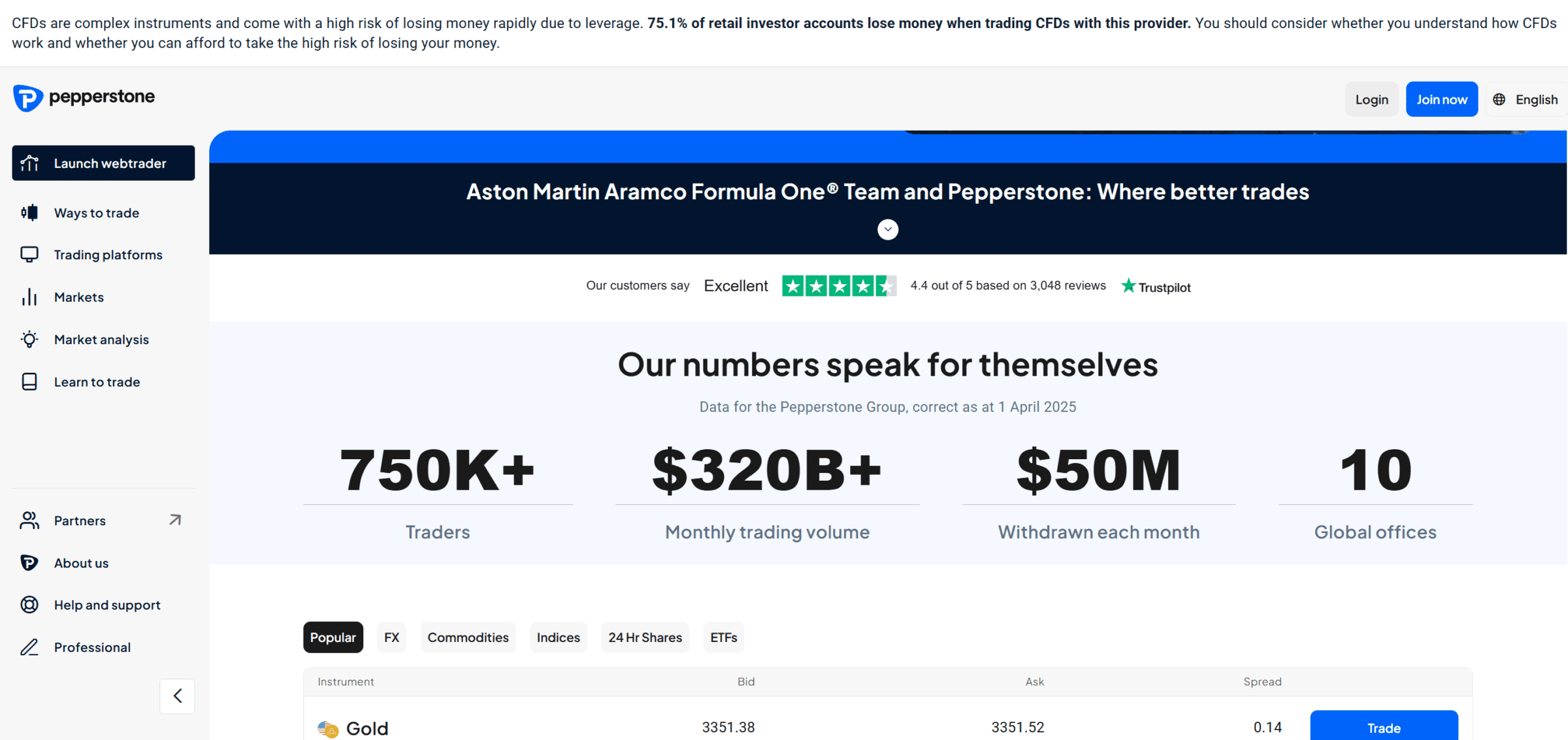
Founded in 2010 in Melbourne, Australia, Pepperstone has grown into one of the world’s largest forex and CFD brokers, now serving more than 900,000 traders with access to more than 1,350 CFDs.
Pepperstone is regulated by multiple financial authorities, including ASIC (Australia), the FCA (UK), BaFin (Germany), CySEC (Cyprus), the DFSA (Dubai), the SCB (Bahamas) and the CMA (Kenya). EU clients are served by Pepperstone EU Limited, regulated by CySEC (licence 388/20).
Retail clients under its top-tier licences are capped at 30:1 leverage on major currency pairs, while professional clients and some entities outside those regions can reach 500:1.
There is no mandatory minimum deposit, although Pepperstone’s EU site lists $10 or the local equivalent as the starting amount.
Pepperstone also offers Islamic (swap-free) accounts for halal trading, and UK residents can access tax-free spread betting accounts.
Pepperstone pros and cons
Pros
- Quick customer support response times
- No fees for deposits, withdrawals, or account inactivity
- Competitive spreads in the Razor account with active trader rebates
- Higher leverage options are available depending on region and client categorization
Cons
- Limited to CFD trading; no direct asset ownership
- Higher Forex spreads in the standard account
- Crypto CFDs offerings are limited compared to competitors
- Limited educational resources
Regulation
- Pepperstone: regulated by top-tier authorities including ASIC (Australia), the FCA (UK), BaFin (Germany), CySEC (Cyprus) and the DFSA (Dubai), plus the SCB (Bahamas) and the CMA (Kenya). Retail clients in these markets are onboarded directly under the top-tier entities. Pepperstone is the clear winner here, particularly if you live in Australia, the UK, the EU or the UAE.
- Exness: regulated by the FSA (Seychelles), the CBCS (Curaçao and Sint Maarten), the FSC (BVI), the FSC (Belize), the FSC (Mauritius), the CMA (Kenya), the JSC (Jordan), the FSCA (South Africa), CySEC and the FCA, according to its regulation page.
- Although Exness holds top-tier licences with the FCA and CySEC, both entities are restricted to non-retail clients. Retail traders are routed instead to entities such as Exness (SC) Ltd (FSA Seychelles, SD025), Exness B.V. or Exness (VG) Ltd, which carry a lighter regulatory burden and no statutory investor compensation scheme.
Fees and spreads
Both brokers offer raw-spread accounts with a commission and commission-free accounts with wider spreads:
- Pepperstone: the Razor account offers raw spreads from 0.0 pips plus a commission from $3.50 per lot per side on forex, and the Standard account adds a 1-pip mark-up to the raw spread with no commission, according to its trading accounts page.
- Exness: the Raw Spread account offers spreads from 0 pips plus up to $3.50 per lot per side, the Zero account from 0 pips plus from $0.05 per lot per side, and the Pro (from 0.1 pips) and Standard (from 0.2 pips) accounts have no commission.
On raw accounts, costs are broadly similar. The bigger difference is regulation, not price.
Trading platforms
- Pepperstone: the Pepperstone web platform and app, MetaTrader 4 (MT4), MetaTrader 5 (MT5), cTrader and TradingView.
- Exness: MetaTrader 4 (MT4), MetaTrader 5 (MT5), MetaTrader WebTerminal, Exness Terminal and the Exness Trade app.
Market instruments
- Pepperstone: more than 1,350 CFDs on forex, indices, commodities, shares, ETFs and cryptocurrencies (crypto CFDs are not available to UK retail clients).
- Exness: CFDs on forex, metals, cryptocurrencies, energies, stocks and indices. No real stocks, ETFs or bonds.
Customer support
- Pepperstone: 24/7 support via phone, live chat, and email.
- Exness: 24/7 support via live chat, email, and phone.
Deposits and withdrawals
Pepperstone
- Minimum deposit: no mandatory minimum ($10 or local equivalent suggested in the EU)
- Methods available: credit/debit cards, PayPal, bank transfer, and regional alternatives.
- Fees: no deposit fees, and most withdrawals are free, although international bank wire withdrawals cost $20.
Exness
- Minimum deposit: varies by account type, region and payment method, and is higher on the Pro, Raw Spread and Zero accounts than on the Standard account.
- Methods available: credit/debit cards, Neteller, Skrill, bank transfer, crypto, and regional e-wallets.
- Fees: Exness doesn’t charge its own deposit or withdrawal fees on most methods, although payment providers may charge.
User experience and feedback
- Regulation in major markets: traders in the UK, EU and Australia can only open retail accounts at Pepperstone, since Exness doesn’t serve retail clients there, and their accounts come with the protection of top-tier regulators (including the FSCS up to £85,000 in the UK and €20,000 in Cyprus).
- Customer service: Pepperstone consistently receives strong reviews for its customer support across independent ratings.
- Exness popularity: Exness is well known among traders in Southeast Asia, the Middle East and Africa, where it primarily operates.
Exness vs Pepperstone: our verdict
The differences between Pepperstone and Exness come down to regulation, leverage, product range and platforms, with costs on raw accounts broadly similar.
Ultimately, the best trading platform for you will depend on your investor profile, preferences, and objectives. Explore both broker websites and decide for yourself.
Above all, always verify that the broker is regulated in your country of residence and offers the level of protection and security you consider essential. Check which entity you’ll actually be onboarded under, as the headline regulator on a broker’s website isn’t always the same one that supervises your retail account.
Want to learn more? Explore our in-depth broker reviews, comparison tool, and BrokerMatch.
Disclaimer: This article is for informational purposes only and does not constitute financial or investment advice. CFD and forex trading involve significant risk, a majority of retail investor accounts lose money trading CFDs. Always do your own research and consider your own financial situation and risk tolerance before opening an account, and verify the regulatory entity that will serve your residency before depositing funds.